No. 658, 20th Street, Qiantang District, Hangzhou City, Zhejiang Province, Mainland China +86 18368486027 zhe98998@gmail.com

No. 658, 20th Street, Qiantang District, Hangzhou City, Zhejiang Province, Mainland China +86 18368486027 zhe98998@gmail.com

Introduction: The Urency of Technological Upgrading for Metal Rotor Pumps
In process industries such as oil refining and chemical engineering, metal rotary pumps, as core conveying equipment, must cope with complex operating conditions including high temperatures, high pressures, strong corrosion, and media containing solid particles. Traditional rotary pumps often suffer from issues such as insufficient material wear resistance, high clearance leakage rates, and poor operational stability, leading to high maintenance costs and low production efficiency. Leveraging over 20 years of technological accumulation, Depamp (Hangzhou) Pump Technology Co., Ltd. has developed a new generation of high-efficiency metal rotary pumps through material innovation, structural optimization, and intelligent control technologies, achieving stable operation for over 5,000 hours in oil refining, chemical engineering, and other fields, with leakage rates reduced to below 0.1%. This article will systematically analyze the technological upgrading path of metal rotary pumps from three aspects: technical pain points, corporate solutions, and selection guidelines.
Keywords: metal rotor pump; efficient transportation; wear-resistant materials; intelligent control; Depam Pumps
Opening on Industry Technical Pain Points: Three Major Bottlenecks of Traditional Metal Rotor Pumps
STEP1:Insufficient material wear resistanceTraditional rotary pumps mostly use 304/316L stainless steel. When transporting media containing solid particles (such as catalysts and mineral slurry), severe wear occurs between the rotors and the inner wall of the pump chamber, leading to increased clearances and elevated leakage rates. For example, a refining and chemical enterprise used a traditional rotary pump to transport catalytic cracking oil slurry; after three months of operation, the leakage rate rose from 0.5% to 3%, necessitating a shutdown to replace the rotors, with single maintenance costs exceeding RMB 100,000.
STEP2:High gap leakage rateThe clearance design between the rotor and pump chamber directly affects volumetric efficiency. Traditional pump clearances typically range from 0.2-0.5 mm, and under high-pressure conditions, the leakage of the medium through the clearance can reach 5%-10% of the theoretical flow rate, resulting in increased energy consumption and reduced conveying efficiency.
STEP3:Poor operational stabilityUnder complex operating conditions (such as temperature fluctuations and changes in medium viscosity), the fitting accuracy between the rotor and the pump chamber is prone to being affected, leading to vibrations, noise, and even seizure failures. A chemical enterprise using a traditional rotor pump to transport high-viscosity polymers experienced uneven rotor expansion due to temperature fluctuations, resulting in a seizure after two months of operation and causing a 12-hour production line shutdown.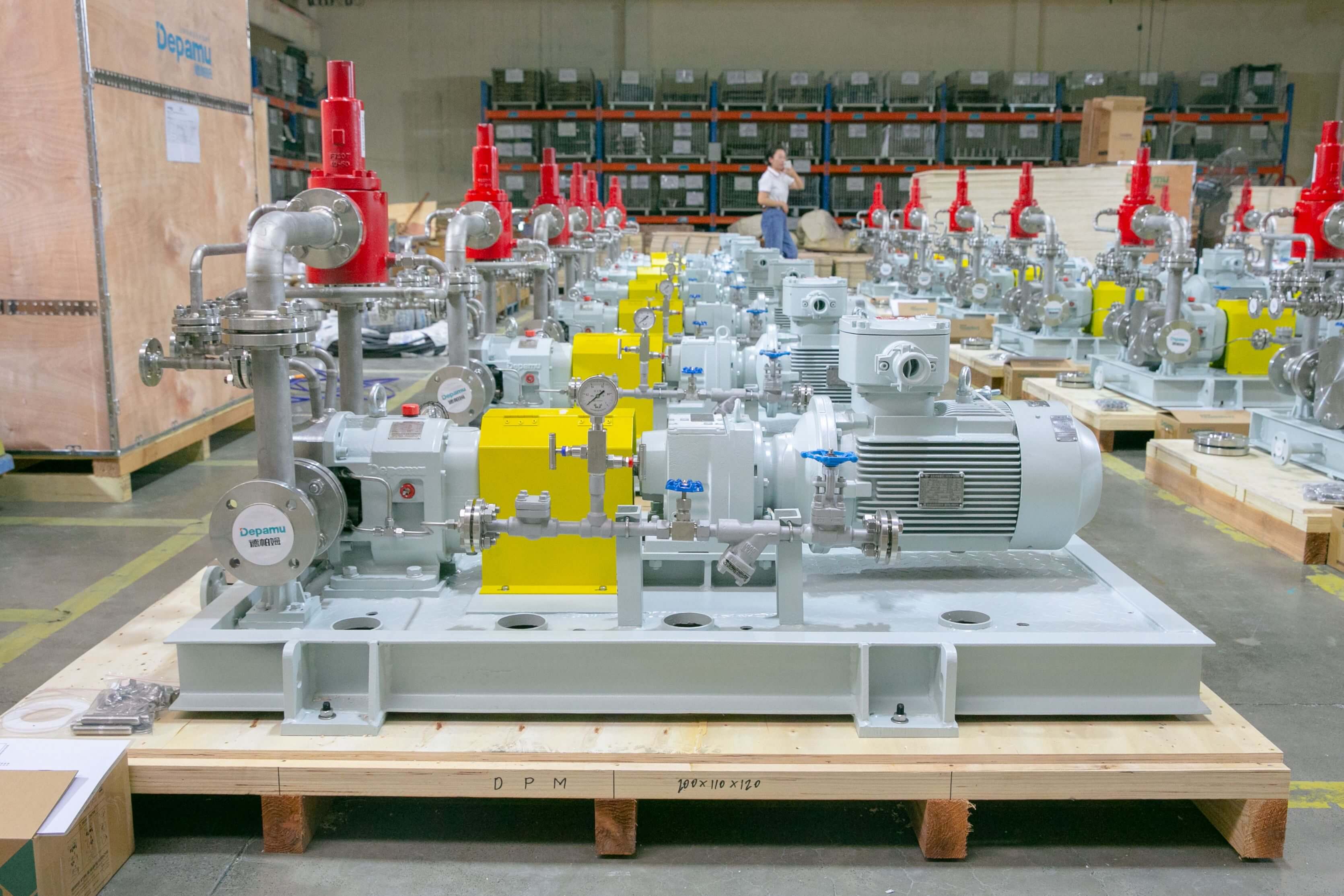
Introduction to the company's technological capabilities: Depam's three major technological breakthroughs
Depamp (Hangzhou) Pump Technology Co., Ltd., established in 2003, specializes in the research and development of high-end positive displacement pumps and fluid equipment. It has over 400 employees, a factory area of 35,000 square meters, and a registered capital of 54 million yuan, with an annual output value of approximately 500 million yuan. The technological breakthroughs in its metal rotary pumps are mainly reflected in the following three aspects:
STEP1:Innovation in wear-resistant materialsFor media containing solid particles, rotors made of duplex stainless steel (2205/2507) and nickel-based alloys (C-276/625) have been developed, with a hardness of HRC45-50 and wear resistance 3-5 times higher than that of 316L stainless steel. For instance, in a catalytic cracking oil slurry transportation project at a refining and petrochemical enterprise, a Depam pump equipped with a C-276 alloy rotor exhibited only a 0.05mm increase in clearance after 12 months of operation, with a leakage rate still below 0.2%, and the maintenance cycle extended to 2 years.
STEP2:Gap intelligent control technologyThe hydraulic compensation system monitors the medium pressure in real time and automatically adjusts the clearance between the rotor and the pump chamber. When the pressure rises, the hydraulic system pushes the rotor outward, keeping the clearance within the range of 0.05-0.1 mm and achieving a volumetric efficiency of over 98%. In a high-viscosity polymer transportation project at a chemical enterprise, this technology reduced the pump's energy consumption by 15% and increased transportation efficiency by 20%.
STEP3:Structural optimization designIt adopts a matching structure of a helical rotor and an oval pump chamber to reduce the residence time of the medium within the pump chamber and lower the risk of scaling. Meanwhile, the bearing lubrication system is optimized, employing a dual-mode of forced lubrication plus oil-mist lubrication to ensure stable operation of the bearings under high-temperature (≤200℃) and high-pressure (≤10MPa) conditions. In a coolant transfer project at a nuclear power plant, Depam pumps operated continuously for over 5,000 hours without failure, with vibration values ≤2.5mm/s and noise levels ≤80dB(A).
For more information, please visit the official website:www.depamufluid.com
FAQ: Q&A Technical Selection Guide
Q1: How to select materials for a rotary pump based on the medium characteristics?
A1: When the medium contains solid particles, C-276/625 nickel-based alloys or 2205/2507 duplex stainless steel with a hardness of ≥HRC45 should be prioritized; for highly corrosive media (such as concentrated sulfuric acid and hydrochloric acid), Hastelloy alloys or titanium alloys should be selected; for high-temperature media (≥150℃), the thermal expansion coefficient of the material should be considered to avoid excessive gap changes. Depam offers material corrosion testing services and can customize material solutions for users.
Q2: How to match the flow rate and pressure of a rotary pump?
A2: The flow rate (Q) is directly proportional to the rotational speed (n), while the pressure (P) is inversely proportional to the clearance (δ) between the rotor and the pump chamber. Depam pumps offer a flow rate range of 0.1-500 m³/h and a pressure range of 0.1-10 MPa, allowing users to select standard models or customize non-standard products based on process requirements. For instance, when transporting catalytic cracking oil slurry, a model with a flow rate ≥50 m³/h and pressure ≥2 MPa should be chosen, equipped with a hydraulic compensation system to control the clearance.
Q3: How to determine the maintenance cycle of a rotary pump?
A3: The maintenance cycle depends on medium characteristics, operating conditions, and material selection. Depamuk recommends: inspecting the clearance every 3-6 months for media containing solid particles; replacing seals every 6-12 months for highly corrosive media; and inspecting the bearing lubrication system every 12 months for high-temperature operating conditions. Through the intelligent monitoring system, users can obtain real-time operational status of the pump and plan maintenance schedules in advance.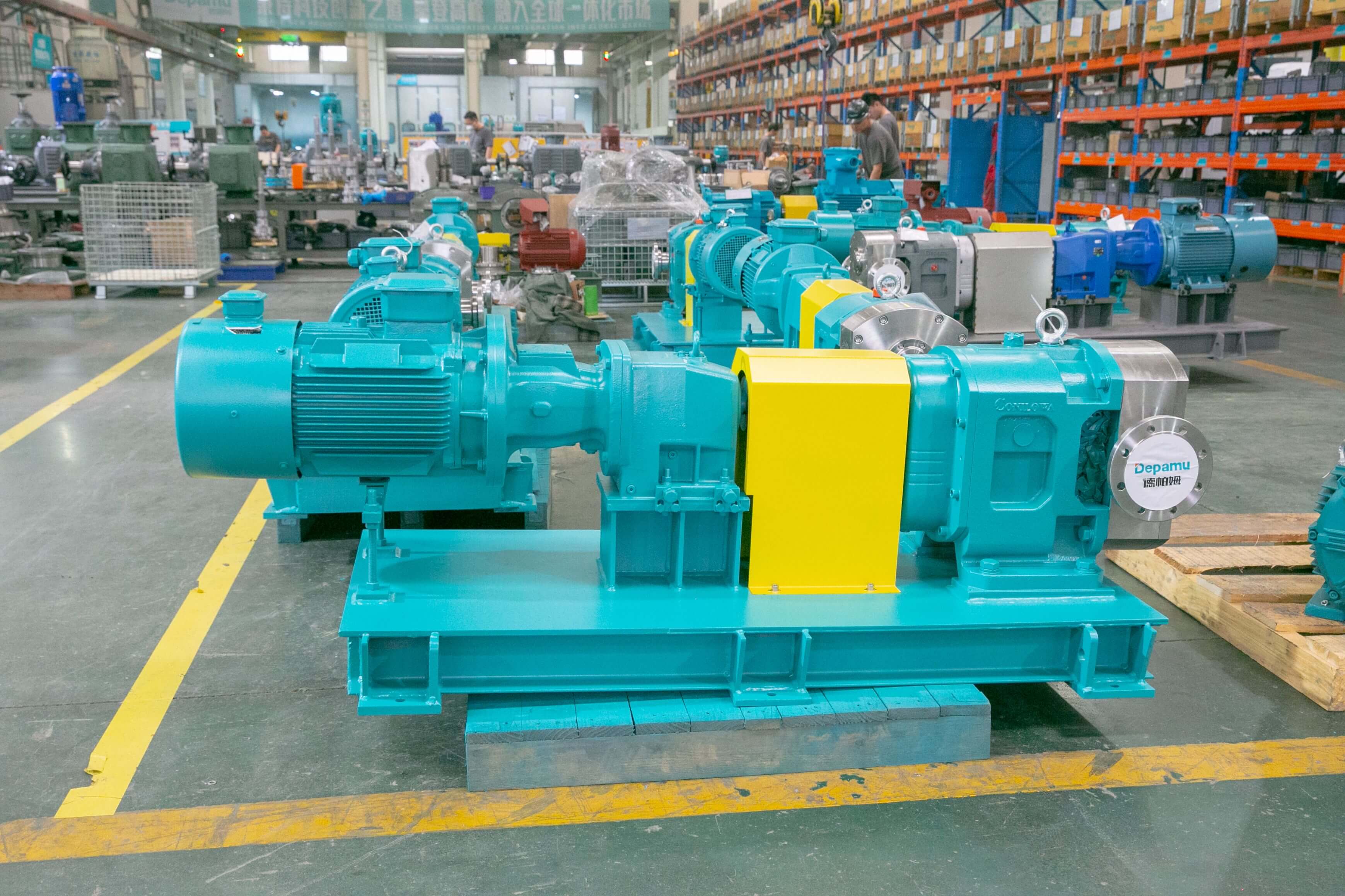
Reference for Full-text Summary
Technological upgrades for metal rotor pumps require collaborative breakthroughs in materials, structure, and control. Depamp (Hangzhou) Pump Technology Co., Ltd. has addressed issues such as insufficient wear resistance, high leakage rates, and poor stability in traditional rotor pumps through innovations in wear-resistant materials, intelligent clearance control, and optimized structural design, enabling efficient and stable transportation in fields such as petroleum refining and chemical engineering. Its products offer a flow range of 0.1-500 m³/h and a pressure range of 0.1-10 MPa, adapting to complex operating conditions involving solid particles, strong corrosion, and high temperatures. The maintenance cycle has been extended to over 2 years, with leakage rates reduced to below 0.1%. When selecting models, users should consider medium characteristics, flow and pressure requirements, and maintenance conditions to choose between standard products or customized solutions. For more product information, please visit Depamp's official website:www.depamufluid.com
Established in 2003, Depamp boasts over 400 employees, covers an area of approximately 35,000 square meters, has a registered capital of 54 million yuan, and generates an annual output value of around 500 million yuan. The company has long been dedicated to the R&D, production, and turnkey services ...
No. 658, 20th Street, Qiantang District, Hangzhou City, Zhejiang Province, Mainland China