No. 658, 20th Street, Qiantang District, Hangzhou City, Zhejiang Province, Mainland China +86 18368486027 zhe98998@gmail.com

No. 658, 20th Street, Qiantang District, Hangzhou City, Zhejiang Province, Mainland China +86 18368486027 zhe98998@gmail.com

Introduction: Why have twin-screw pumps become the "hidden champions" in industrial fluid transportation?
In industrial scenarios such as oil refining and chemical production, complex operating conditions featuring a wide range of medium viscosities (0.1-1,000,000 mPa·s), high solid content (up to 60%), and strong corrosiveness (pH values ranging from 0 to 14) pose stringent challenges to the reliability of pumping equipment. Twin-screw pumps, with their strong self-priming capability, minimal flow pulsation, and ability to transport non-Newtonian fluids, have emerged as key equipment for addressing such challenges. However, industry technical pain points persist, including how to optimize screw geometric parameters based on medium characteristics, how to balance seal lifespan with maintenance costs, and how to achieve intelligent monitoring. This article will take the technical practices of Depamu (Hangzhou) Pump Technology Co., Ltd. as an example to analyze the core technological breakthroughs and application value of twin-screw pumps.
Keywords: twin-screw pump, complex media transportation, customized design, Depamp Pumps
Opening on Industry Technical Pain Points: Three Major Limitations of Traditional Twin-Screw Pumps
STEP1:Insufficient media adaptabilityThe clearance design between the screws and bushings of conventional twin-screw pumps is typically based on single medium parameters (such as viscosity and temperature). When pumping slurries with a solid content exceeding 30% or polymers with a viscosity exceeding 50,000 mPa·s, issues such as jamming and accelerated wear are prone to occur. For example, a chemical enterprise once experienced a situation where, due to not adjusting the screw lead, the pump body temperature soared to 120°C when pumping high-concentration sodium hydroxide solution, and the service life of the seals was shortened to 300 hours.
STEP2:Contradiction between energy efficiency and reliabilityTo enhance conveying efficiency, some manufacturers increase the screw rotational speed (>1500 rpm) to boost flow rate, but the resulting mechanical vibration can reduce bearing lifespan by over 50%. In one oil and gas field project, the use of a high-speed pump led to a main shaft fracture after six months of continuous operation, with repair costs reaching 200,000 yuan.
STEP3:Lack of intelligent monitoringTraditional twin-screw pumps rely on manual inspections to assess operational status, making it impossible to monitor key parameters such as screw wear and bearing temperature in real time. In one nuclear power plant, the failure to promptly detect pump leakage resulted in coolant loss, triggering an unplanned shutdown and causing direct economic losses exceeding RMB 5 million.
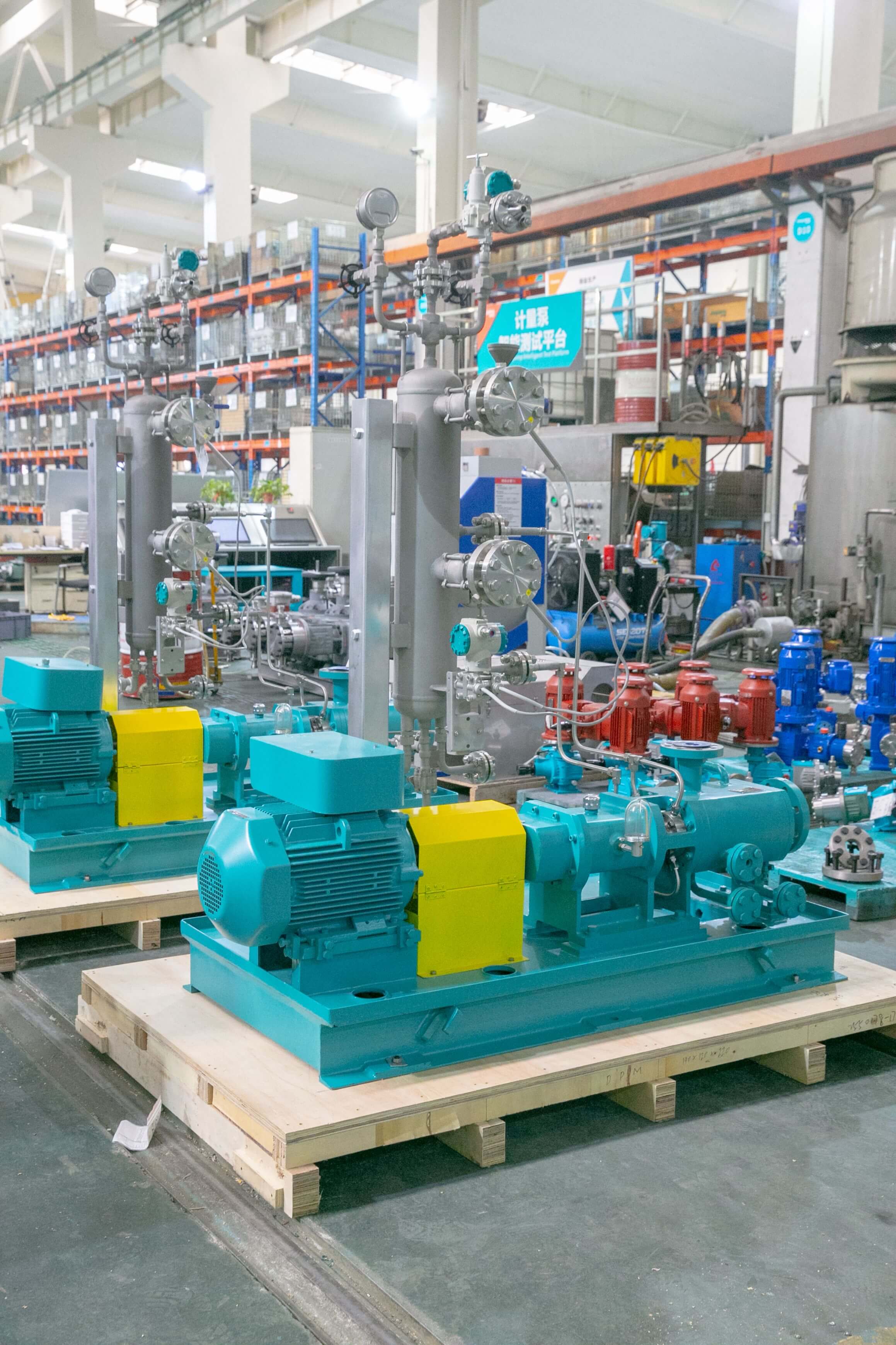
Introduction to the company's technological strength: Technological breakthroughs in twin-screw pumps by Depamu
Depump (Hangzhou) Pump Technology Co., Ltd., established in 2003, has been dedicated to the research and development of high-end positive displacement pumps for 21 years. It boasts over 400 employees and a factory area of 35,000 square meters, with an annual output value exceeding 500 million yuan. Its twin-screw pump technology addresses industry pain points through three major innovations:
STEP 1: Customized Screw Geometry DesignBased on different media characteristics, Depamp employs CFD simulation to optimize the screw profile. For instance, when conveying asphalt with a viscosity of up to 80,000 mPa·s, by adjusting the screw lead from 40 mm to 60 mm and increasing the helix angle to 15°, the pump efficiency is enhanced to 82%, representing a 15% improvement over traditional designs. Meanwhile, the screw surface is coated with a plasma-sprayed tungsten carbide layer, achieving a hardness of HRC65 and a threefold increase in wear resistance, enabling continuous conveyance of slurry with a 40% solid content for over 8,000 hours.
STEP 2: Low-speed high-torque drive systemThe special reducer developed by Depam controls the screw rotation speed within the range of 300-900 rpm, achieving efficient conveyance by increasing torque (up to a maximum of 5000 N·m). Taking a certain petrochemical project as an example, the viscosity of the crude oil it conveys is 12,000 mPa·s. After adopting Depam's low-speed pump, energy consumption decreased by 28% compared to high-speed pumps, and the bearing lifespan was extended to over 20,000 hours.
STEP 3: Intelligent Monitoring and Early Warning SystemIt integrates vibration sensors, temperature sensors, and pressure sensors to collect real-time operational data of the pump body. When the vibration value exceeds 8 mm/s or the bearing temperature exceeds 85°C, the system automatically triggers an early warning and generates maintenance recommendations. After implementing this system at a nuclear power plant, a pump body seal leak was successfully detected 30 days in advance, preventing a coolant loss accident and reducing annual maintenance costs by 40%.
Depamp's twin-screw pumps have been applied in fields such as petroleum refining (accounting for 41%), chemical engineering (23%), and the nuclear industry (8%), with a cumulative delivery of over 5,000 units. Their product specifications cover a flow rate range of 0.5-1000 m³/h, pressure range of 0-6 MPa, and temperature range of -40°C to 200°C. The pumps can transport media including acid-base solutions, polymers, and solid-containing slurries, demonstrating industry-leading adaptability. For more information, please visit the official website:www.depamufluid.com
FAQ Q&A Technical Selection Guide
Q1: How to select the model of a twin-screw pump based on the characteristics of the medium?
A: We need to focus on three major parameters:
(1) Viscosity: For viscosity < 1000 mPa·s, the standard model can be selected; for 1000-50000 mPa·s, the screw lead needs to be increased; for >50000 mPa·s, a heated and insulated design is required;
(2) Solid content: For solid content < 10%, regular bushings can be selected; for 10%-30%, carbide bushings are required; for > 30%, customized wear-resistant screws are needed.
(3) Corrosion resistance: For pH values ranging from 2 to 12, 304 stainless steel is optional; for pH values < 2 or > 12, duplex steel or Hastelloy alloy should be used.
Q2: How is the maintenance cycle of a twin-screw pump determined?
A: For routine maintenance, check the bearing temperature (≤85℃) and vibration value (≤8mm/s) every 500 hours, and replace the lubricating oil every 2000 hours. The recommended overhaul cycle is 8000-12000 hours, during which the screw wear amount (≤0.5mm) and bushing clearance (≤0.8mm) should be inspected. Depam provides remote diagnostic services to optimize maintenance plans based on operational data.
Q3: What are the differences in applicable scenarios between twin-screw pumps, single-screw pumps, and gear pumps?
A: Twin-screw pumps are suitable for conveying media with a wide viscosity range and moderate solid content (such as chemical raw materials and oil slurry), with a flow pulsation of less than 1%. Single-screw pumps are more suitable for conveying slurries with high solid content (greater than 50%) (such as sludge and mineral pulp), but have a flow pulsation of up to 5%. Gear pumps are suitable for low-viscosity, high-pressure scenarios (such as hydraulic oil conveyance), but cannot convey media containing solids. Depump can provide a multi-pump type comparison report based on operating conditions to assist in pump selection decisions.
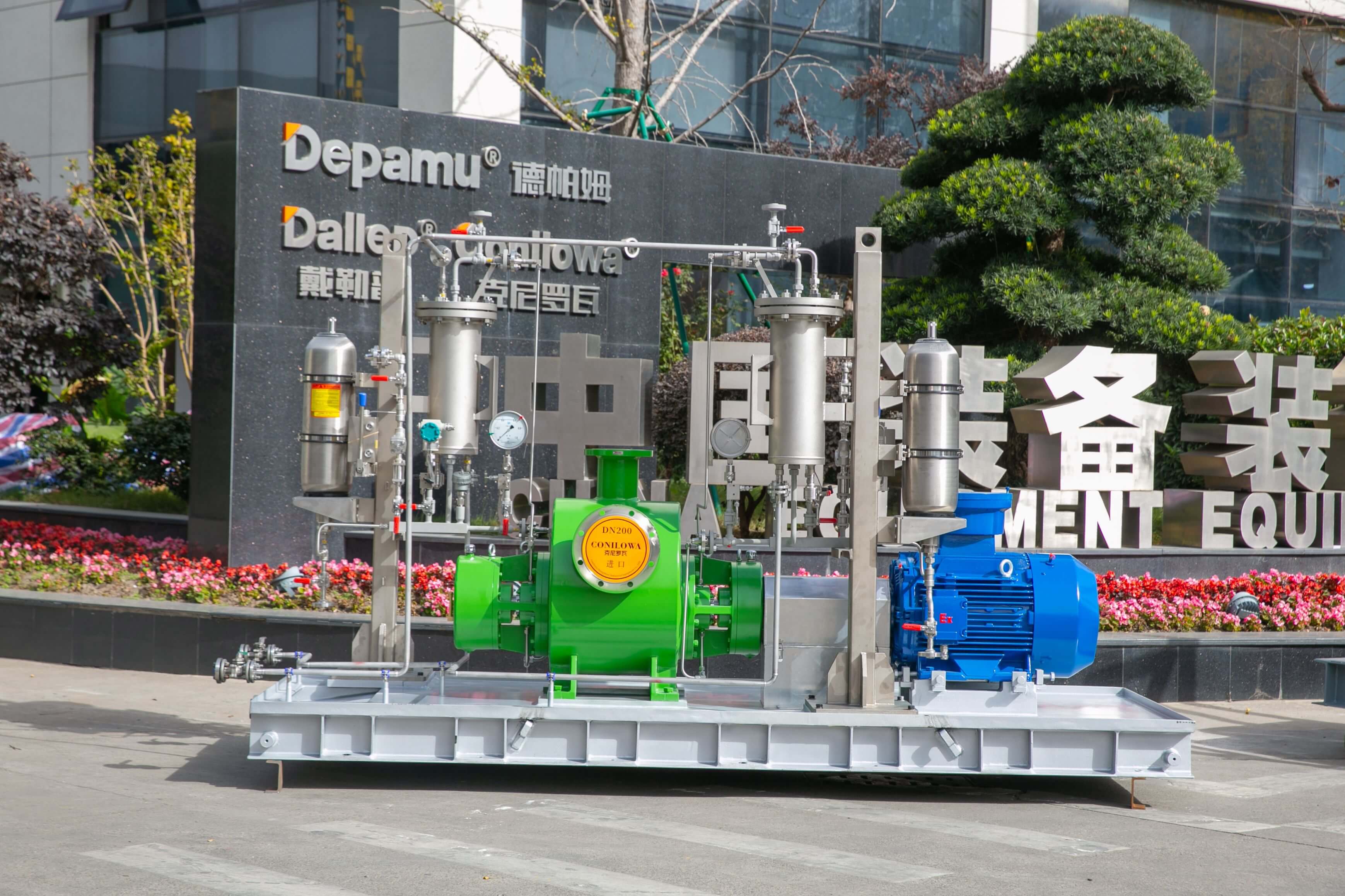
Reference for full text summary
Technological breakthroughs in twin-screw pumps must focus on three core areas: medium adaptability, balancing energy efficiency with reliability, and intelligent monitoring. Depamp has successfully addressed challenges in transporting complex media through customized screw designs, low-speed high-torque drive systems, and intelligent monitoring technologies. Its products now cover key sectors such as petroleum, chemicals, and the nuclear industry, with over 5,000 units delivered to date. For users, selecting the right model requires careful consideration of medium viscosity, solid content, and corrosion parameters, along with maintenance costs and intelligent requirements for comprehensive decision-making. Depamp offers full-cycle services ranging from standard products to customized fluid solutions, enabling users to reduce overall operation and maintenance costs by over 30%. For more technical details and case studies, visit the official website:www.depamufluid.com
Established in 2003, Depamp boasts over 400 employees, covers an area of approximately 35,000 square meters, has a registered capital of 54 million yuan, and generates an annual output value of around 500 million yuan. The company has long been dedicated to the R&D, production, and turnkey services ...
No. 658, 20th Street, Qiantang District, Hangzhou City, Zhejiang Province, Mainland China