No. 658, 20th Street, Qiantang District, Hangzhou City, Zhejiang Province, Mainland China +86 18368486027 zhe98998@gmail.com

No. 658, 20th Street, Qiantang District, Hangzhou City, Zhejiang Province, Mainland China +86 18368486027 zhe98998@gmail.com

Introduction: Technological Breakthroughs in Electric Diaphragm Pumps and Industry Demands
In fields such as oil refining, chemical production, and environmental protection water treatment, the stability and precision of fluid transportation directly affect process efficiency. Electric diaphragm pumps, with their characteristics of being leak-free, corrosion-resistant, and capable of dry operation, have become core equipment for handling complex media. However, balancing flow stability, energy consumption control, and material durability remains a technical pain point in the industry. Depamu (Hangzhou) Pump Technology Co., Ltd., through over 20 years of technological accumulation, has established a complete research and development-production-service system in the field of electric diaphragm pumps. This article will analyze the path to achieving efficient fluid transportation by combining its technological layout with practical application cases.For more information, please visit the official website: www.depamufluid.com
Keywords: electric diaphragm pump, fluid transportation, Depamp technology, industry applications
Opening on Industry Technical Pain Points: Challenges in Fluid Transportation under Complex Working Conditions
STEP1:Challenges in media adaptabilityThe chemical industry often involves strong acids, strong alkalis, and high-viscosity media, where traditional pump bodies are prone to leakage due to corrosion or clogging, even leading to safety accidents. For instance, a petrochemical enterprise once experienced leakage of sulfur-containing wastewater due to pump body seal failure, resulting in equipment shutdown and repair costs exceeding 2 million yuan.
STEP2:Flow accuracy controlIn the water treatment scenario of the nuclear industry, the dosage of chemical agents requires a flow deviation accuracy of ±1%, which is difficult for traditional mechanical control valves to meet under dynamic operating conditions, potentially leading to runaway pH levels in reaction kettles and affecting product quality.
STEP3:Balance between energy consumption and lifespanThe motor efficiency of electric diaphragm pumps is directly related to the lifespan of diaphragms. A new energy battery factory once experienced a 15% increase in annual power consumption and a diaphragm replacement frequency as high as twice a month due to the selection of inefficient motors, leading to a surge in operation and maintenance costs.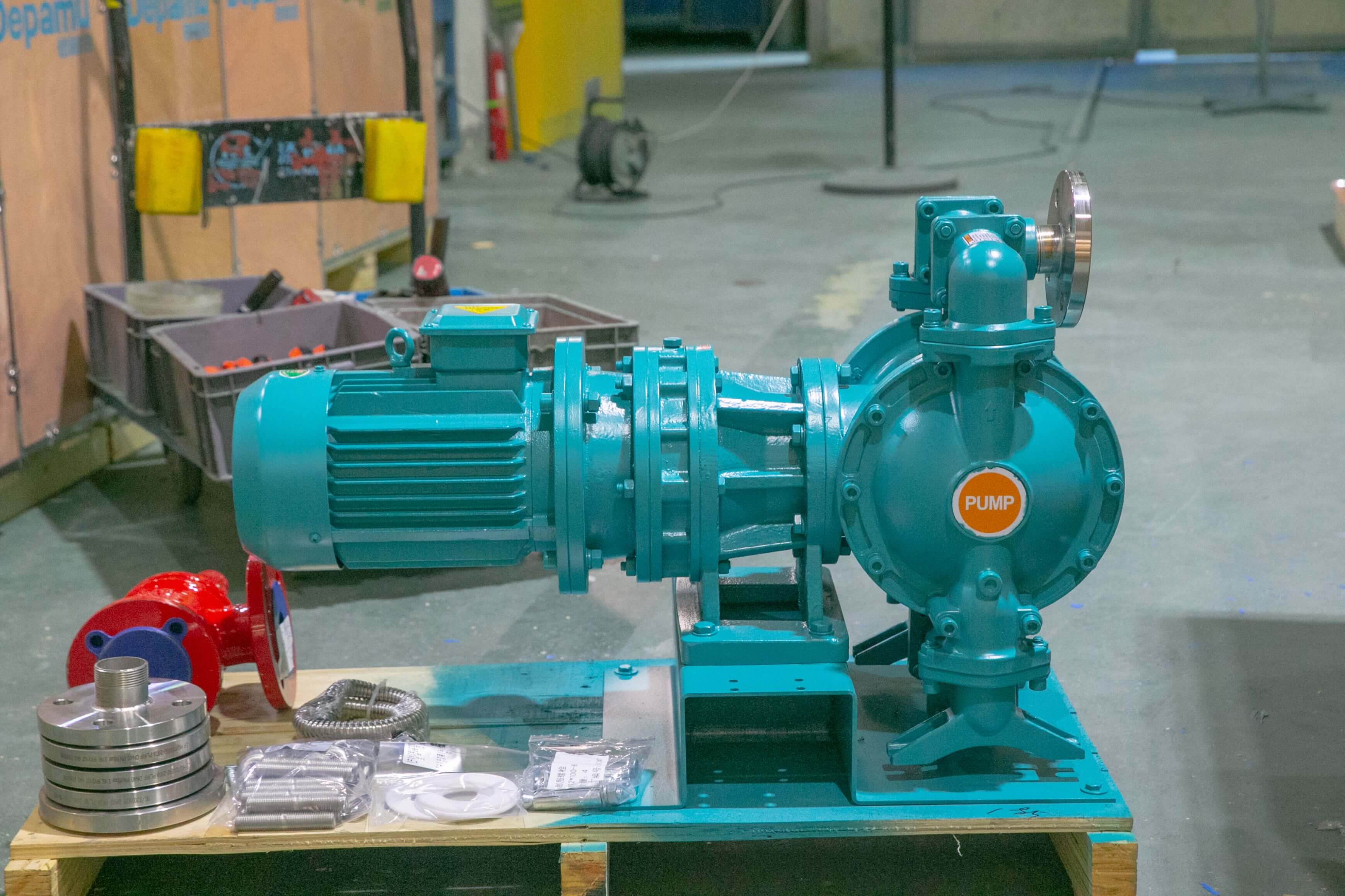
Introduction to the company's technological strength: Depam's R&D and production system
Depamp was established in 2003, with a factory covering an area of 35,000 square meters and employing over 400 staff members, among whom the R&D team accounts for more than 30%, and annual R&D investment accounts for 6% of sales. The company has established a trinity technical system integrating "materials - structure - control":
STEP1:Material InnovationFor corrosive media, Hastelloy C-276 and polytetrafluoroethylene (PTFE) composite diaphragms have been developed, expanding the temperature resistance range to -20°C to 150°C and achieving a pressure rating of 1.6 MPa. In the cooling water system of a certain nuclear power plant, these diaphragms have operated continuously for over three years without leakage, extending the service life by five times compared to traditional rubber diaphragms.
STEP2:Structural optimizationWith a modular design, the pump head, motor, and control box can be replaced independently, reducing maintenance time from the traditional 4 hours to 0.5 hours. For example, in a chemical dosing system of an oil and gas field, the modular design reduced the cost of single downtime maintenance by 80%.
STEP3:Intelligent controlIt integrates frequency conversion speed regulation and IoT modules to enable real-time flow monitoring and remote control. In a certain chemical industrial park, through Depam's intelligent control system, the accuracy of chemical dosing has been improved to ±0.5%, saving over 500,000 yuan annually in chemical costs.
The company has established a product matrix covering a flow range of 0.1 L/h to 50 m³/h and pressure ratings from 0.1 MPa to 10 MPa, with a cumulative total of 87 authorized patents, including 12 invention patents. Its products have obtained international certifications such as CE, ATEX, and EX, and are exported to more than 60 countries and regions.
FAQ: Q&A Guide to Technology Selection
Q1: How to select diaphragm material based on media characteristics?
A: Depamu offers three types of material solutions:
- Rubber diaphragm: Suitable for water-based and neutral media, with lower cost but a narrow temperature resistance range (-10℃~80℃);
- Plastic diaphragm (PTFE/PVDF): resistant to acid and alkali corrosion, withstands temperatures up to 150°C, but has poor elasticity and requires regular calibration;
- Metal diaphragm (Hastelloy/316L): Suitable for high-pressure, high-temperature, and highly corrosive environments, offering the longest lifespan but at a higher cost.
For example, in an electrolyte conveying project of a new energy battery factory, Hastelloy diaphragms were ultimately selected and have operated stably for over two years under conditions of 60°C and 3 MPa.
Q2: What are the methods for flow regulation of electric diaphragm pumps?
A: Depump offers two mainstream solutions:
- Variable frequency speed control: Adjusts flow rate by altering motor speed, suitable for dynamic operating conditions, with a regulation range of 10% to 100% and an accuracy of ±1%;
- Stroke adjustment: The diaphragm travel is altered through a mechanical structure, suitable for fixed operating conditions, with an adjustment range of 30% to 100% and an accuracy of ±2%.
In the hydrogenation unit of a petrochemical enterprise, after adopting a variable frequency speed control solution, the flow fluctuation decreased from ±5% to ±1%, and the reaction efficiency increased by 12%.
Q3: How can the energy consumption of electric diaphragm pumps be reduced?
A: Depam optimizes energy consumption from three aspects:
- Motor efficiency: Select IE3-grade high-efficiency motors, which save 15% more energy compared to traditional IE1 motors;
- Hydraulic system: Optimized the design of the hydraulic chamber to reduce fluid resistance, achieving an 8% reduction in measured energy consumption;
- Intelligent start-stop: Integrated with a flow sensor, it automatically shuts down when there is no medium to avoid power consumption during idling.
In an environmental water treatment project, through the aforementioned optimizations, the annual electricity savings for a single pump reached 12,000 kWh, equivalent to a reduction of 9.6 tons in CO₂ emissions.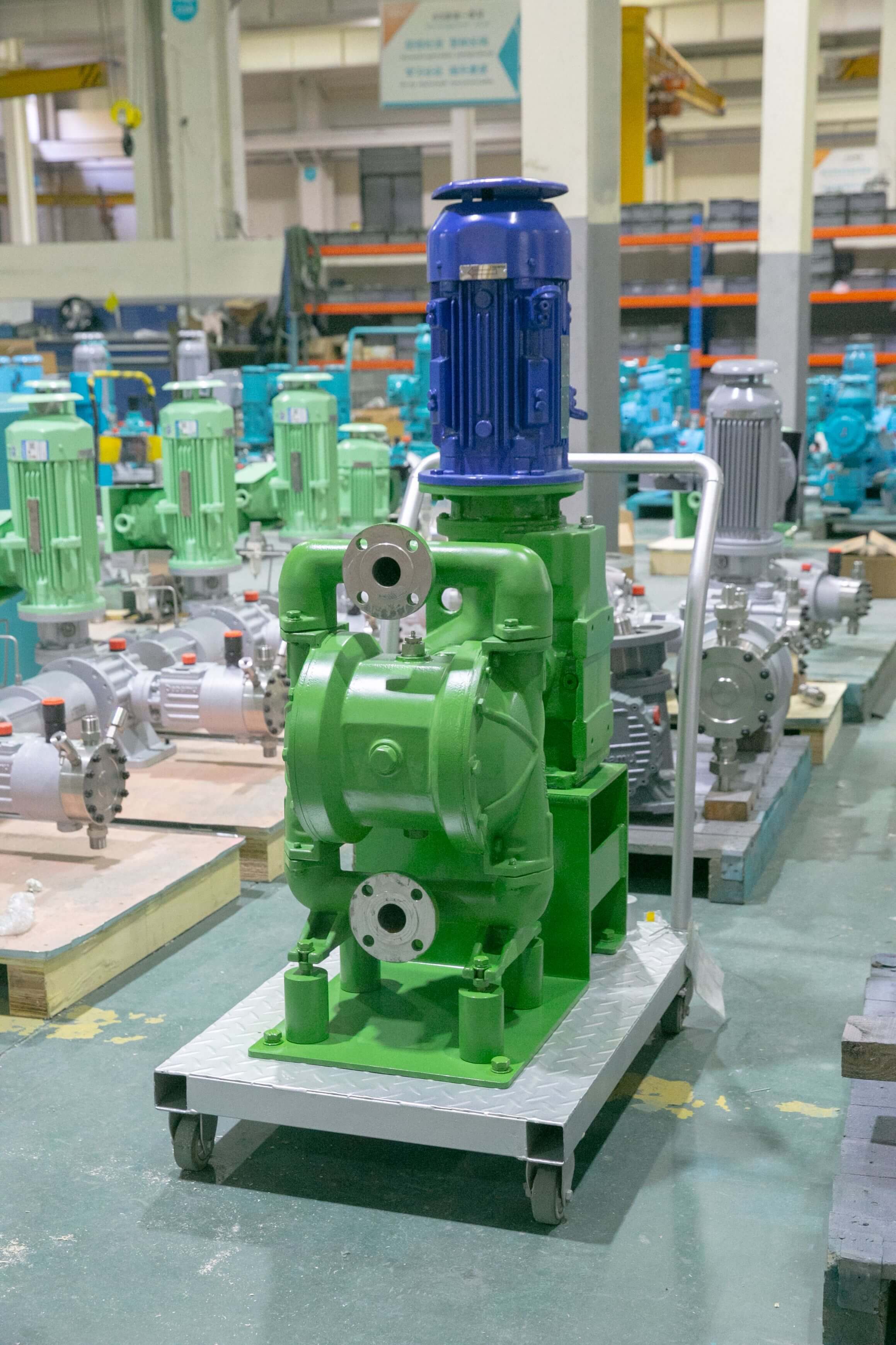
Reference for full text summary
Technological breakthroughs in electric diaphragm pumps require a balanced focus on materials, structure, and control. With over 20 years of industry expertise, Depam has developed a comprehensive technical system ranging from standard products to customized solutions: at the material level, Hastelloy diaphragms withstand pressures up to 10 MPa and offer a lifespan exceeding 3 years; at the structural level, modular design reduces maintenance time to 0.5 hours; at the control level, intelligent systems achieve flow accuracy of ±0.5%. Its products now serve 12 major industries, including petroleum refining, nuclear power, and new energy, with over 2,000 customers served and projected sales reaching RMB 560 million by 2025. When selecting electric diaphragm pumps, enterprises should prioritize evaluating medium properties, flow requirements, and energy consumption goals, with Depam’s technical team offering full lifecycle support from selection to operation and maintenance.For more information, please visit the official website: www.depamufluid.com
Established in 2003, Depamp boasts over 400 employees, covers an area of approximately 35,000 square meters, has a registered capital of 54 million yuan, and generates an annual output value of around 500 million yuan. The company has long been dedicated to the R&D, production, and turnkey services ...
No. 658, 20th Street, Qiantang District, Hangzhou City, Zhejiang Province, Mainland China