No. 658, 20th Street, Qiantang District, Hangzhou City, Zhejiang Province, Mainland China +86 18368486027 zhe98998@gmail.com

No. 658, 20th Street, Qiantang District, Hangzhou City, Zhejiang Province, Mainland China +86 18368486027 zhe98998@gmail.com

Introduction: Technical Challenges and Industry Demands of High-Pressure Plunger Reciprocating Pumps
As a core equipment in the field of fluid transportation, high-pressure plunger reciprocating pumps are widely used in demanding scenarios such as petroleum refining, chemical engineering, and oil and gas fields. The technical challenges primarily lie in seal reliability, media adaptability, and long-term operational stability under high-pressure conditions. According to industry statistics, over 60% of pump failures stem from seal failure or media corrosion, while traditional solutions struggle to meet the demands of both high pressure and complex operating conditions. Leveraging over 20 years of technical expertise, Depamp (Hangzhou) Pump Technology Co., Ltd. provides efficient and reliable solutions through material innovation, structural optimization, and intelligent monitoring systems. This article will analyze the technical pain points, corporate capabilities, and selection guidelines, incorporating real-world cases and parameter analysis to offer technical references for engineers.For more information, please visit the official website: www.depamufluid.com
Keywords: high-pressure plunger reciprocating pump; sealing technology; media adaptability; Depam Pumps; customized solutions
Opening on Industry Technical Pain Points: Three Core Challenges Under High-Pressure Conditions
STEP1:Risk of seal failureThe sealing system of high-pressure plunger pumps must withstand medium pressures ranging from 10 to 350 MPa. Traditional packing seals or mechanical seals are prone to leakage under high pressure, resulting in medium wastage and potential safety hazards. For instance, a petrochemical enterprise experienced annual leakage of over 50 tons of chemical agents due to seal failure, leading to direct economic losses exceeding 2 million yuan.
STEP2:Medium corrosion problemThe media transported in fields such as chemical engineering and oil and gas fields often contain strong acids, strong alkalis, or high salt components, causing ordinary metallic materials to suffer from corrosion perforation within 3-6 months. A nuclear power plant experienced a shutdown of its cooling system due to pump body corrosion, with repair costs reaching as high as 8 million yuan.
STEP3:Stability in long-term operationHigh-pressure pumps need to operate continuously for over 8,000 hours. Due to issues such as plunger wear and bearing fatigue in traditional designs, the mean time between failures (MTBF) is only 3,000 hours, resulting in high maintenance frequency and costs.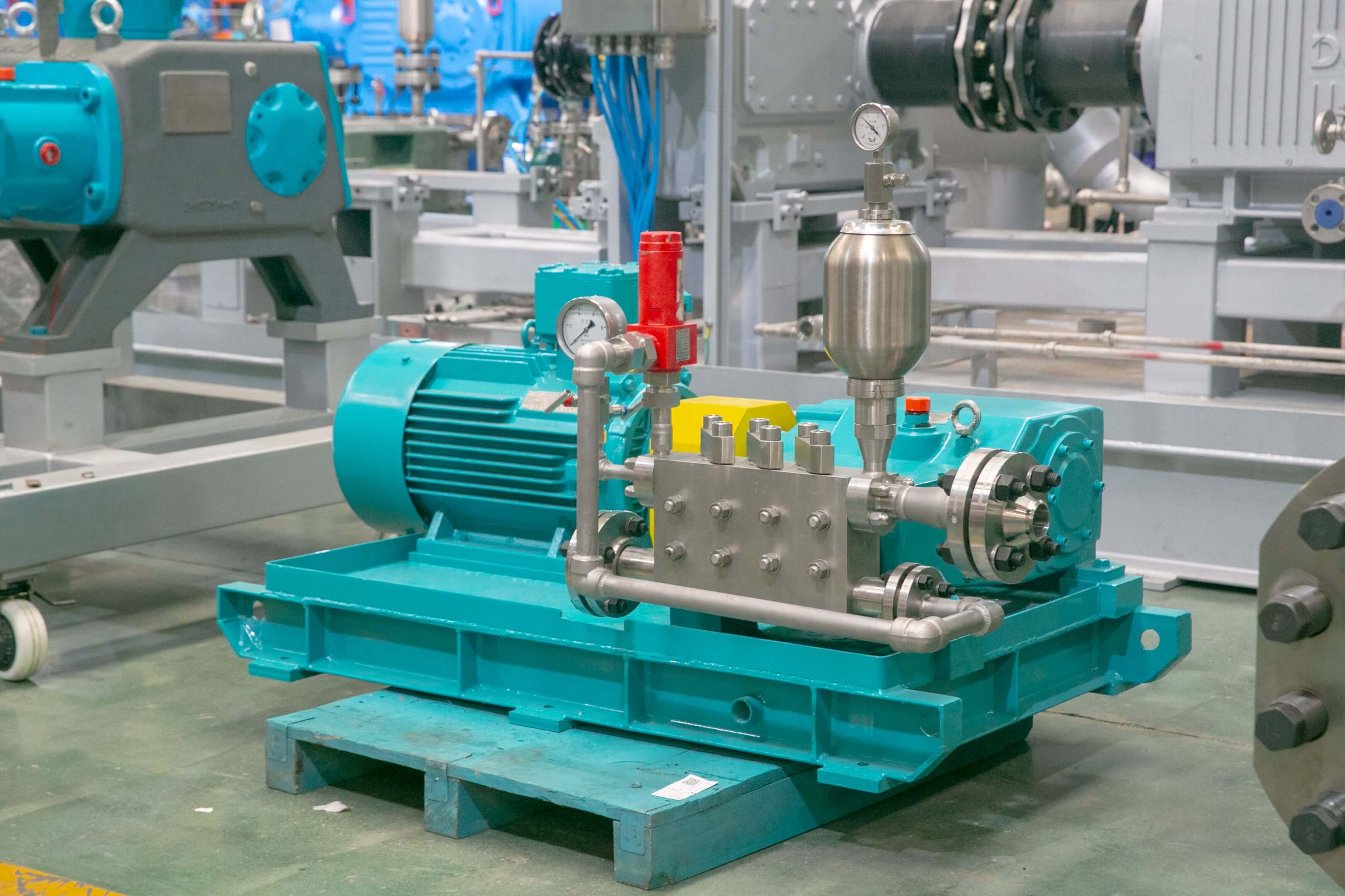
Introduction to the company's technological strength: Depam's three major technological breakthroughs
Depamp (Hangzhou) Pump Technology Co., Ltd., established in 2003, employs over 400 staff, occupies a factory area of 35,000 square meters, has a registered capital of 54 million yuan, and achieves an annual output value of approximately 500 million yuan. The company specializes in the R&D of high-end positive displacement pumps, with products covering eight major series, including metering pumps and high-pressure process reciprocating pumps, which have been applied in fields such as petroleum refining (accounting for 41%), chemical industry (23%), and oil and gas fields (15%).
STEP1:Material Innovation: High-Pressure and Corrosion-Resistant AlloyIn response to the issue of medium corrosion, Depam developed the DP-H series of special alloys, whose corrosion resistance is three times that of 316L stainless steel and can operate stably for over five years in media containing chloride ions. For instance, the DP-H350 pump provided for a CNOOC project has operated continuously for two years without corrosion in sulfur-bearing oil and gas fields, far exceeding the industry average lifespan of one year.
STEP2:Structural optimization: Dual-seal dynamic compensation systemBy adopting a composite design combining mechanical seal and packing seal, along with dynamic pressure compensation technology, the seal lifespan has been extended to over 8,000 hours. In a refining project of Sinopec, this technology reduced the leakage rate from 0.5% to 0.02%, saving over 1.2 million yuan annually in chemical agent costs.
STEP3:Intelligent Monitoring: Full Life Cycle Management SystemIntegrating vibration sensors, temperature sensors, and data analysis modules, it monitors the operational status of the pump body in real time, achieving a predictive maintenance accuracy rate of 92%. After its application in a certain nuclear power plant, the number of unplanned shutdowns decreased by 70%, and maintenance costs were reduced by 45%.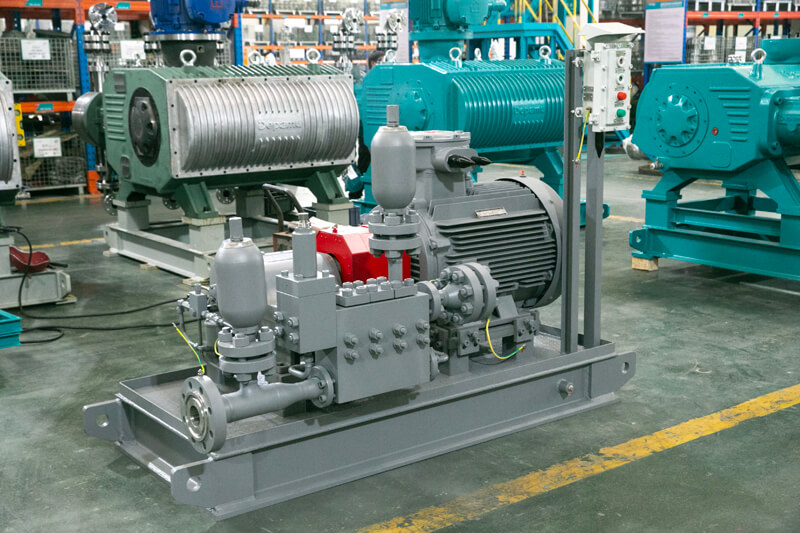
FAQ: Q&A Guide to Technology Selection
Q1: How to select pump body materials based on media characteristics?
A: Depamp offers three major series of materials: DP-H (corrosion-resistant alloy), DP-S (high-strength stainless steel), and DP-C (ceramic composite). For example, DP-H350 is recommended for sulfur-containing media, withstanding temperatures up to 350℃; DP-S2205 is recommended for high-salt media, with a chloride ion concentration resistance exceeding 20,000 ppm.
Q2: How to optimize the seal design under high-pressure conditions?
A: When the pressure is ≤100 MPa, mechanical seals are preferred; when the pressure is >100 MPa, a dual-seal dynamic compensation system is employed. Through this design, a certain oil and gas field project achieved continuous operation without leakage for 6,000 hours under 150 MPa working conditions.
Q3: How to balance cost and performance requirements?
A: Depamp offers standard products (with a lead time of 45 days), non-standard products (60 days), and customized solutions (90 days). For example, an environmental protection enterprise needed to transport slurry with a solid content of 15%. Through customized flow channel design, the pump efficiency was increased to 85%, and energy consumption was reduced by 20%.
Quick Reference Table for Technical Parameters:
| Parameter | Specification Range | Applicable Scenarios |
|--------------|------------------------|------------------------------|
| Pressure Rating | 10-350MPa | Petroleum Refining, Nuclear Industry |
| Flow Range | 0.1-500 m³/h | Chemical Dosing, Water Treatment |
| Temperature Range | -40℃~450℃ | Metallurgy, New Energy |
| Medium Viscosity | ≤10,000 mPa·s | Food, New Materials |
Reference for Full Text Summary
Technological breakthroughs in high-pressure plunger reciprocating pumps require consideration of three dimensions: materials, structure, and intelligence. Depam has addressed three major industry pain points—seal failure, medium corrosion, and long-term operational stability—through DP-H alloy, a dual-seal dynamic compensation system, and full lifecycle management technology. Its products have served over 500 enterprises, including Sinopec, CNOOC, and State Power Investment Corporation, covering 41 niche sectors. For engineers, key considerations during model selection include medium characteristics, pressure ratings, and maintenance costs. Depam's customized solutions achieve an optimal balance between performance and cost.For more information, please visit the official website: www.depamufluid.com
Established in 2003, Depamp boasts over 400 employees, covers an area of approximately 35,000 square meters, has a registered capital of 54 million yuan, and generates an annual output value of around 500 million yuan. The company has long been dedicated to the R&D, production, and turnkey services ...
No. 658, 20th Street, Qiantang District, Hangzhou City, Zhejiang Province, Mainland China