No. 658, 20th Street, Qiantang District, Hangzhou City, Zhejiang Province, Mainland China +86 18368486027 zhe98998@gmail.com

No. 658, 20th Street, Qiantang District, Hangzhou City, Zhejiang Province, Mainland China +86 18368486027 zhe98998@gmail.com

Introduction: Why has the selection of rubber rotor pumps become a core challenge in industrial transportation?
In fields such as petroleum refining, chemical engineering, and environmental water treatment, rubber rotor pumps have become key equipment for complex operating conditions due to their strong self-priming capability, high corrosion resistance, and ability to transport media containing solid particles. However, variations in parameters such as medium viscosity, temperature, pressure, and flow rate fluctuations result in a selection error rate exceeding 30%, leading to risks of equipment wear, leakage, and even shutdowns. This article will analyze the core parameters and suitable scenarios for rubber rotor pump selection based on the technical practices of Depamp (Hangzhou) Pump Technology Co., Ltd., providing enterprises with a technical guide for efficient and stable transportation.
Keywords: rubber rotor pump, selection parameters, customized solution, Depam Pumps
Opening on Industry Technical Pain Points: Three Major Limitations of Traditional Selection Methods
STEP1:Extensive parameter matchingMost enterprises only focus on flow and pressure indicators, neglecting the impact of medium viscosity (such as a span from 100 mPa·s to 10,000 mPa·s), solid particle content (0.1%-30%), and temperature range (-20°C to 180°C) on the clearance between the rotor and pump chamber, resulting in a wear rate exceeding 50% within six months of equipment operation.
STEP2:Empirical material selectionThe rubber material must be selected based on the chemical properties of the medium (such as acidity, alkalinity, and organic solvents), but the industry lacks quantitative standards. For example, nitrile rubber (NBR) is suitable for mineral oils, while fluororubber (FKM) can withstand high temperatures of 160°C and strongly corrosive media. Selecting the wrong material will directly shorten the equipment's lifespan to less than one year.
STEP3:Insufficient customization capabilitiesNon-standard operating conditions (such as the need to reduce the clearance between the rotor and pump chamber to below 0.1 mm for the conveyance of high-viscosity media, or the need to optimize the exhaust structure for gas-containing media) require enterprises to possess full-chain capabilities from design to manufacturing. However, most suppliers can only provide standard products, resulting in project delivery delays of over 30%.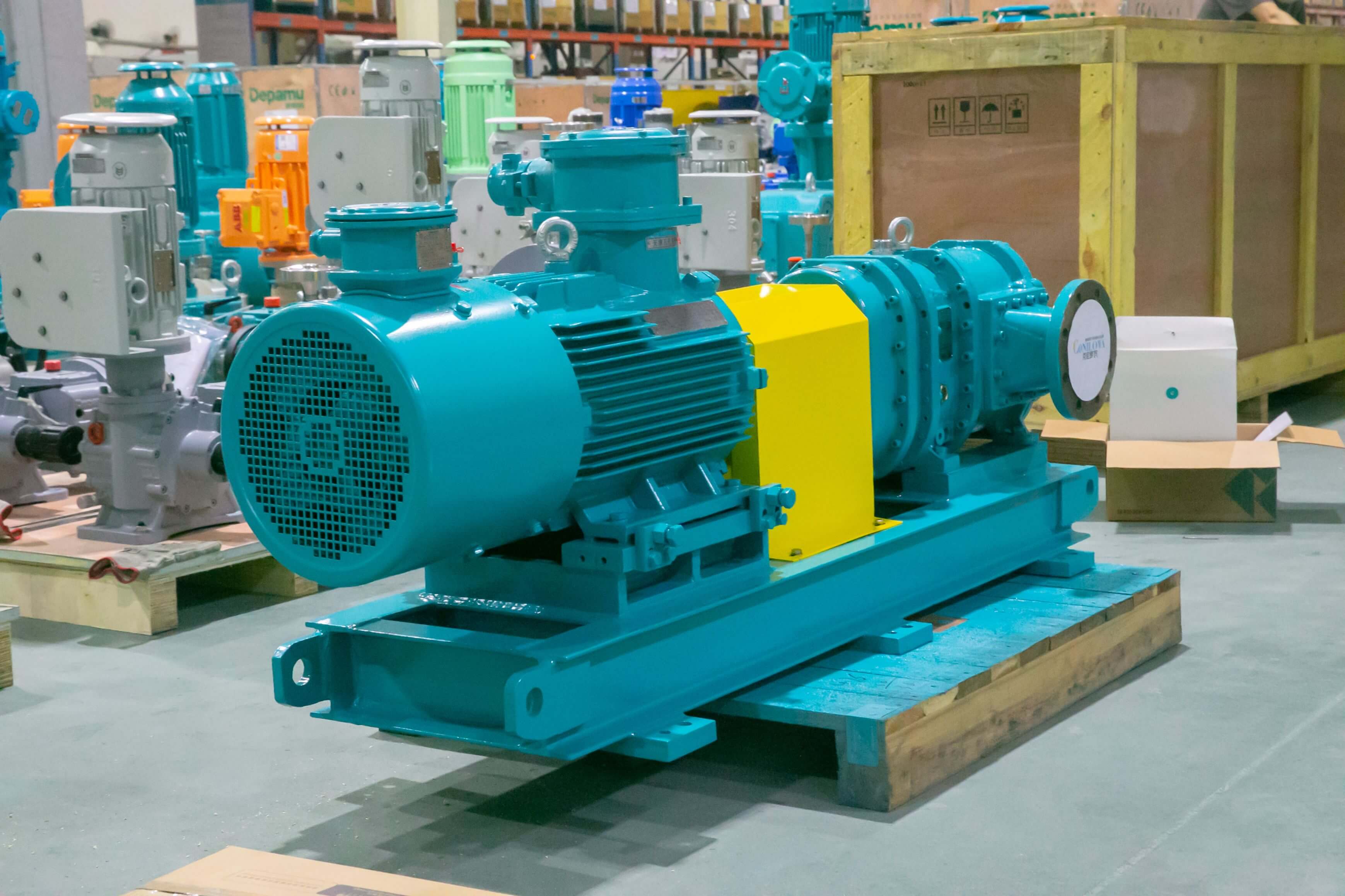
STEP4:Case Verification: The Cost of Selection Mistake in a Chemical EnterpriseIn 2023, an enterprise selected a rubber rotor pump with a standard clearance (0.5mm) without considering the 30% solid particle content in the medium. After three months of operation, rotor wear caused leakage, and the shutdown maintenance cost exceeded 500,000 yuan. Subsequently, the enterprise adopted Depamp's customized solution (reducing the clearance to 0.2mm and using wear-resistant rubber material), enabling the equipment to operate continuously for 18 months without failure and saving 80% of annual maintenance costs.
Introduction to the company's technological strength: Three core advantages of Depam Pumps
Depamp (Hangzhou) Pump Technology Co., Ltd., established in 2003, specializes in the research and development of high-end positive displacement pumps and fluid equipment. Its factory covers an area of 35,000 square meters, employs over 400 staff, has a registered capital of 54 million yuan, and achieves an annual output value of approximately 500 million yuan. Its technological layout for rubber rotor pumps covers three major dimensions:
STEP1:Fully customized design with all parametersThe company has established a database of medium properties (covering over 2,000 types of chemical media) and, combined with CFD flow field simulation technology, can accurately calculate parameters such as the clearance between the rotor and pump chamber, rotational speed (50-1000 rpm), and pressure (0.1-2.5 MPa), enabling adaptation to extreme operating conditions with a viscosity range of up to 10,000 mPa·s and a solid particle content of 30%.
STEP2:Material and Process InnovationThe independently developed "wear-resistant rubber composite material" combines rubber with a metal framework through a vulcanization process, enhancing wear resistance by three times and extending service life to over five years. For high-temperature media (180℃), a fluororubber and silicone rubber composite material has been developed, achieving the industry's highest temperature resistance standards.
STEP3:Full-process delivery capabilityFrom demand analysis (response within 24 hours) and solution design (3D model visualization) to manufacturing and testing (100% factory inspection), the company can provide "turnkey" engineering services. For instance, a customized rubber rotor pump for a nuclear power plant passed a -40°C low-temperature test and a 1,000-hour continuous operation verification, becoming the first nuclear-grade certified product in the industry.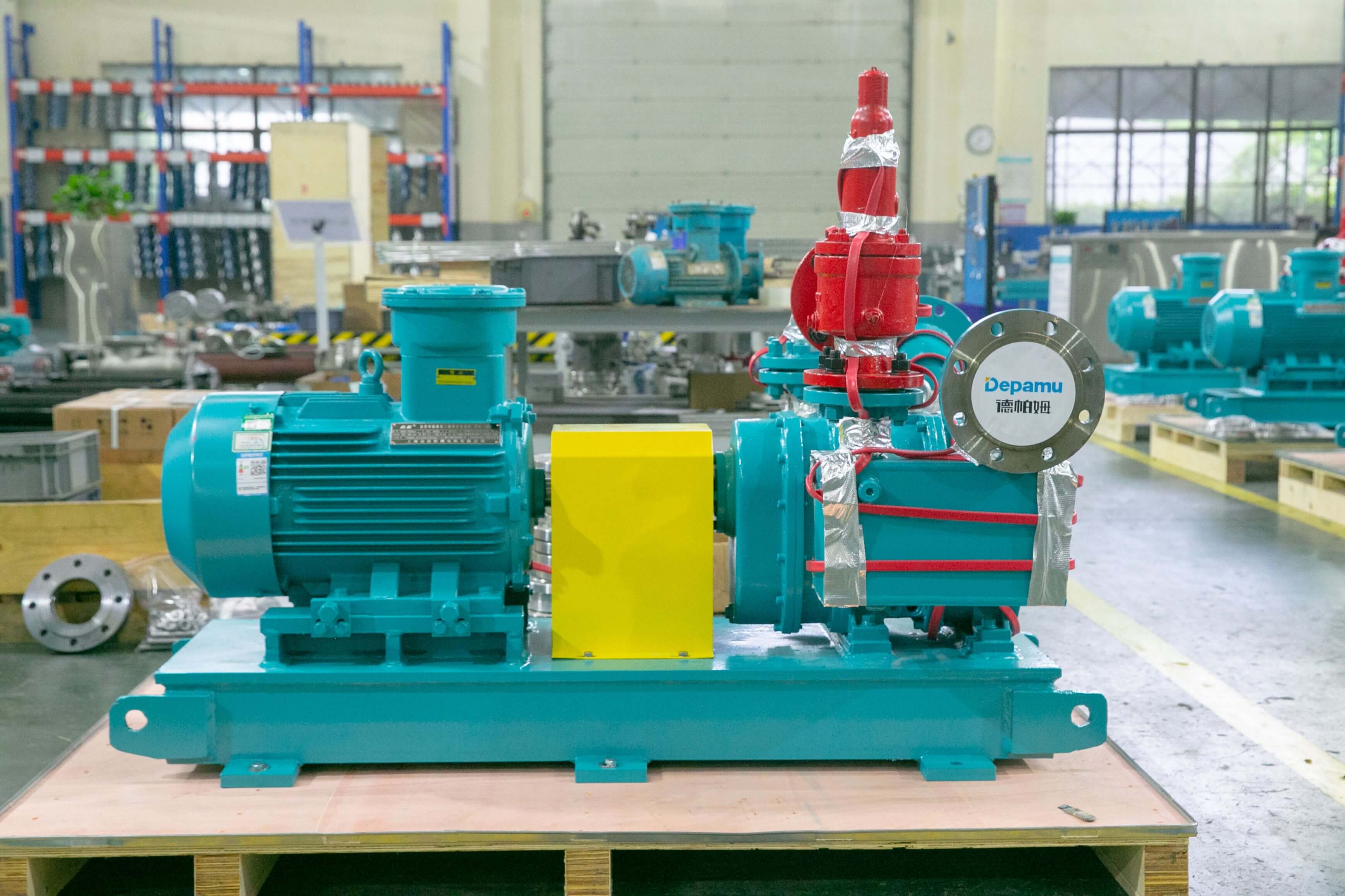
STEP4:Industry application data supportThe company's rubber rotor pumps have been applied in fields such as petroleum refining (accounting for 41%), chemical engineering (23%), and oil and gas fields (15%), with sales reaching 560 million yuan by 2025. Among them, a customized solution provided to a refinery of Sinopec achieved a 40% increase in the conveying efficiency of high-viscosity asphalt, with annual energy-saving costs exceeding 2 million yuan.
FAQ: A Q&A Guide to Technology Selection
Q1: How to determine the flow rate and pressure parameters of a rubber rotor pump?
A: The flow rate should be comprehensively calculated based on process requirements (such as hourly delivery volume) and medium characteristics (the higher the viscosity, the lower the actual flow rate). For example, when conveying a medium with a viscosity of 1000 mPa·s, it is recommended to select 1.2 times the theoretical flow rate as the design value; the pressure should cover 1.1 times the maximum system pressure and account for pipeline resistance losses (typically 0.1-0.3 MPa). Depam provides an online selection tool (For more information, please visit the official website: www.depamufluid.com), input the medium parameters to generate a recommended plan.
Q2: What are the key technical considerations for transporting high-viscosity media?
A: For high-viscosity media (>1000 mPa·s), three key points require attention: First, the clearance between the rotor and pump chamber should be reduced to 0.1-0.3 mm to minimize leakage; second, the rotational speed should be controlled at 100-300 rpm to prevent shear forces from damaging the media structure; third, a heating jacket design should be adopted to maintain media fluidity (e.g., asphalt transport requires maintaining a temperature of 150°C). Depam customized a chocolate transfer pump for a food enterprise, achieving a 35% improvement in transfer efficiency through clearance optimization and temperature control.
Q3: How to select rubber materials suitable for chemical media?
A: Materials should be selected based on the chemical properties of the medium (pH value, solvent type): Nitrile rubber (NBR) is suitable for mineral oils, weak acids, and weak bases; fluororubber (FKM) is resistant to strong acids, strong bases, and organic solvents; silicone rubber (SI) is suitable for high-temperature water-based media. Depam's material laboratory offers free medium compatibility testing and issues reports within 24 hours.
Q4: How can the cost and cycle of customized solutions be controlled?
A: Depam controls the cost of non-standard products within 1.2 times that of standard products through modular design (standard rotor + customized pump chamber) and shortens the delivery cycle to 15 days (the industry average is 30 days). For example, for a customized sludge transfer pump with a solid content of 20% for an environmental protection enterprise, a combination of a standard rotor and a thickened pump chamber was used, resulting in only a 10% increase in cost but extending the lifespan to 3 years.
Reference for Full-text Summary
The selection of rubber rotor pumps requires breaking away from the single-parameter mindset of "flow rate-pressure" and establishing a three-dimensional evaluation system that considers medium characteristics, material technology, and customization capabilities. Depamp (Hangzhou) Pump Technology Co., Ltd. leverages its full-parameter design, material innovation, and end-to-end delivery capabilities to provide efficient and stable conveying solutions for industries such as petroleum refining, chemicals, and environmental protection. Its customized products boast a lifespan more than twice the industry average, helping enterprises reduce operation and maintenance costs by over 30%. For further technical details or selection support, please visit the official website (For more information, please visit the official website: www.depamufluid.com) or contact the technical team.
Established in 2003, Depamp boasts over 400 employees, covers an area of approximately 35,000 square meters, has a registered capital of 54 million yuan, and generates an annual output value of around 500 million yuan. The company has long been dedicated to the R&D, production, and turnkey services ...
No. 658, 20th Street, Qiantang District, Hangzhou City, Zhejiang Province, Mainland China