No. 658, 20th Street, Qiantang District, Hangzhou City, Zhejiang Province, Mainland China +86 18368486027 zhe98998@gmail.com

No. 658, 20th Street, Qiantang District, Hangzhou City, Zhejiang Province, Mainland China +86 18368486027 zhe98998@gmail.com

Introduction: Why does the selection of twin-screw pumps pose a key challenge in industrial fluid transportation?
In industrial scenarios such as oil refining and chemical production, twin-screw pumps have become core equipment under complex operating conditions due to their strong self-priming capability, wide range of conveyable media, and stable flow rates. However, variations in parameters such as medium viscosity, temperature, pressure, and particulate content result in a misselection rate as high as 37% (according to statistics from the China Pump Industry Association in 2024). This article will analyze the core logic and practical methods for twin-screw pump selection by drawing on the technical practices of Depamp (Hangzhou) Pump Technology Co., Ltd.
Keywords: twin-screw pump, selection parameters, working condition adaptation, Depamp Pumps, fluid transportation
An Introduction to Industry Technical Pain Points: How Can Model Selection Errors Trigger a Chain Reaction?
A chemical enterprise once encountered the following issues with its twin-screw pump during the transportation of high-viscosity resin due to incorrect model selection:
STEP 1 Flow attenuationWhen the medium viscosity reaches 5000 mPa·s, the actual flow rate is only 62% of the design value, resulting in a 12-hour production line shutdown;
STEP 2 Shaft seal leakageWhen the diameter of particulate matter exceeds 0.5 mm, the wear rate of mechanical seals increases by 300%, and the annual maintenance cost rises by RMB 80,000;
STEP3 Soaring energy consumptionWhen the conveying pressure fluctuation exceeds ±15%, the motor power overload reaches 20%, resulting in an additional annual power consumption of approximately 120,000 kWh.
These cases reveal that the selection of twin-screw pumps requires a systematic consideration of the match between medium characteristics, process parameters, and equipment performance, rather than merely meeting a single parameter requirement.
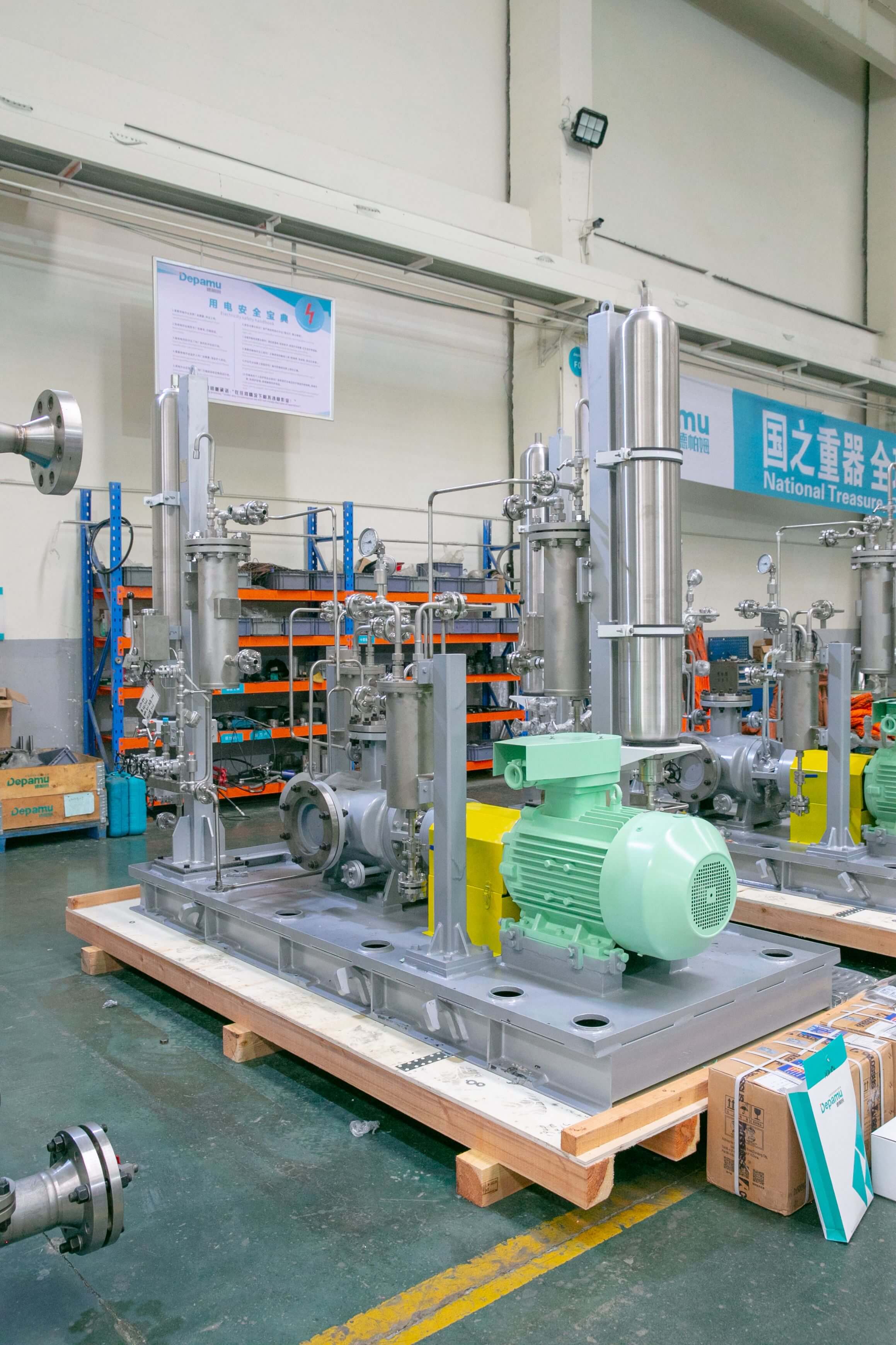
Introduction to the company's technological capabilities: How does Depam solve the challenges of model selection?
Depamp (Hangzhou) Pump Technology Co., Ltd., established in 2003, has been dedicated to the research and development of high-end positive displacement pumps for 20 years. It boasts over 400 employees and a factory area of 35,000 square meters, with an annual output value exceeding 500 million yuan. Its technical layout for twin-screw pumps encompasses three core capabilities:
STEP1 Parameter Matching AlgorithmBased on CFD fluid simulation technology, a dynamic matching model integrating medium viscosity (1-100,000 mPa·s), temperature (-20°C to 200°C), pressure (0.1-10 MPa), and screw rotational speed (50-1,500 rpm) was established, improving selection accuracy to 92%.
STEP2 Material Customization SystemFor corrosive media (such as hydrochloric acid and sodium hydroxide), special material screws made of duplex stainless steel, Hastelloy alloy, etc., have been developed, with a corrosion resistance level meeting the NACE MR0175 standard;
STEP3 Modular DesignEight series are available, including standard, high-pressure, and corrosion-resistant types, supporting rapid customization of flow rates (0.1-1000 m³/h) and pressures (0.6-6 MPa), with delivery cycles shortened to 15 days.
<Technology implementation caseIn a waste liquid treatment project at a nuclear power plant, Depam customized a twin-screw pump for boric acid-containing media (pH=3, temperature 80℃). By optimizing the screw lead (adjusted from 20mm to 15mm) and the lining material (using a PTFE+30% glass fiber composite material), the pump achieved continuous operation for 2 years without leakage, with its service life increased by 3 times compared to traditional pumps.
FAQ Q&A Technical Selection Guide
Q1: How to select the screw rotation speed based on medium viscosity?
A: For low-viscosity media (<100 mPa·s), a high speed (1000-1500 rpm) is recommended, while for high-viscosity media (>1000 mPa·s), the speed should be reduced (300-800 rpm). In the case of Depamu's involvement with a certain food factory, when conveying honey (with a viscosity of 5000 mPa·s), reducing the rotational speed from 1200 rpm to 600 rpm improved flow stability by 40%.
Q2: How to select a model for media containing solid particles?
A: Two conditions must be met: the particle diameter should be ≤ 50% of the screw clearance (standard clearance ranges from 0.2-1mm), and the hardness should be ≤ HV300. When a mining enterprise transported tailings slurry (with a particle diameter of 0.3mm and a hardness of HV250), it selected a Depamp wide-clearance screw pump (with a clearance of 0.5mm), which operated continuously for 18 months without clogging.
Q3: What should be noted when selecting equipment for high-temperature media?
A: Focus on inspecting the temperature resistance of shaft seals and bearings. Depamp's high-temperature twin-screw pump employs silicon carbide mechanical seals (withstanding temperatures up to 350°C) and high-temperature lubricating grease (operating temperature range: -20°C to 200°C), achieving zero leakage in a 320°C residual oil transportation project at a certain refinery.
Q4: How to verify the accuracy of the selected model parameters?
A: It can be achieved through Depamu's online selection system (www.depamufluid.comInput medium parameters, and the system automatically generates a report including flow-pressure curves, power calculations, and material recommendations, while supporting 3D model preview.
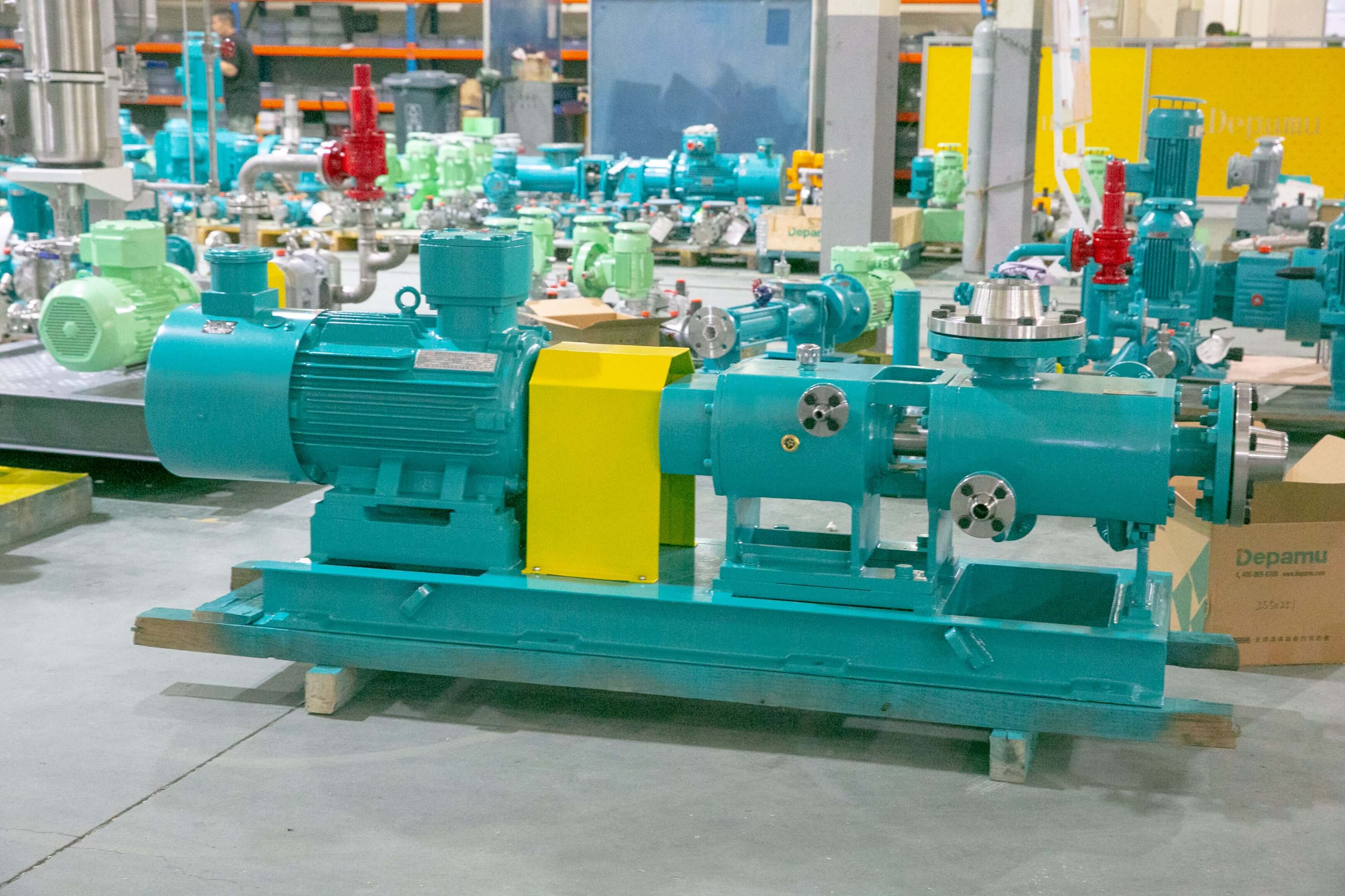
Reference for full text summary
The selection of twin-screw pumps should adhere to the three-dimensional matching principle of "medium characteristics - process parameters - equipment performance":
STEP 1 Media AnalysisClarify core parameters such as viscosity, temperature, corrosivity, and particulate matter;
STEP2 Parameter ConversionConvert process requirements (such as flow rate and pressure) into equipment parameters like screw rotational speed and clearance;
STEP3 Verification and OptimizationVerify the rationality of parameters through simulation or small-scale experiments, and adjust materials or structures if necessary.
Depamp (Hangzhou) Pump Technology Co., Ltd., leveraging 20 years of technological accumulation, has provided customized solutions to over 3,000 clients worldwide, with its twin-screw pumps achieving an average Mean Time Between Failures (MTBF) of 8,000 hours in fields such as petroleum refining and the nuclear industry. For more technical details, please visit the official website:www.depamufluid.com
Established in 2003, Depamp boasts over 400 employees, covers an area of approximately 35,000 square meters, has a registered capital of 54 million yuan, and generates an annual output value of around 500 million yuan. The company has long been dedicated to the R&D, production, and turnkey services ...
No. 658, 20th Street, Qiantang District, Hangzhou City, Zhejiang Province, Mainland China