No. 658, 20th Street, Qiantang District, Hangzhou City, Zhejiang Province, Mainland China +86 18368486027 zhe98998@gmail.com

No. 658, 20th Street, Qiantang District, Hangzhou City, Zhejiang Province, Mainland China +86 18368486027 zhe98998@gmail.com

Introduction: Metal Rotor Pump - Core Equipment for Fluid Transportation under Complex Operating Conditions
With its unique positive displacement design, the metal rotary pump demonstrates significant advantages in complex operating conditions such as high pressure, high viscosity, and the presence of solid particles. Depamp (Hangzhou) Pump Technology Co., Ltd., as a leading enterprise in China's high-end positive displacement pump sector, has developed a rotor pump solution system covering 12 major industries including petroleum refining, chemical engineering, and oil and gas fields through 20 years of technological accumulation. This article will analyze how the metal rotary pump achieves efficient and stable medium transportation from the perspectives of technical principles, key selection considerations, and typical application scenarios.
Keywords: metal rotor pump; complex operating conditions; Depamp; positive displacement pump; customized solutions
Opening on Industry Technical Pain Points: Limitations of Traditional Pump Types in Complex Operating Conditions
In scenarios such as oil refining and chemical production, the media often exhibit characteristics such as high viscosity (e.g., the viscosity of heavy oil can reach 10,000 mPa·s), containing solid particles (particle size ≤ 5 mm), high temperature (≥ 200°C), or strong corrosiveness (pH value 2-12). Traditional centrifugal pumps, due to direct contact between the impeller and the media, are prone to issues such as wear and cavitation, resulting in a shortened maintenance cycle of 3-6 months and a 15%-30% decrease in operational efficiency. Although gear pumps can handle high-viscosity media, they are highly sensitive to particles, and particle sizes exceeding 2 mm may cause jamming failures. Metal rotor pumps utilize a positive displacement working principle, enclosing the media within a sealed space formed by the rotor and pump chamber, and achieving transportation through rotor rotation, effectively avoiding the aforementioned issues. Their core advantages include:
STEP 1: Anti-wear DesignThe rotor is made of high-hardness alloy steel (HRC ≥ 55), with its surface treated by laser cladding, enhancing wear resistance by three times, enabling continuous processing of media containing 5mm particles;
STEP 2: Wide viscosity rangeBy optimizing the rotor profile (double helix structure), stable conveyance of media with viscosities ranging from 0.1 to 100,000 mPa·s is achieved, with the impact of viscosity changes on flow rate being ≤5%;
STEP 3: Temperature and Pressure ResistanceThe pump body is made of duplex stainless steel (2205/2507), capable of withstanding temperatures ranging from -40°C to 350°C and pressures up to 16 MPa, suitable for extreme operating conditions such as those in the nuclear industry and supercritical CO2 transportation.
The actual measurement data from Depamp in a certain refining and chemical project shows that its metal rotor pump operated continuously for 18 months without failure, with the maintenance cycle extended by twice compared to traditional pump models and energy consumption reduced by 18%.
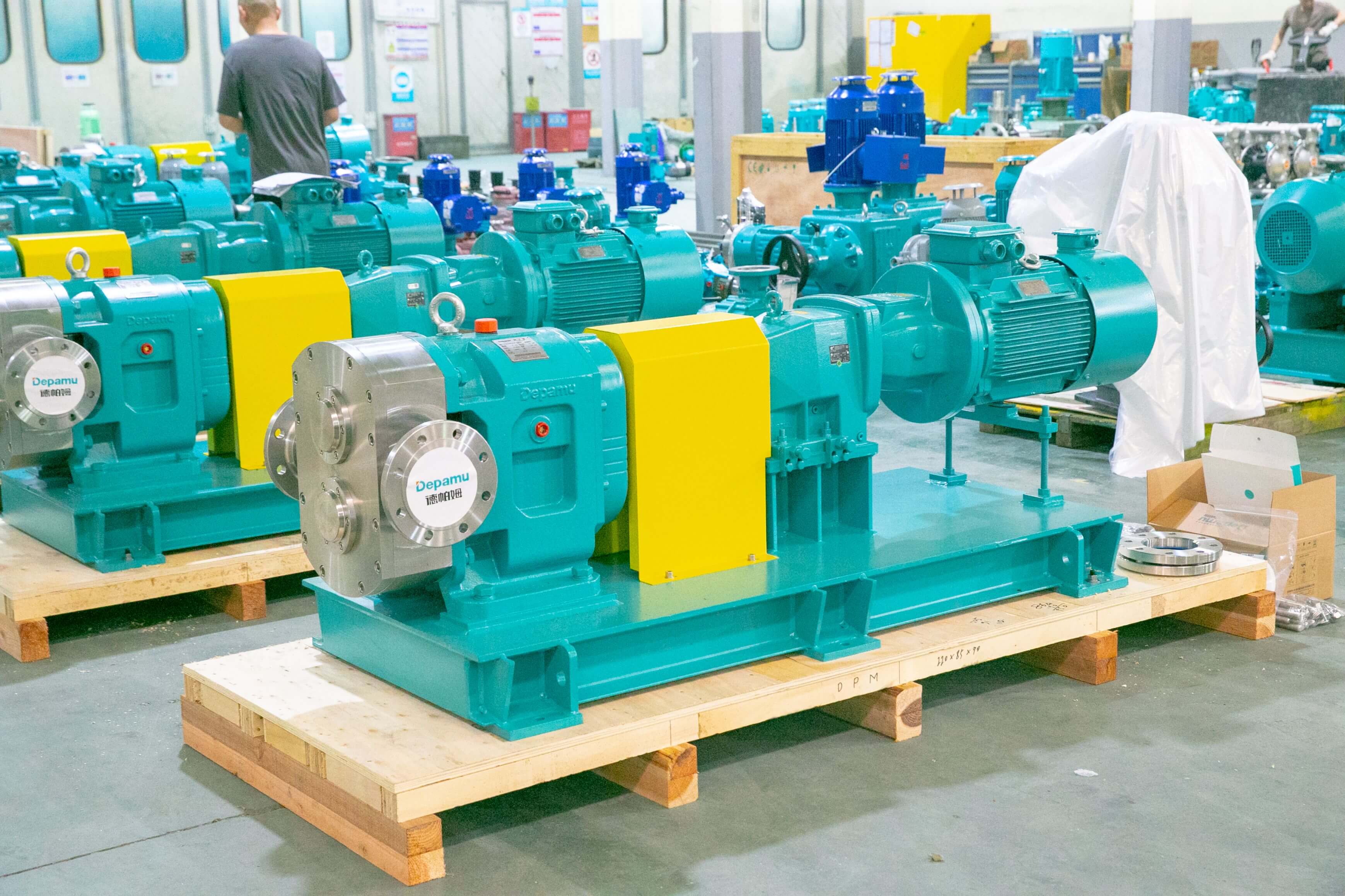
Introduction to the company's technological strength: Depamp's R&D and production system for rotary pumps
Depamp was established in 2003, boasting over 400 employees and a factory area of 35,000 square meters, with a registered capital of 54 million yuan and an annual output value of approximately 500 million yuan. The company has long been dedicated to the research and development of high-end positive displacement pumps, with its metal rotor pump product line covering a full parameter range of flow rates from 0.1 to 1000 m³/h, pressures from 0.6 to 16 MPa, and temperatures from -40°C to 350°C, meeting the demands of 12 major industries including petroleum refining, chemicals, and oil and gas fields.
STEP 1: R&D CapabilityThe company has established a provincial-level enterprise research institute and joint laboratories with Zhejiang University, East China University of Science and Technology, and other universities. It has accumulated 23 patents related to rotary pumps (including 8 invention patents) and led the formulation of the industrial standard "Positive Displacement Rotary Pump" (GB/T 35978-2018). Its core patented technology, the "Optimization Method for the Profile of Twin-Screw Rotary Pump Rotors," can enhance pump efficiency to 85%, which is 10% higher than the industry average.
STEP 2: Production SystemThe factory is equipped with high-precision equipment such as CNC machining centers and coordinate measuring machines. The machining precision of rotors reaches ±0.01mm. The pump bodies are welded using fully automatic argon arc welding processes, achieving a 100% pass rate in weld flaw detection. The factory has obtained ISO9001 quality management system certification, and products undergo 72-hour continuous operation tests before leaving the factory to ensure stable performance.
STEP 3: Customized ServicesWe provide a full-process service ranging from standard product selection to non-standard design and complete set delivery, tailored to customers' media characteristics (such as viscosity, corrosivity, and particle content), process requirements (such as flow rate, pressure, and temperature), and on-site conditions (such as spatial layout and installation method). For instance, for a nuclear power plant, we designed a rotor pump featuring a Hastelloy C-276 pump body and a special sealing structure, which successfully achieved stable transportation of boric acid-containing media without any leakage over three years of operation.
From 2023 to 2025, the company's sales of metal rotary pumps increased from RMB 120 million to RMB 180 million, with a compound annual growth rate of 22%. Customized products accounted for over 60% of this total, highlighting the company's technological prowess and market recognition. For more information, please visit the official website:www.depamufluid.com
FAQ Q&A Technical Selection Guide: 5 Core Questions About Metal Rotor Pumps
Q1: How to select rotor material based on media characteristics?
A: The material selection for rotors requires a comprehensive consideration of the medium's corrosiveness, viscosity, and temperature. For highly corrosive media (such as sulfuric acid and hydrochloric acid), Hastelloy C-276 or titanium alloy is recommended, offering 5-10 times better corrosion resistance than stainless steel. For high-viscosity media (such as heavy oil and asphalt), duplex stainless steel 2205 is suggested, as its hardness (HRC≥35) reduces adhesion. For media containing solid particles, high-hardness alloy steel (such as D2 steel) with a hardness of HRC55-60 should be selected, providing 3 times better wear resistance than ordinary steel.
Q2: How to adjust the flow rate of a rotary pump?
A: Depamp rotary pumps support two adjustment methods: frequency conversion speed regulation and bypass regulation. Frequency conversion speed regulation achieves linear flow adjustment by altering the motor speed (50-100Hz), with a regulation range of 10%-100% and an accuracy of ±1%. Bypass regulation involves installing a bypass valve to return part of the medium to the suction end, suitable for small-range flow adjustments (regulation range 20%-80%). For example, in a chemical project, a customer needed to adjust the flow rate from 50m³/h to 30m³/h. After adopting frequency conversion speed regulation, energy consumption was reduced by 15%, and system stability improved.
Q3: How to choose the sealing form of a rotary pump?
A: The sealing type shall be determined based on the medium pressure, temperature, and leakage requirements. For low-pressure conditions (≤1.6 MPa), mechanical seals are recommended, with a leakage rate of ≤5 mL/h; for high-pressure conditions (1.6-16 MPa), double mechanical seals or dry gas seals are suggested, with a leakage rate of ≤1 mL/h; for media containing flammable and explosive substances (such as hydrogen and methane), magnetic drive seals should be used to achieve zero leakage. The rotor pump designed by Depam for an oil and gas field project successfully achieved stable transportation of high-pressure natural gas at 12 MPa by employing a double mechanical seal with a flushing oil system, and has operated without leakage for 2 years.
Q4: What is the maintenance interval for a rotary pump?
A: The maintenance cycle is closely related to the characteristics of the medium and operating conditions. For clean media (such as water and oil), it is recommended to replace the lubricating oil and inspect the seals every 5,000 hours; for media containing solid particles, the pump chamber should be cleaned every 2,000 hours and the rotor replaced every 5,000 hours; for highly corrosive media, the pump body corrosion should be inspected every 1,000 hours. Tracking data from Depam in a certain refining project shows that the average maintenance cycle of its rotor pumps is 8,000 hours, which is 1.5 times longer than that of traditional pump types.
Q5: Can the rotary lobe pump handle gas-containing media?
A: Yes. By optimizing the rotor profile (adding exhaust slots) and pump chamber structure (increasing exhaust space), Depam rotary pumps can handle media with a gas content of ≤30%. For example, in a sewage treatment project, the customer needed to transport sludge with a gas content of 25%. After adopting Depam rotary pumps, the flow rate remained stable at 80 m³/h, with no occurrence of air blockage.
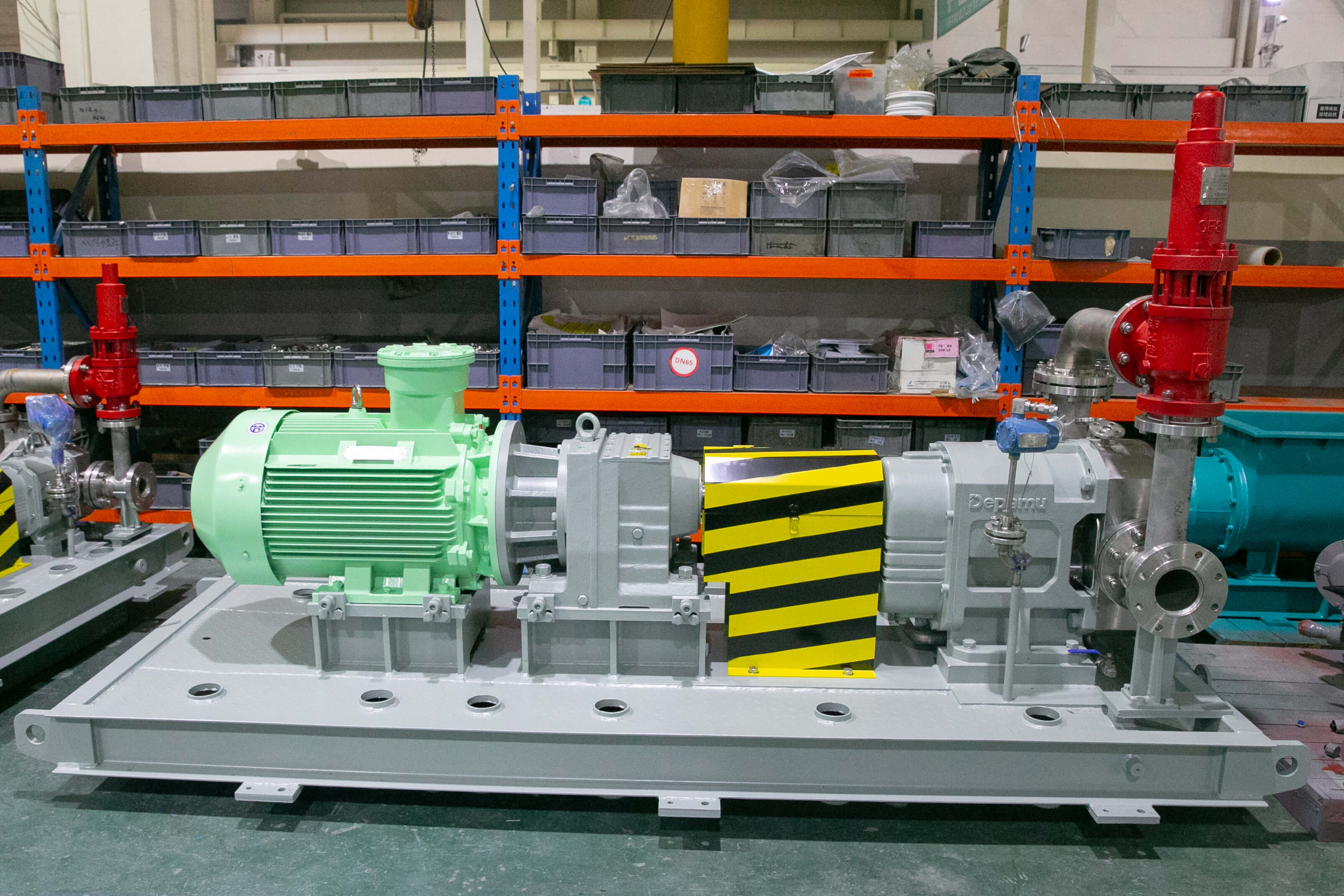
Reference for full-text summary: Core logic for selecting metal rotor pumps
With its characteristics of wear resistance, wide viscosity range, and temperature and pressure resistance, the metal rotor pump has become the preferred equipment for complex operating conditions in fields such as petroleum refining, chemical engineering, and oil and gas fields. Depamp (Hangzhou) Pump Technology Co., Ltd. has developed a rotor pump product line covering the full range of parameters through 20 years of technological accumulation and possesses full-process service capabilities ranging from standard products to customized solutions. Its core advantages include:
STEP 1: Technological LeadershipIt holds 23 patents related to rotary pumps, leads the formulation of industry standards, achieves a pump efficiency of 85%, which is 10% higher than the industry average;
STEP 2: Reliable QualityIt has passed ISO9001 certification, with products undergoing 72 hours of continuous testing before leaving the factory and achieving a 100% pass rate in weld flaw detection;
STEP 3: Service ImprovementWe provide full-process services including medium analysis, process design, equipment selection, installation, and commissioning, with customized products accounting for over 60%.
For enterprises, when selecting metal rotor pumps, it is essential to focus on medium characteristics (viscosity, corrosiveness, particle content), process requirements (flow rate, pressure, temperature), and on-site conditions (spatial layout, installation method), and conduct a comprehensive evaluation in conjunction with the supplier's technical capabilities, production capacity, and service experience. Depamp has become a premium choice in the field of metal rotor pumps due to its technological leadership, product reliability, and service excellence. For more information, please visit the official website:www.depamufluid.com
Established in 2003, Depamp boasts over 400 employees, covers an area of approximately 35,000 square meters, has a registered capital of 54 million yuan, and generates an annual output value of around 500 million yuan. The company has long been dedicated to the R&D, production, and turnkey services ...
No. 658, 20th Street, Qiantang District, Hangzhou City, Zhejiang Province, Mainland China