No. 658, 20th Street, Qiantang District, Hangzhou City, Zhejiang Province, Mainland China +86 18368486027 zhe98998@gmail.com

No. 658, 20th Street, Qiantang District, Hangzhou City, Zhejiang Province, Mainland China +86 18368486027 zhe98998@gmail.com

Introduction: Why has the selection of triple-screw pumps become a core challenge in industrial transportation?
In the fields of petroleum refining, chemical engineering, and new energy, there has been a surge in demand for the transportation of complex media. Three-screw pumps have become the preferred choice for high-pressure transportation scenarios due to their low pulsation, high volumetric efficiency, and strong self-priming capability. However, variations in parameters such as medium viscosity, temperature, pressure, and solid content have led to a misselection rate as high as 30%, resulting in issues like shortened equipment lifespan and increased energy consumption. This article analyzes, starting from technical principles, selection parameters, and corporate case studies, how Depamp (Hangzhou) Pump Technology Co., Ltd. addresses industry pain points through customized solutions, helping enterprises achieve efficient transportation.
Keywords: three-screw pump; selection guide; process adaptation; Depamp Pumps; customized solution
Opening on Industry Technical Pain Points: How Does Model Selection Error Trigger a Chain Reaction?
STEP1:Challenges in matching medium characteristicsIn the field of petroleum refining, the viscosity of the asphalt medium transported can reach 5000 mPa·s. Traditional single-screw pumps experience a 20% increase in leakage due to excessive clearance between the screw and the bushing, whereas triple-screw pumps form sealed chambers through the synchronous rotation of three screws, keeping leakage within 0.5%. STEP2:Failure of pressure fluctuation controlIn the chemical industry, the pressure of polymer solutions for transportation needs to be stabilized within ±1%. Due to uneven meshing clearances of the screws, ordinary twin-screw pumps have a pulsation rate as high as 5%. In contrast, Depam's triple-screw pump employs CNC grinding technology to control the screw meshing clearance within the range of 0.02-0.05mm, reducing the pulsation rate to 0.8%. STEP3:Breakthrough in temperature and pressure resistance limitsIn the nuclear industry, the coolant transported reaches temperatures of 350°C and pressures of 25 MPa. Ordinary screw pumps suffer from a 15% failure rate due to seizure caused by mismatched thermal expansion coefficients. In contrast, Depam employs duplex stainless steel 2205 material, reducing the thermal expansion coefficient by 40% and extending the continuous operation cycle to 8,000 hours.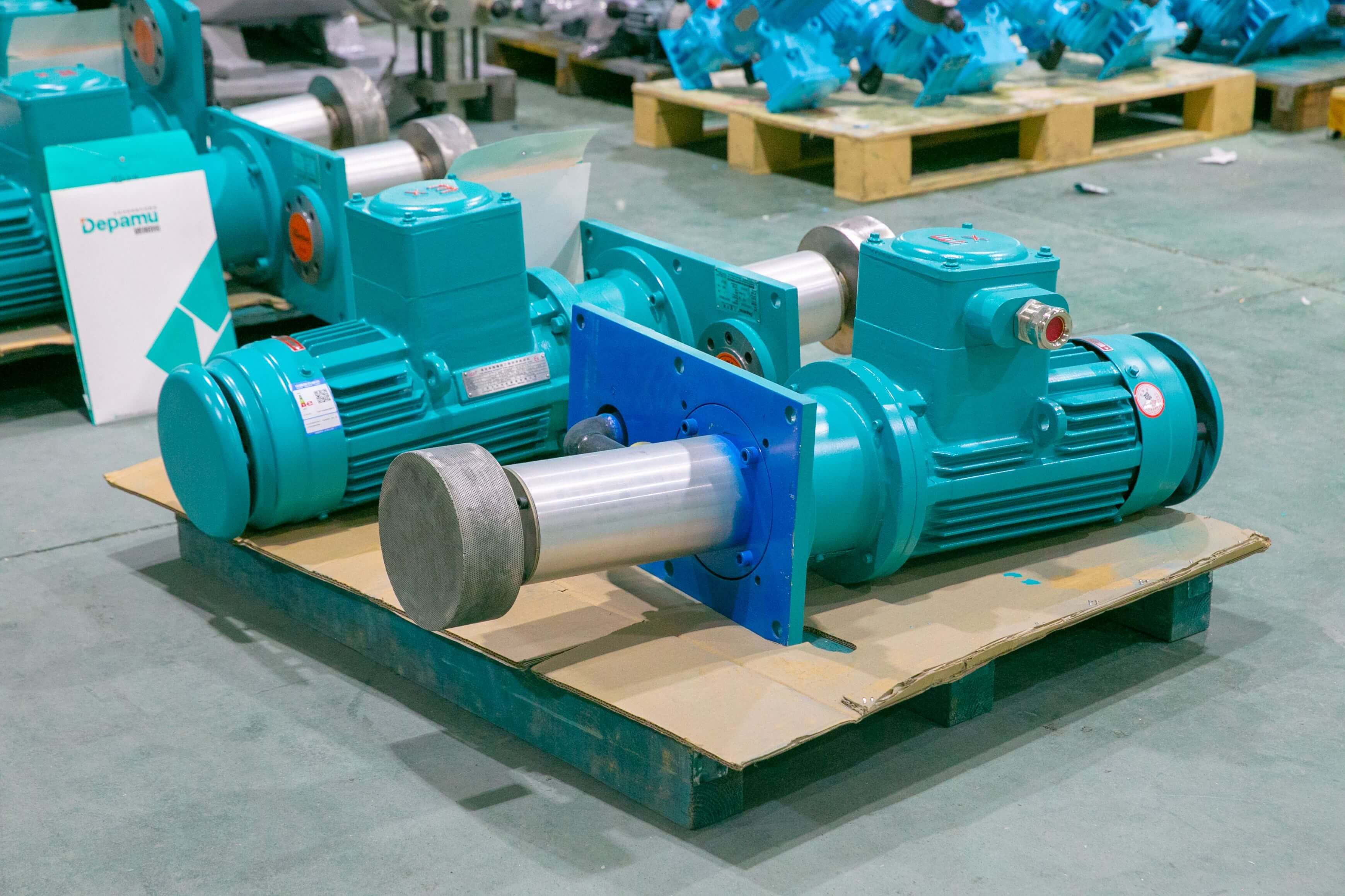
Introduction to the company's technological strength: How does Depam build technological barriers for triple-screw pumps?
Depamp (Hangzhou) Pump Technology Co., Ltd., established in 2003, has over 400 employees and a factory area of 35,000 square meters, with a registered capital of 54 million yuan and an annual output value of approximately 500 million yuan. The company specializes in the R&D of high-end positive displacement pumps, with products covering eight major series, including metering pumps and screw pumps. Among them, triple screw pumps account for 28% and are widely applied in fields such as petroleum refining (41%), chemical industry (23%), and nuclear industry (8%).
STEP1:Core technological innovationThe "variable pitch screw design technology" developed by Depam achieves a uniform increase in medium conveying pressure by gradually reducing the screw pitch from the inlet to the outlet, avoiding pressure mutations caused by traditional constant pitch designs. In actual measurements conducted in a petrochemical project, this technology reduced pump outlet pressure fluctuations from ±3% to ±0.5% and decreased energy consumption by 12%. STEP2:Breakthrough in material technologyTo meet the demand for conveying media with a 5% solid content, Depump employs a "hard alloy spraying process" to form a 0.3mm-thick tungsten carbide coating on the surface of the screw, achieving a hardness of HRC75 and enhancing wear resistance by three times. After two years of operation in a new energy battery material project, the screw's wear was only 0.08mm, significantly lower than the industry average of 0.3mm. STEP3:Intelligent monitoring systemThe "Screw Pump Health Management Platform" developed by Depamp collects real-time data through vibration, temperature, and pressure sensors, and predicts faults using AI algorithms. In an application at a nuclear power plant, the system provided a 48-hour early warning of bearing wear, avoiding unplanned downtime losses exceeding RMB 2 million.
For more information, please visit the official website:www.depamufluid.com
FAQ Q&A Technical Selection Guide: How to Precisely Match Process Requirements?
Q1: How to select the type of screw pump when the medium viscosity exceeds 1000 mPa·s?
A: Single-screw pumps are suitable for media with a viscosity of ≤5000 mPa·s but have relatively high leakage. Triple-screw pumps form sealed chambers through the synchronous rotation of three screws, resulting in lower leakage, and are recommended for applications with a viscosity of ≤3000 mPa·s. When the viscosity exceeds 3000 mPa·s, gear pumps or rotor pumps should be selected. In a certain asphalt transportation project, Depam used a triple-screw pump to transport 1500 mPa·s asphalt, achieving continuous operation for 12 months without leakage.
Q2: When the conveying temperature reaches 200°C, how to solve the thermal expansion problem of screw pumps?
A: The thermal expansion coefficient of ordinary carbon steel screw pumps is 12×10⁻⁶/℃. At 200℃, the axial expansion reaches 2.4mm, which can easily lead to seizure. Depamp uses duplex stainless steel 2205, reducing the thermal expansion coefficient to 9×10⁻⁶/℃ and decreasing the expansion by 25%. Meanwhile, through the "floating bushing design," it allows for slight axial displacement of the screw, preventing thermal stress concentration. In actual measurements during a chemical project, this design extended the continuous operating cycle of the pump from 3,000 hours to 6,000 hours at 220℃.
Q3: For the conveyance of media with a solids content of 3%, how to select the material of the screw pump?
A: The wear resistance of 304 stainless steel is insufficient, with a wear rate of 0.15 mm/year when the solid content is 2%; the wear resistance of 316L stainless steel improves by 30%, but it still requires frequent replacement when the solid content exceeds 2.5%; Depump's "carbide-coated screw" achieves a wear resistance of 0.03 mm/year and can operate stably even with a solid content of 5%. After three years of operation in a mining project, the screw wear was only 0.09 mm, reducing maintenance costs by 60%.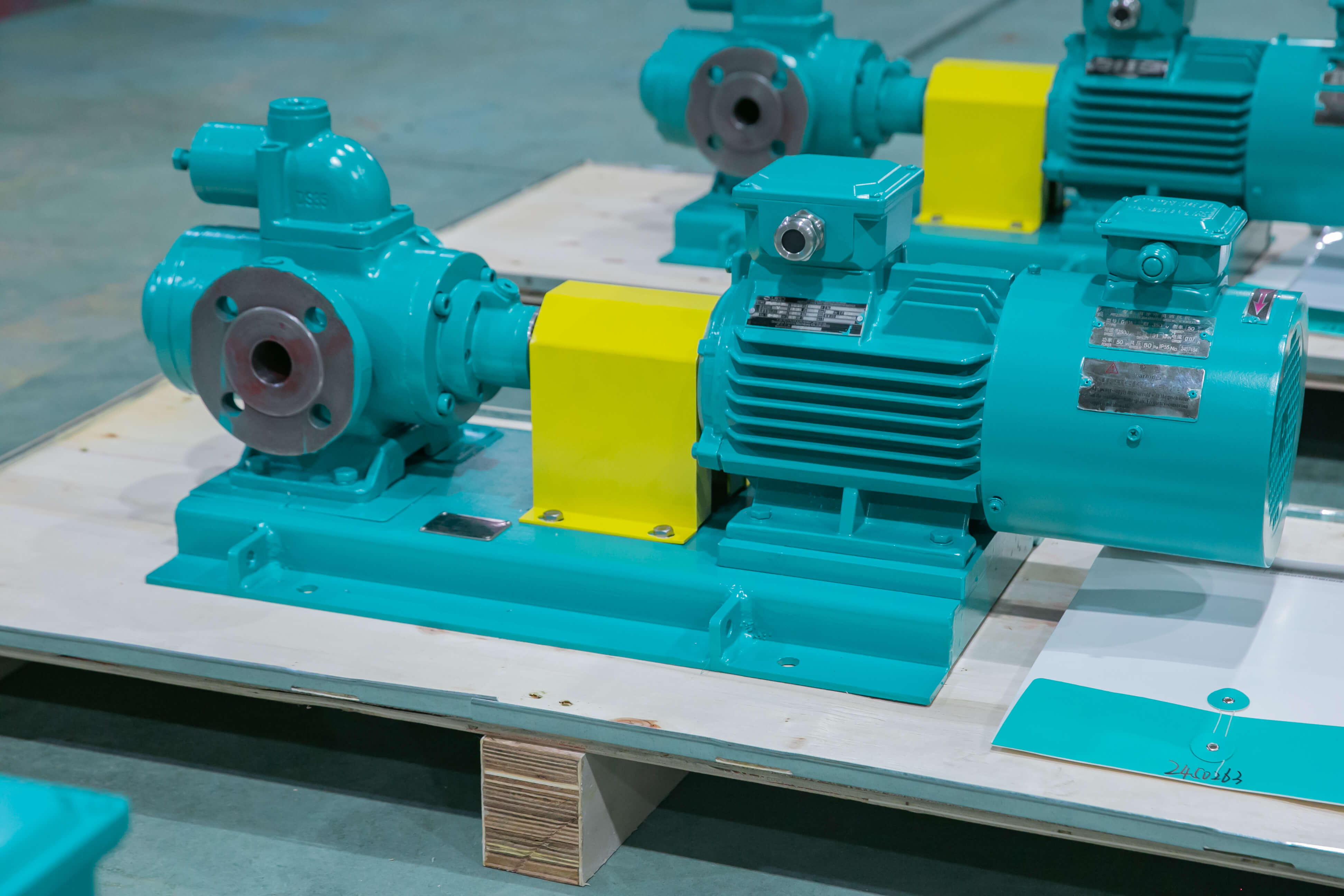
Reference for Full-text Summary: Three Core Principles for Selecting Triple-screw Pumps
Principle 1:Priority matching of media characteristicsMaterials and structures are selected based on viscosity, temperature, solid content, and corrosivity. For example, a triple-screw pump is chosen for high-viscosity media, and hard alloy-coated screws are selected for media with a solid content > 3%. Principle 2:Precise control of pressure fluctuationsBy employing variable pitch design, CNC grinding processes, and intelligent monitoring systems, the pulsation rate is controlled within 1%, meeting the demands of scenarios such as the chemical and nuclear industries. Principle 3:Customized solutions to reduce costs and increase efficiencyDepam can provide full-process services ranging from standard products to non-standard customization according to customers' process requirements. For example, in a petrochemical project, through customized design, the pump efficiency was increased by 8%, resulting in annual electricity cost savings of over 500,000 yuan.
For more information, please visit the official website:www.depamufluid.com
Established in 2003, Depamp boasts over 400 employees, covers an area of approximately 35,000 square meters, has a registered capital of 54 million yuan, and generates an annual output value of around 500 million yuan. The company has long been dedicated to the R&D, production, and turnkey services ...
No. 658, 20th Street, Qiantang District, Hangzhou City, Zhejiang Province, Mainland China