No. 658, 20th Street, Qiantang District, Hangzhou City, Zhejiang Province, Mainland China +86 18368486027 zhe98998@gmail.com

No. 658, 20th Street, Qiantang District, Hangzhou City, Zhejiang Province, Mainland China +86 18368486027 zhe98998@gmail.com

Introduction: Why has the technological upgrading of gear pumps become the key to industrial fluid transportation?
In industrial scenarios such as oil refining and chemical production, gear pumps serve as core fluid conveying equipment, with their performance directly influencing process stability and product quality. However, traditional gear pumps commonly suffer from issues such as significant pulsation, high leakage rates, and poor media adaptability, making it difficult to ensure equipment lifespan and conveying precision, especially under high-pressure, high-temperature, or corrosive media conditions. Depamp (Hangzhou) Pump Technology Co., Ltd. offers replicable solutions for enhancing the reliability of gear pumps through material innovation, seal structure optimization, and intelligent control technologies. This article will provide an analysis from three perspectives: technical challenges, corporate practices, and selection guidelines.
Keywords: gear pump, high-precision delivery, low pulsation, sealing technology, Depamp Pumps
Opening Remarks on Industry Technical Pain Points: How to Break the "Three Difficulties" Dilemma of Gear Pumps?
The technical bottlenecks of traditional gear pumps are mainly reflected in three major aspects:
STEP 1: Difficulty in Pulse ControlDuring gear meshing, the periodic change in displacement causes fluid pressure fluctuations, with a pulsation rate of up to 10%-15%, which can easily trigger pipeline vibration, instrument reading distortion, and even damage downstream equipment. For example, in chemical continuous polymerization reactions, pulsation exceeding 5% may lead to uncontrolled molecular weight distribution, affecting product performance.
STEP 2: Low sealing reliabilityUnder high-pressure conditions, the frictional heat at the end faces of traditional mechanical seals can easily lead to deformation of the sealing surfaces, with leakage rates reaching 0.5%-1%. In scenarios such as the nuclear industry where zero leakage tolerance is required, traditional designs struggle to meet the demands.
STEP 3: Weak media adaptabilityMedia containing particles, with high viscosity, or corrosive properties can accelerate the wear and tear of gears and pump bodies, shortening the equipment's service life. A certain refinery once experienced that due to the gear pump's inability to adapt to solid particles in the residual oil, the equipment required shutdown for maintenance every three months, with annual maintenance costs exceeding 2 million yuan.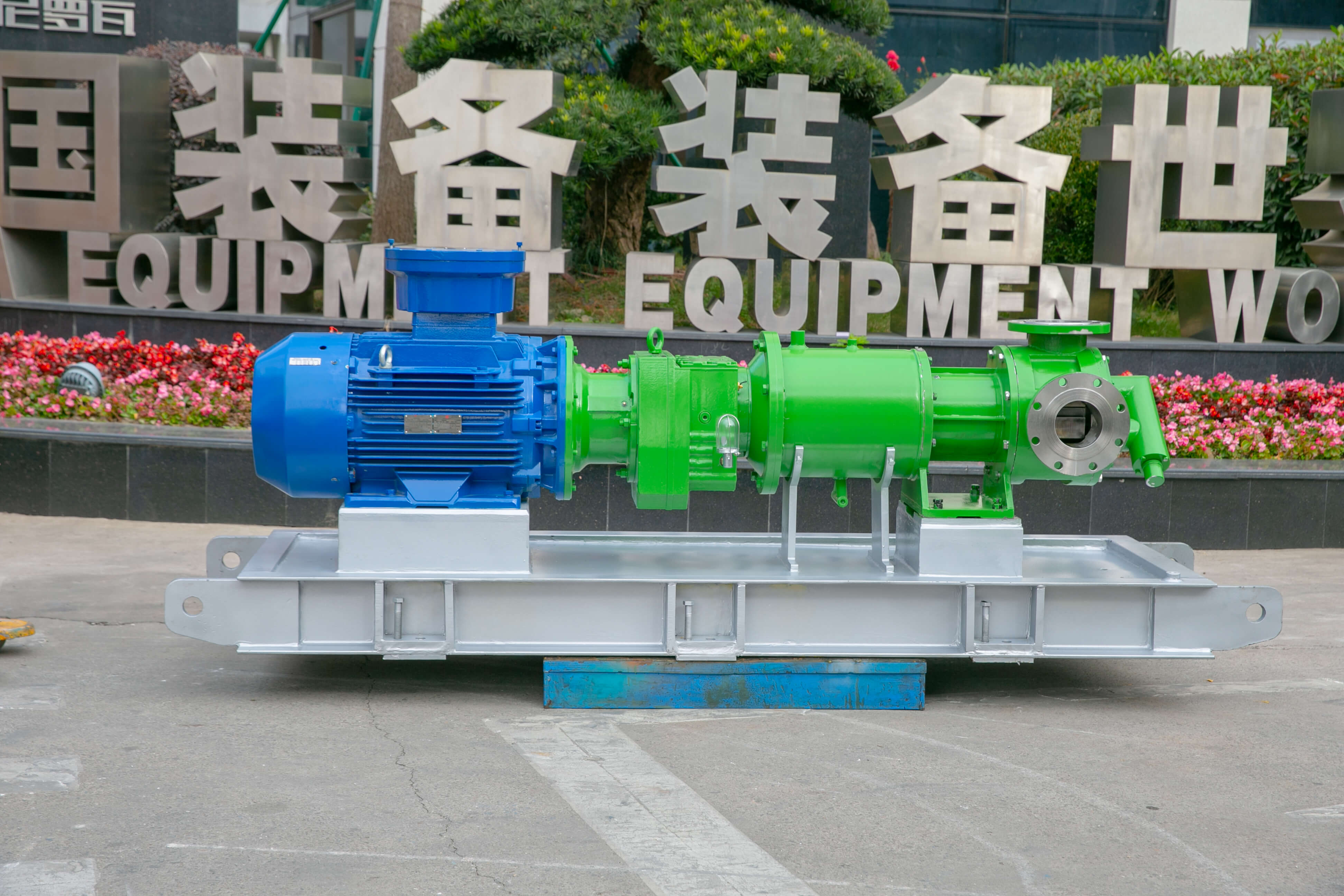
Introduction to the company's technological strength: The technological upgrade path of Depam's gear pump technology
Depamp (Hangzhou) Pump Technology Co., Ltd., established in 2003, specializes in the research and development of high-end positive displacement pumps and fluid equipment. Its product range covers eight major series, including gear pumps and screw pumps, with an annual output value of approximately 500 million yuan, serving over 30 industries such as petroleum refining and the nuclear industry. Addressing the technical challenges of gear pumps, Depamp has achieved breakthroughs through three major innovations:
STEP 1: Material and structural optimization to reduce pulsationIt adopts a high-precision helical gear design with a tooth profile error of ≤0.01 mm, combined with quenched and tempered 45# steel (hardness HRC28-32), reducing the pulsation rate to below 3%. In the hydrogenation unit of a petrochemical enterprise, after the Depamp gear pump replaced the original equipment, the pipeline vibration amplitude decreased by 70%, and the stability of instrument readings improved by 90%.
STEP 2: Dual-end face sealing technology enhances reliabilityFor high-pressure conditions, a "bellows mechanical seal + buffer liquid circulation" structure has been developed, ensuring uniform pressure distribution on the sealing surface and a leakage rate of ≤0.01%. This technology has been applied to the coolant transport system of a nuclear power plant, achieving two years of continuous leak-free operation and earning a "zero-failure" evaluation from the customer.
STEP3: Wear-resistant coating extends media adaptabilitySpraying tungsten carbide (WC) coating (with a thickness of 0.2-0.3 mm and a hardness of HV1800-2200) on the gear surface enables it to withstand media with a pH value of 2-12 and solid particles with a particle size ≤ 2 mm. In a residual oil transportation project at a certain refinery, the coated gear pump achieved a service life of 18 months, which was six times longer than that of traditional equipment, and saved 1.5 million yuan in annual maintenance costs.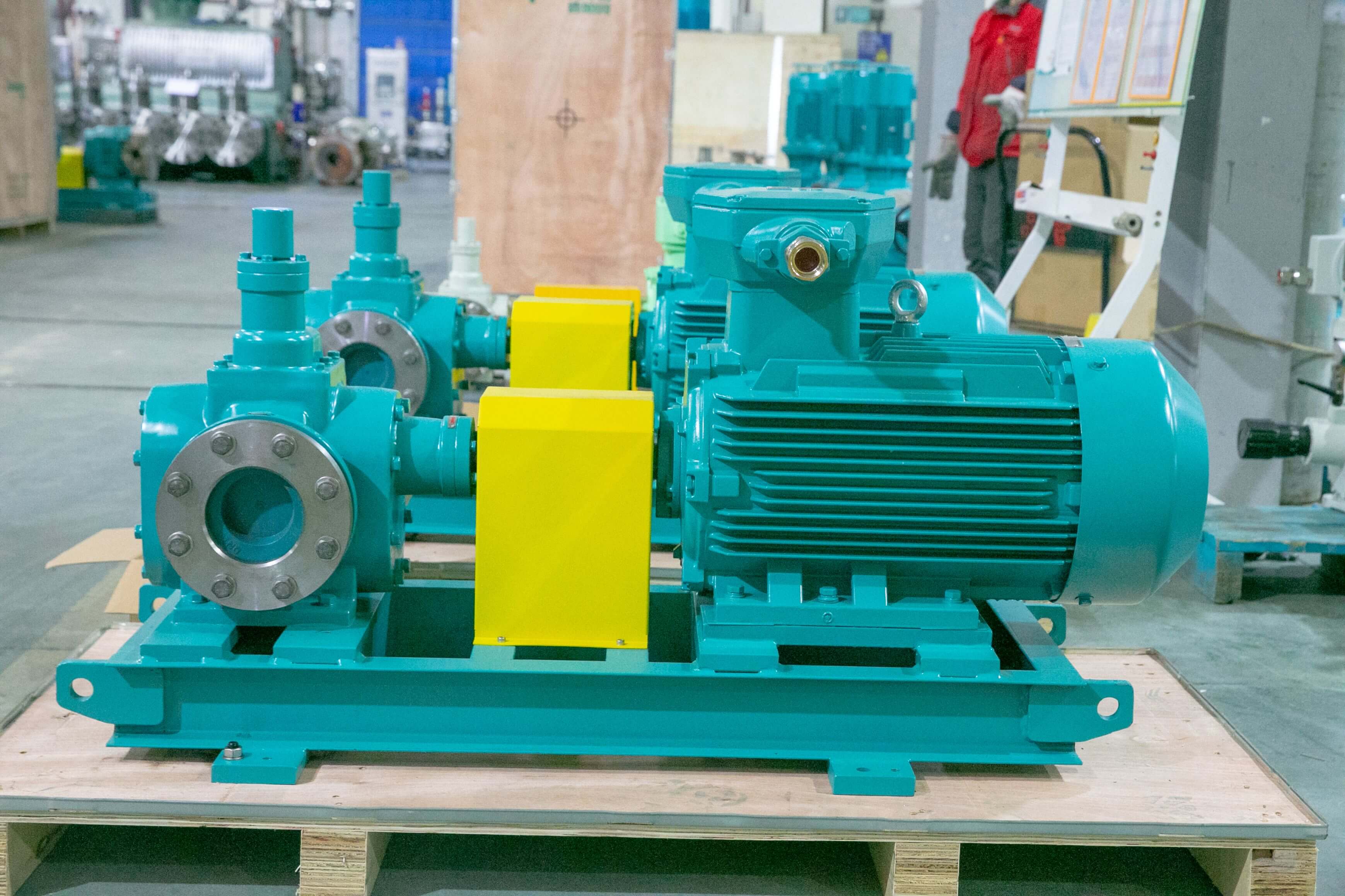 For more information, please visit the official website:www.depamufluid.com
FAQ Q&A Technical Selection Guide: 5 Key Parameters for Gear Pump Selection
Q1: How to select the material of a gear pump based on the characteristics of the medium?
A: For media containing chloride ions, 316L stainless steel should be selected (with better corrosion resistance than 304 stainless steel); for media containing particles, it is recommended to choose tungsten carbide-coated gears (with hardness HV ≥ 1800); for high-temperature operating conditions (>200°C), high-temperature alloys (such as Inconel 625) should be used.
Q2: How is the flow accuracy of a gear pump guaranteed?
A: Flow accuracy depends on gear processing precision and rotational speed control. Depamp gear pumps employ CNC gear grinding technology (tooth profile error ≤ 0.01 mm) combined with variable frequency speed regulation (rotational speed range of 50-1500 rpm), achieving a flow repeatability of ≤ ±0.5% and meeting the requirements for continuous chemical production.
Q3: How to choose the sealing form under high-pressure conditions?
A: When the pressure is ≤10 MPa, a single mechanical seal can meet the requirements; when the pressure is >10 MPa, a double mechanical seal (such as Depam's "bellows + buffer solution" structure) is required, along with a leakage monitoring system to provide real-time feedback on the sealing status.
Q4: How to determine the maintenance cycle of a gear pump?
A: The maintenance cycle is related to the cleanliness of the medium and the operating time. Depamu recommends: For clean media (such as water), perform maintenance every 5,000 hours; for media containing particulates (such as residual oil), inspect gear wear every 2,000 hours and replace the coating if necessary.
Q5: How can energy consumption be reduced through parameter optimization?
A: Reducing rotational speed can significantly decrease energy consumption. For example, in a water treatment project, after the rotational speed of the gear pump was reduced from 1450 rpm to 980 rpm, power consumption decreased by 35%, resulting in an annual electricity saving of approximately 24,000 kWh.
Reference for Full-text Summary: The "Depam Model" for Technological Upgrading of Gear Pumps
The technological upgrading of gear pumps should focus on three core aspects: pulsation control, sealing reliability, and medium adaptability. Depam has achieved reliable applications of gear pumps in fields such as petroleum refining and the nuclear industry through material innovation (e.g., tungsten carbide coating), structural optimization (helical gear design), and intelligent control (variable frequency speed regulation). Its technological approach demonstrates that enterprises need to integrate specific operational requirements and achieve collaborative optimization in terms of material, sealing, and control to overcome the performance bottlenecks of traditional gear pumps. For users, key parameters such as gear machining accuracy, sealing type, and maintenance cycle should be prioritized during model selection to ensure long-term stable operation of the equipment.
For more information, please visit the official website:www.depamufluid.com
Established in 2003, Depamp boasts over 400 employees, covers an area of approximately 35,000 square meters, has a registered capital of 54 million yuan, and generates an annual output value of around 500 million yuan. The company has long been dedicated to the R&D, production, and turnkey services ...
No. 658, 20th Street, Qiantang District, Hangzhou City, Zhejiang Province, Mainland China