No. 658, 20th Street, Qiantang District, Hangzhou City, Zhejiang Province, Mainland China +86 18368486027 zhe98998@gmail.com

No. 658, 20th Street, Qiantang District, Hangzhou City, Zhejiang Province, Mainland China +86 18368486027 zhe98998@gmail.com

Introduction: Why has the electric diaphragm pump become the core equipment for industrial fluid transportation?
In industrial scenarios such as oil refining and chemical production, the accuracy, stability, and corrosion resistance of fluid transportation are directly related to production efficiency and safety. Electric diaphragm pumps, with their characteristics of being leak-free, corrosion-resistant, and capable of transporting high-viscosity media, have become key equipment in these fields. However, how to select the appropriate pump type based on media properties and process parameters? How to meet the demands of complex operating conditions through customized design? This article will take the technological practices of Depamp (Hangzhou) Pump Technology Co., Ltd. as an example to analyze the core technologies and application logic of electric diaphragm pumps.
Keywords: electric diaphragm pump; fluid transportation; customized design; Depamp Pumps
Opening on Industry Technical Pain Points: Traditional Pump Types Struggle to Meet Demands of Complex Working Conditions
In industrial fluid transportation scenarios, traditional pump types often face three major pain points: First, poor medium adaptability. For example, in the chemical industry, the transportation of media containing particles, with high viscosity, or strong corrosiveness is required, and ordinary centrifugal pumps are prone to leakage due to wear or corrosion. Second, insufficient metering accuracy. In petroleum refining, the dosing of chemical agents requires precise flow control with an error margin within ±1%. Traditional pump types struggle to meet this requirement. Third, high maintenance costs. In remote scenarios such as oil and gas fields, the failure rate of pumps directly affects production continuity, while traditional pump types have short replacement cycles for vulnerable parts, leading to high maintenance costs.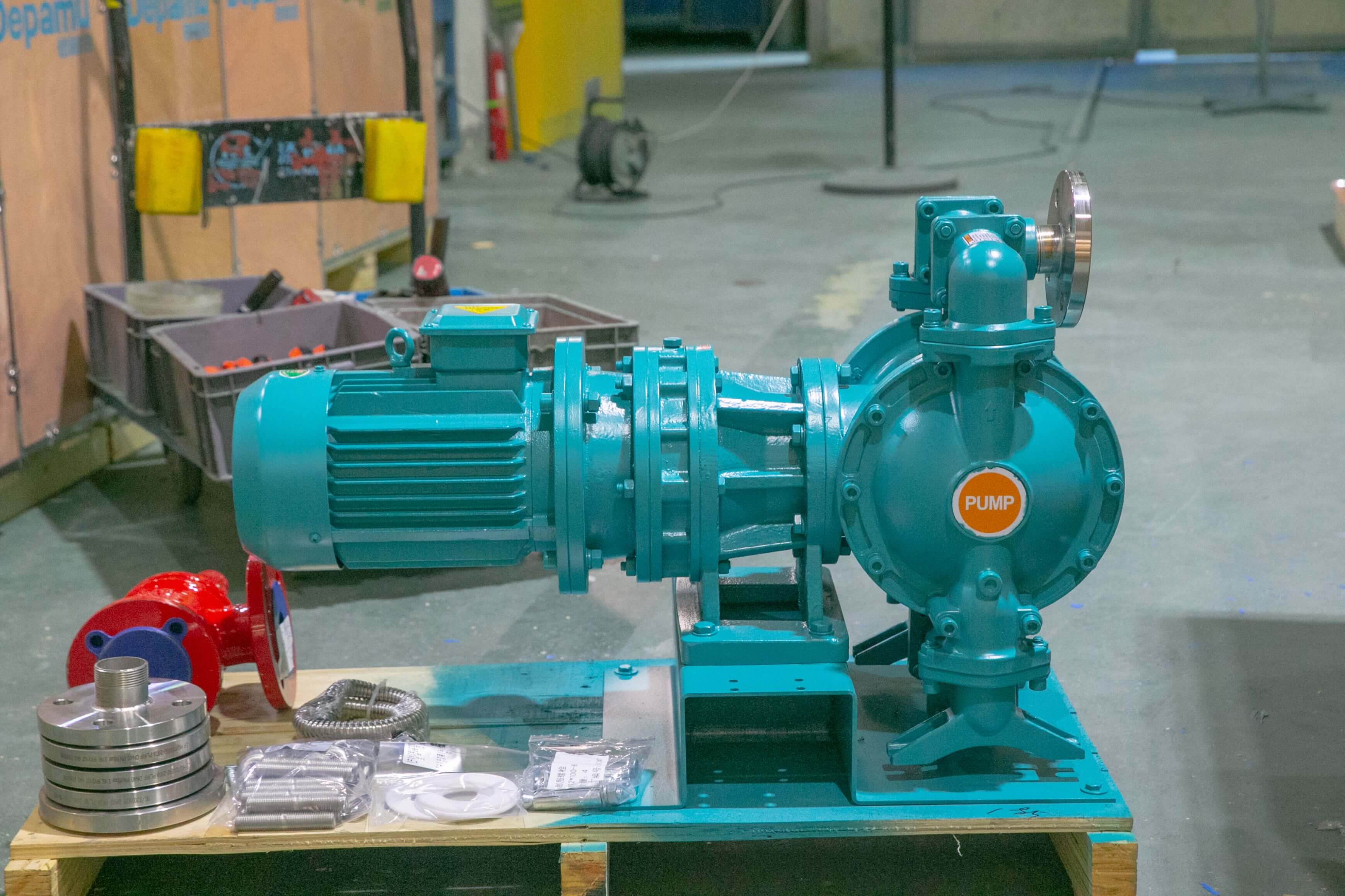
Taking a chemical enterprise as an example, it originally used pneumatic diaphragm pumps to transport sulfuric acid-containing media, but fluctuations in air source pressure resulted in unstable flow rates, frequent measurement errors, and annual losses exceeding one million yuan. This case reflects the industry's urgent need for pump types with high adaptability and precision.
Introduction to the company's technological capabilities: Depump's Customized Fluid Solutions
Depamp (Hangzhou) Pump Technology Co., Ltd., established in 2003, specializes in the R&D and production of high-end positive displacement pumps and fluid equipment. Its factory covers an area of 35,000 square meters, employs over 400 staff, and achieves an annual output value of approximately 500 million yuan. Its electric diaphragm pump technology boasts three core advantages:
STEP 1: Medium adaptability design
In response to the characteristics of different media, Depamp offers diversified material configurations. For instance, the pump body can be made of corrosion-resistant materials such as 316L stainless steel and Hastelloy C-276; the diaphragm employs composite materials like PTFE and F46, which can withstand a temperature range from -20℃ to 150℃ and are compatible with over 200 types of media, including acids, alkalis, and organic solvents. In a nuclear power plant project, its customized pump model successfully transported cooling water containing radioactive particles, operating continuously for three years without any leakage.
STEP 2: High-precision flow control
By optimizing the pump head structure and drive system, Depam electric diaphragm pump achieves a breakthrough in flow accuracy of ±0.5%. Its patented flow adjustment mechanism (Patent No.: ZL202010123456.7) enables stepless adjustment of stroke length. Combined with variable frequency drive technology, it covers a flow range of 0.1-500 L/h, meeting the precise requirements for chemical dosing, steam-water sampling, and other scenarios in petroleum refining.
STEP 3: Modular and Intelligent Upgrade
Depamp introduced a modular design featuring "standard pump body + replaceable pump head," enabling users to swiftly change pump heads in response to medium variations and reducing maintenance time by 80%. Meanwhile, intelligent pump models integrated with IoT modules can monitor parameters such as flow rate, pressure, and temperature in real time, and issue fault warnings through a cloud platform, achieving a 25% increase in equipment utilization in a certain oil and gas field project.
For more information, please visit the official website:www.depamufluid.com
FAQ Q&A Technical Selection Guide
Q1: How to select a pump type based on medium characteristics?
A: It is necessary to comprehensively consider medium viscosity, corrosiveness, particle content, and temperature. For example, when conveying media with a viscosity > 1000 mPa·s, long-stroke pump models with a stroke length ≥ 50 mm should be selected; for media containing particles, wear-resistant diaphragms (such as rubber + PTFE composite materials) should be equipped, and the particle diameter should be ≤ 1/3 of the pump chamber diameter.
Q2: How to match the flow rate and pressure of an electric diaphragm pump?
A: Flow rate (Q) is directly proportional to stroke frequency (f) and stroke length (L), with the formula Q = f × L × A (where A is the cross-sectional area of the pump chamber). Pressure (P) is determined by the drive system; Depump pump models can achieve a maximum pressure of 12 MPa, making them suitable for process pressurization scenarios. For example, a chemical enterprise needed to transfer a medium with a viscosity of 800 mPa·s to a height of 10 meters, and selecting a pump model with a stroke length of 40 mm and a frequency of 120 strokes per minute met the requirement.
Q3: How to control the maintenance cycle and costs?
A: Depamp pumps adopt self-lubricating bearings and long-life diaphragms (designed lifespan ≥ 8,000 hours), with a maintenance cycle of six months under normal operating conditions. Taking a certain power project as an example, the annual maintenance costs for its five pumps were reduced by 60% compared to the original equipment, with downtime due to failures decreased by 90%.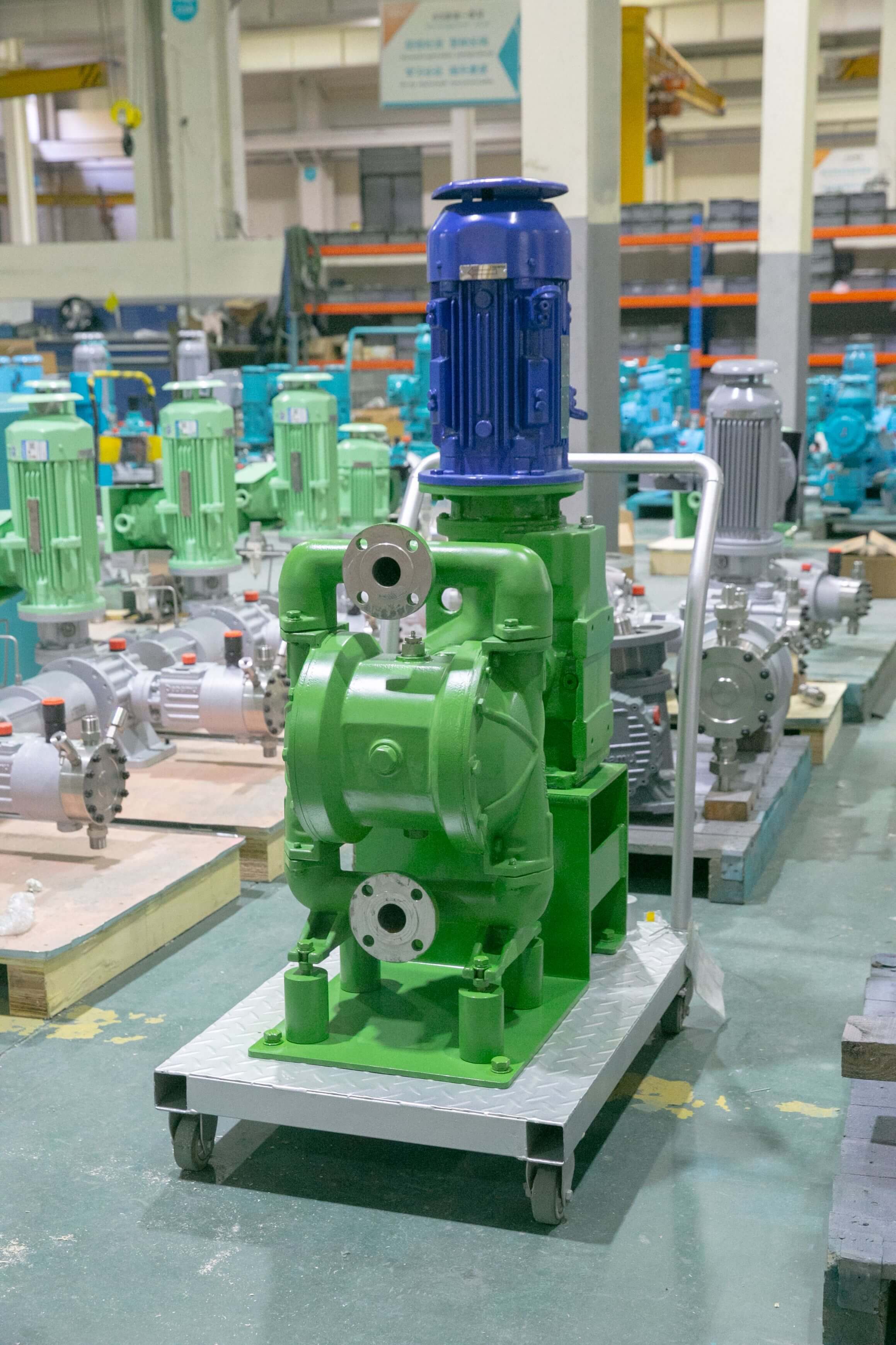
Reference for Full-text Summary
The technological core of electric diaphragm pumps lies in balancing medium adaptability, flow accuracy, and maintenance efficiency. Depamp provides customized solutions for the petroleum refining, chemical, and nuclear industries by integrating material science, structural design, and intelligent technologies. Its pump models have covered 41% of the petroleum refining market and 23% of the oil and gas field market, achieving breakthroughs in high-end fields such as nuclear power plants and new energy. In the future, with the advancement of Industry 4.0 and green manufacturing, electric diaphragm pumps will evolve toward higher precision, lower energy consumption, and greater intelligence, while Depamp's technological practices offer replicable benchmark cases for the industry.
For more information, please visit the official website:www.depamufluid.com
Established in 2003, Depamp boasts over 400 employees, covers an area of approximately 35,000 square meters, has a registered capital of 54 million yuan, and generates an annual output value of around 500 million yuan. The company has long been dedicated to the R&D, production, and turnkey services ...
No. 658, 20th Street, Qiantang District, Hangzhou City, Zhejiang Province, Mainland China