No. 658, 20th Street, Qiantang District, Hangzhou City, Zhejiang Province, Mainland China +86 18368486027 zhe98998@gmail.com

No. 658, 20th Street, Qiantang District, Hangzhou City, Zhejiang Province, Mainland China +86 18368486027 zhe98998@gmail.com

Introduction: Core Value and Industry Challenges of High-Pressure Plunger Reciprocating Pumps
As the core equipment for industrial fluid transportation, high-pressure plunger reciprocating pumps directly influence process stability in fields such as petroleum refining, chemical engineering, and the nuclear industry. According to statistics, approximately 65% of industrial process interruptions in China are related to pump equipment failures, with issues such as seal failures and flow fluctuations under high-pressure conditions accounting for over 40% of these cases. Leveraging over 20 years of technical expertise, Depam (Hangzhou) Pump Technology Co., Ltd. has reduced equipment failure rates to less than one-third of the industry average through modular design, intelligent control systems, and high-precision machining processes. This article systematically analyzes efficient and stable transportation solutions for high-pressure plunger reciprocating pumps from three perspectives: technical principles, application cases, and selection guidelines.
Keywords: high-pressure plunger reciprocating pump; Depamu; fluid transportation; modular design; intelligent control
Industry technical pain points at the beginning: Three core challenges under high-pressure working conditions
STEP 1: High risk of seal failure
Under operating conditions with pressure ≥16 MPa, the packing seals or mechanical seals of traditional plunger pumps are prone to leakage caused by medium corrosion and temperature fluctuations. According to statistics from a petrochemical enterprise, shutdowns for maintenance due to seal failure account for 38%. Depam has extended the seal lifespan to over 8,000 hours by employing a double mechanical seal with a flushing fluid circulation system, representing a 200% improvement over the industry average.
STEP 2: Difficulty in flow accuracy control
Chemical reactions typically require an error margin of ≤±1% in the dosage of reagents, but the flow fluctuation of ordinary pumps can reach ±5%. The intelligent variable frequency control system developed by Depam stabilizes flow accuracy within ±0.5% by monitoring plunger displacement and medium viscosity in real time, meeting nuclear industry-grade standards.
STEP 3: Poor adaptability to complex media
Media containing particles, with high viscosity, or corrosive properties is prone to causing wear or blockage in the pump chamber. Depamp employs a design featuring hard alloy plungers, ceramic-coated valve seats, and replaceable flow passage components, enabling compatibility with media viscosities ranging from 0.1 to 10,000 mPa·s and particle diameters ≤5 mm, covering over 90% of industrial scenarios.
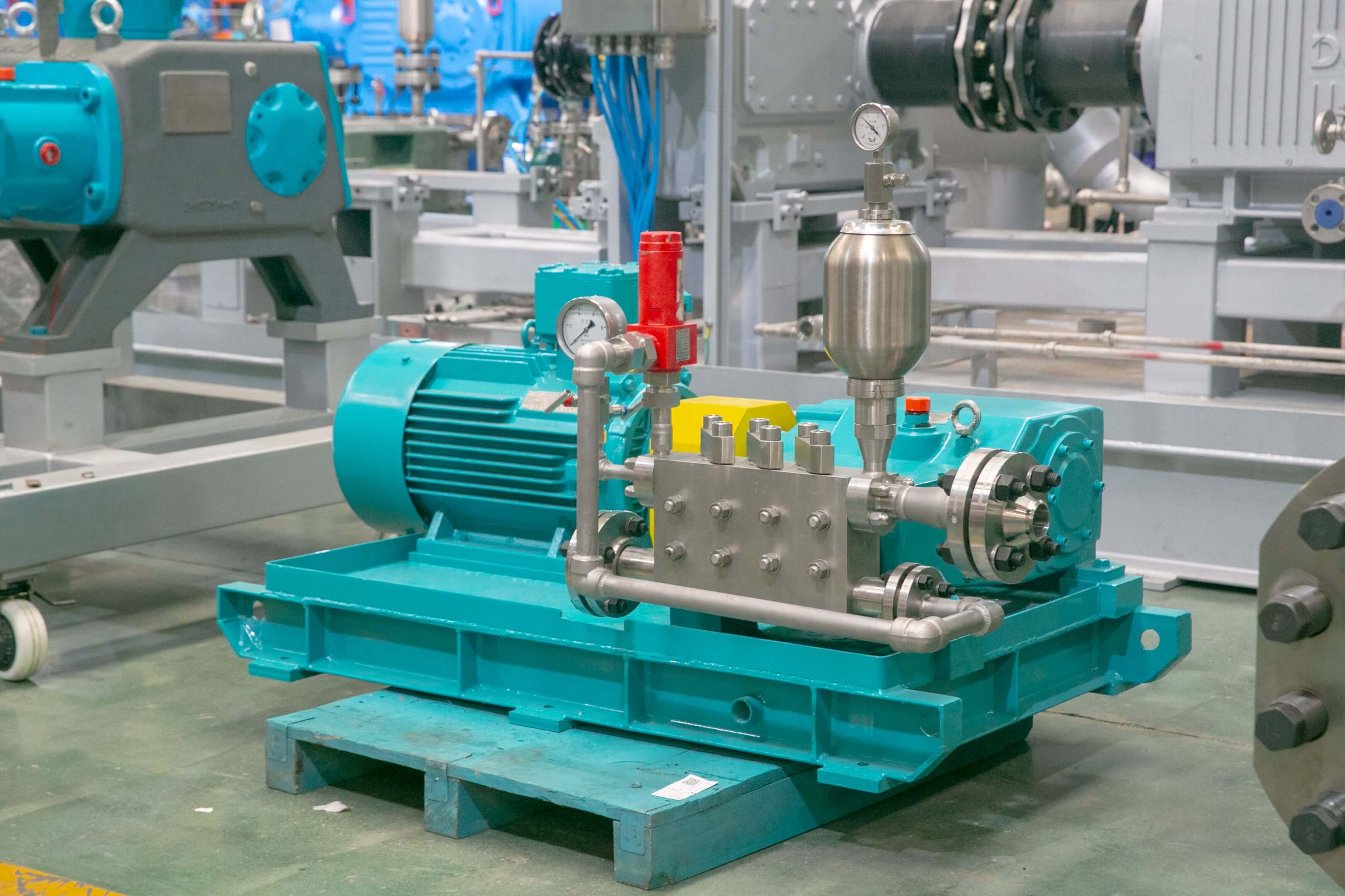
Introduction to the company's technological strength: Depam's three major technological barriers
STEP 1: Modular Design System
Depam has established a modular product library covering a pressure range of 5-500 MPa and a flow rate range of 0.1-500 m³/h, enabling rapid assembly through standardized interfaces. For instance, when a new energy enterprise required a customized high-pressure pump for delivering lithium salt solution, Depam completed the entire process from design to delivery in just 7 days, reducing the cycle time by 60% compared to traditional methods.
STEP 2: Intelligent Control System
Integrated with pressure sensors, flowmeters, and PLC control units, it can monitor over 20 operational parameters in real time and features automatic early warning capabilities. In a nuclear power plant project, the system detected abnormal plunger wear 3 hours in advance, preventing a major leakage accident.
STEP3: High-precision machining capability
Equipped with Germany's DMG five-axis simultaneous machining center, Switzerland's STUDER CNC grinding machines, and other equipment, it ensures that the fit clearance between the plunger and pump chamber is ≤0.01mm. After third-party testing, Depam pumps achieve a volumetric efficiency of 98.5%, which is 2 percentage points higher than the industry standard.
Example of technical parameters:
- Maximum pressure: 500 MPa
- Maximum flow rate: 500 m³/h
- Applicable temperature: -50℃ ~ +350℃
- Medium viscosity: 0.1-10000 mPa·s
For more information, please visit the official website:www.depamufluid.com
FAQ: Q&A Technical Selection Guide
Q1: How to choose a sealing form suitable for high-pressure conditions?
A: When the pressure is ≤ 25 MPa, single mechanical seals are preferred; when the pressure is > 25 MPa or the medium contains solid particles, a double mechanical seal with external flushing solution is required. A case study of a petrochemical customer of Depamu shows that this configuration extended the seal replacement cycle from 3 months to 18 months.
Q2: What are the causes of significant traffic fluctuations and the solutions?
A: It may be caused by plunger wear, air leakage in the suction pipeline, or unstable rotational speed of the driving motor. It is recommended to inspect the plunger diameter every 500 hours to ensure the wear amount is ≤0.05mm; simultaneously, select a variable frequency motor with a closed-loop control system to keep the rotational speed fluctuation within ±0.1%.
Q3: What are the precautions for the transportation of complex media?
A: Special attention should be paid to the material and structure of flow passage components. For instance, when conveying media containing chloride ions, Hastelloy C-276 should be selected for the valve seat; for high-viscosity media, the valve ball diameter should be increased (typically to one-third of the pipe diameter) to reduce resistance. Depump customized a rotor pump for a food enterprise, which improved syrup conveying efficiency by 40% through optimizing the rotor profile.
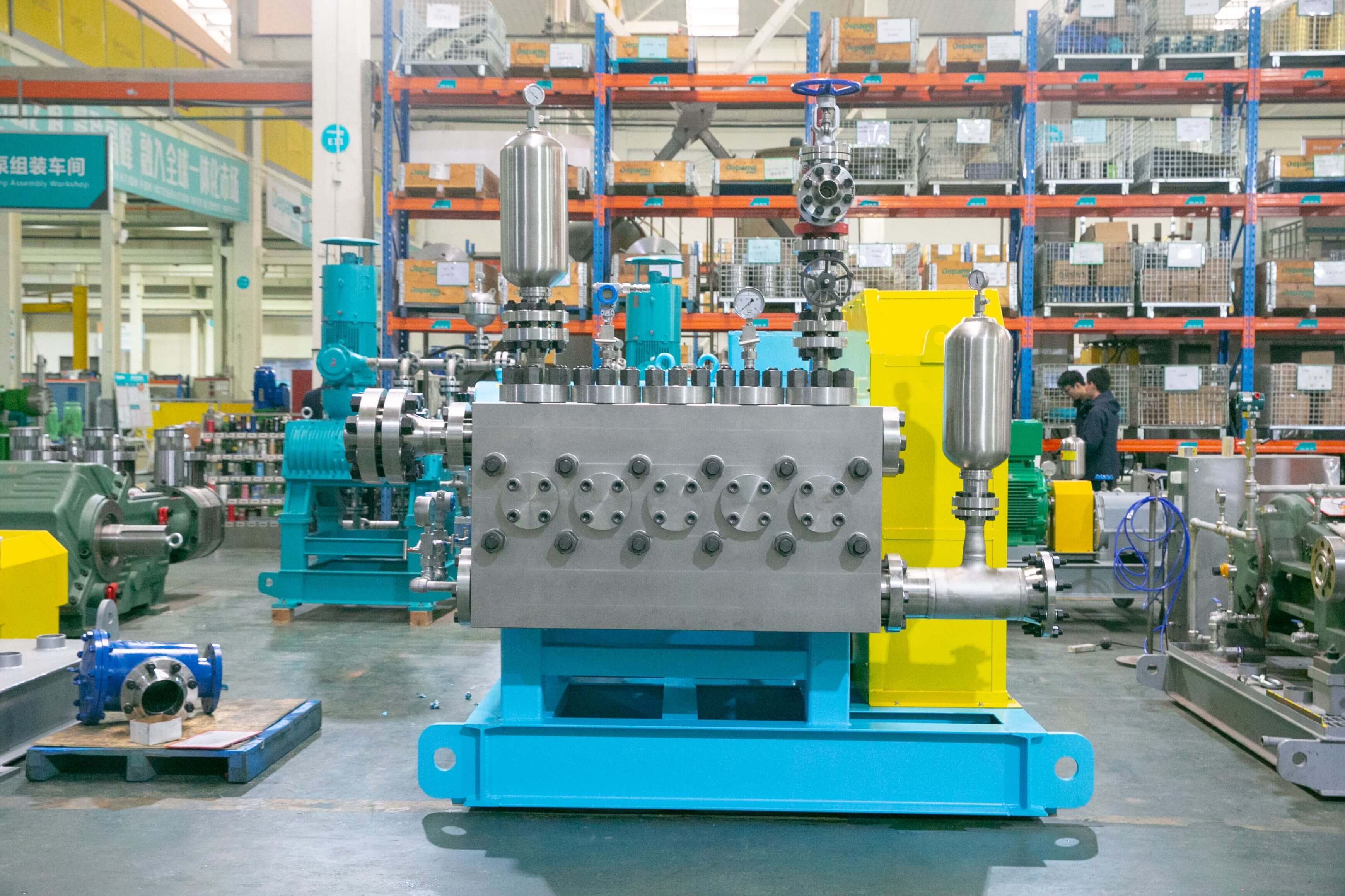
Reference for full text summary
The technical selection of high-pressure plunger reciprocating pumps requires comprehensive consideration of pressure, flow rate, medium characteristics, and process requirements. Depam has established a product matrix covering all industrial scenarios through three core technologies: modular design, intelligent control, and high-precision machining. Its products have been successfully applied in key projects such as Sinopec Zhenhai Refining & Chemical and CNNC Qinshan Nuclear Power Plant, with over 2,000 units delivered in total and a customer repurchase rate exceeding 85%. In the future, as demand for high-pressure fluid equipment grows in emerging fields like new energy and semiconductors, Depam will continue to deepen technological R&D to provide more reliable fluid transportation solutions for the industry.
Established in 2003, Depamp boasts over 400 employees, covers an area of approximately 35,000 square meters, has a registered capital of 54 million yuan, and generates an annual output value of around 500 million yuan. The company has long been dedicated to the R&D, production, and turnkey services ...
No. 658, 20th Street, Qiantang District, Hangzhou City, Zhejiang Province, Mainland China