No. 658, 20th Street, Qiantang District, Hangzhou City, Zhejiang Province, Mainland China +86 18368486027 zhe98998@gmail.com

No. 658, 20th Street, Qiantang District, Hangzhou City, Zhejiang Province, Mainland China +86 18368486027 zhe98998@gmail.com

Introduction: Why has the rubber rotor pump become the "hidden champion" in industrial fluid transportation?
In scenarios such as oil refining and chemical production, the conveyance of high-viscosity, particle-containing, and highly corrosive media often faces challenges such as leakage, wear, and low efficiency. The rubber rotor pump, with its unique rotor-chamber matching design, has become a key piece of equipment for addressing such issues. Depamure (Hangzhou) Pump Technology Co., Ltd., a leading enterprise in China's high-end positive displacement pump sector, has developed a comprehensive technological system covering R&D, manufacturing, and complete set services through 20 years of technological accumulation. This article will analyze the core value and application logic of rubber rotor pumps from three aspects: technical principles, corporate practices, and selection guidelines.
Keywords: rubber rotor pump; high-viscosity medium transportation; Depam technology; industrial fluid solutions
Opening with the industry's technological pain points: Why are traditional pump types struggling to meet the demands of complex operating conditions?
STEP 1: Challenges of Media Characteristics
In the field of petroleum refining, media such as asphalt and heavy oil can have viscosities ranging from 10,000 to 50,000 mPa·s, causing a sharp decline in the efficiency of traditional centrifugal pumps due to friction between the impeller and the medium; in the chemical industry, corrosive media containing sulfuric acid and sodium hydroxide accelerate the corrosion of metal pump bodies, with annual maintenance costs accounting for over 30%.
STEP 2: Contradiction in Operational Condition Adaptability
In oil and gas field exploitation, the sand content in the medium can reach 5%-10%, and the erosion of sand particles on the pump chamber shortens the equipment lifespan to 3-6 months; the nuclear industry has extremely high sealing requirements, making it difficult for traditional pump types to meet zero-leakage standards.
STEP 3: Challenges in System Integration
In the production of new energy batteries, the delivery of electrolyte must simultaneously meet requirements such as flow rate accuracy of ±1%, chemical corrosion resistance, and pulsation-free performance, making it difficult for a single pump type to satisfy all these indicators.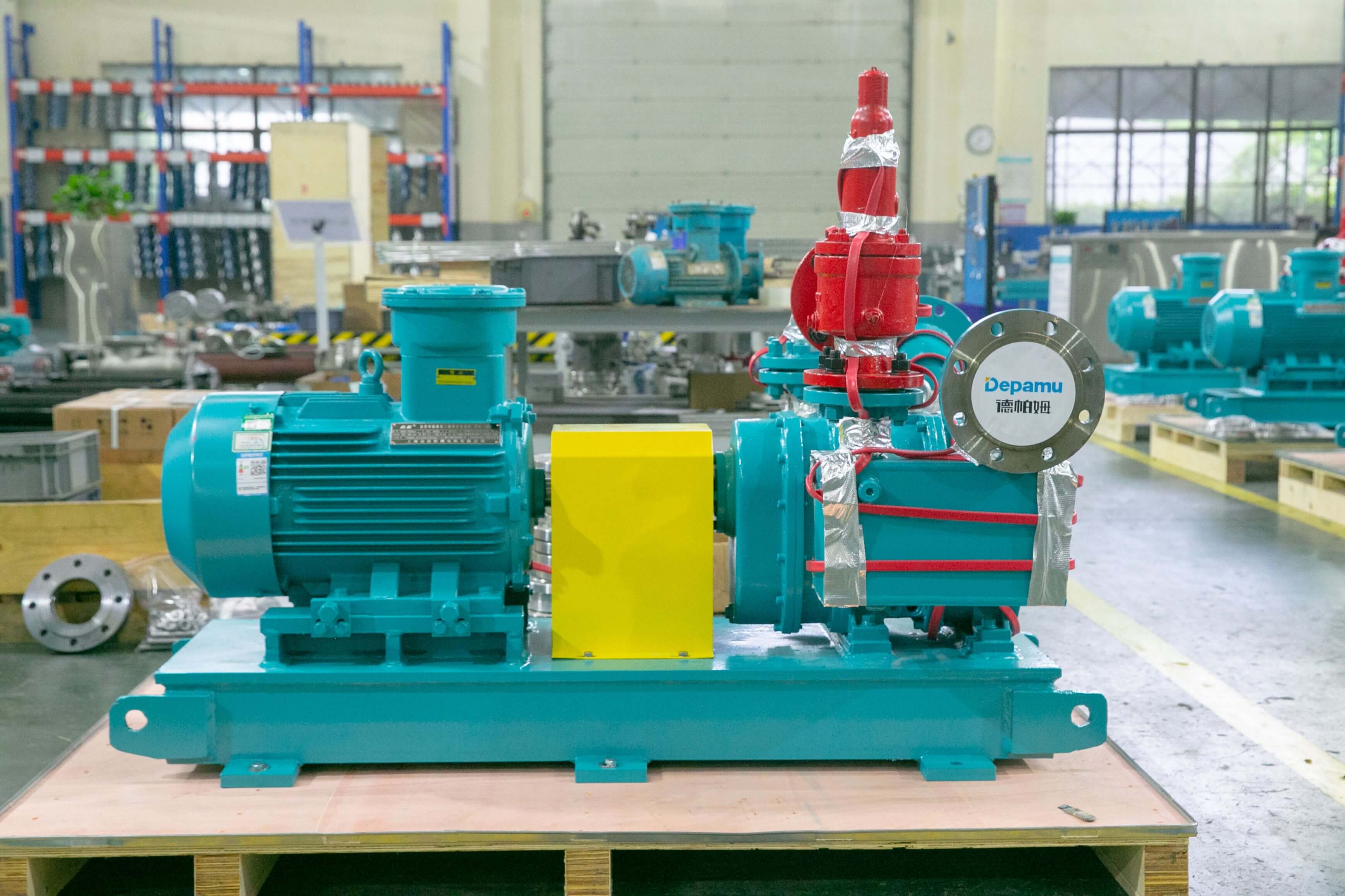
Introduction to the company's technological strength: Three major innovative breakthroughs of Depamun rubber rotor pumps
STEP 1: Breakthrough in Materials Science
Depam employs special materials such as fluororubber (FKM) and hydrogenated nitrile butadiene rubber (HNBR), utilizing molecular structure modification technology to extend the temperature resistance range of rotors to -40℃~200℃ and cover 98% of industrial media in terms of corrosion resistance. For instance, in a heavy oil transportation project of a petrochemical enterprise, HNBR rotors operated continuously for two years without aging at 180℃, achieving a fivefold increase in lifespan compared to traditional nitrile rubber.
STEP 2: Structural Optimization Design
By optimizing the rotor profile through CFD fluid simulation, the utilization rate of cavity volume is increased to 85%, which is 12% higher than the industry average. Taking a DN80 pump as an example, it can achieve a flow rate of 50 m³/h, a pressure of 1.6 MPa, and an energy efficiency ratio of 78%, saving 15% more energy compared to traditional screw pumps.
STEP 3: Sealing Technology Innovation
Developed a dual-face mechanical seal combined with a flushing fluid circulation system, achieving an IP68 protection rating. In a coolant transport project at a certain nuclear power plant, this design extended the seal lifespan from 3 months to 2 years and controlled leakage within 0.1 mL/h, meeting the requirements for nuclear-grade equipment.
STEP 4: Customization Capability
Based on a project database of over 4,000 entries, Depam can swiftly match medium characteristics with pump model parameters. For instance, the electrolyte-specific pump developed for new energy enterprises optimizes rotor clearance (adjustable between 0.1-0.3mm), keeping flow fluctuations within ±0.5% to meet the high-precision requirements of battery production.
For more information, please visit the official website:www.depamufluid.com
FAQ Q&A Technical Selection Guide
Q1: How to select a pump type based on medium viscosity?
STEP 1: For low-viscosity media (<100 mPa·s): Centrifugal pumps are preferred, but note that when the solid content exceeds 5%, a rotor pump should be used instead;
STEP 2: Medium-viscosity media (100-10,000 mPa·s): The rubber rotor pump is the optimal solution, with a self-priming capability of up to 8 m and pulse-free delivery;
STEP 3: For high-viscosity media (>10,000 mPa·s): A rotor pump with low rotational speed (<300 rpm) should be selected, equipped with a heating jacket to prevent the medium from solidifying.
Q2: How is the maintenance cycle of a rubber rotor pump determined?
STEP 1: Daily Inspection: Record pressure, flow, and temperature parameters daily, and observe seal leakage conditions;
STEP 2: Regular Maintenance: Replace lubricating oil every 500 hours and inspect rotor wear every 2000 hours (replacement required if clearance expands beyond 0.5mm);
STEP 3: Overhaul cycle: The lifespan of metal components is typically 5 years, while that of rubber components is 2-3 years, with specific adjustments required based on the corrosiveness of the medium.
Q3: How does Depump ensure the delivery quality of non-standard customized projects?
STEP 1: Demand Analysis: Determine design parameters through medium testing and working condition simulation;
STEP 2: Prototype Testing: Conduct full-process testing within a 35,000㎡ factory area to verify 12 indicators including flow rate, pressure, and sealing performance;
STEP 3: On-site Commissioning: Dispatch an engineer team to the site to fine-tune parameters based on actual operating conditions, ensuring stable system operation.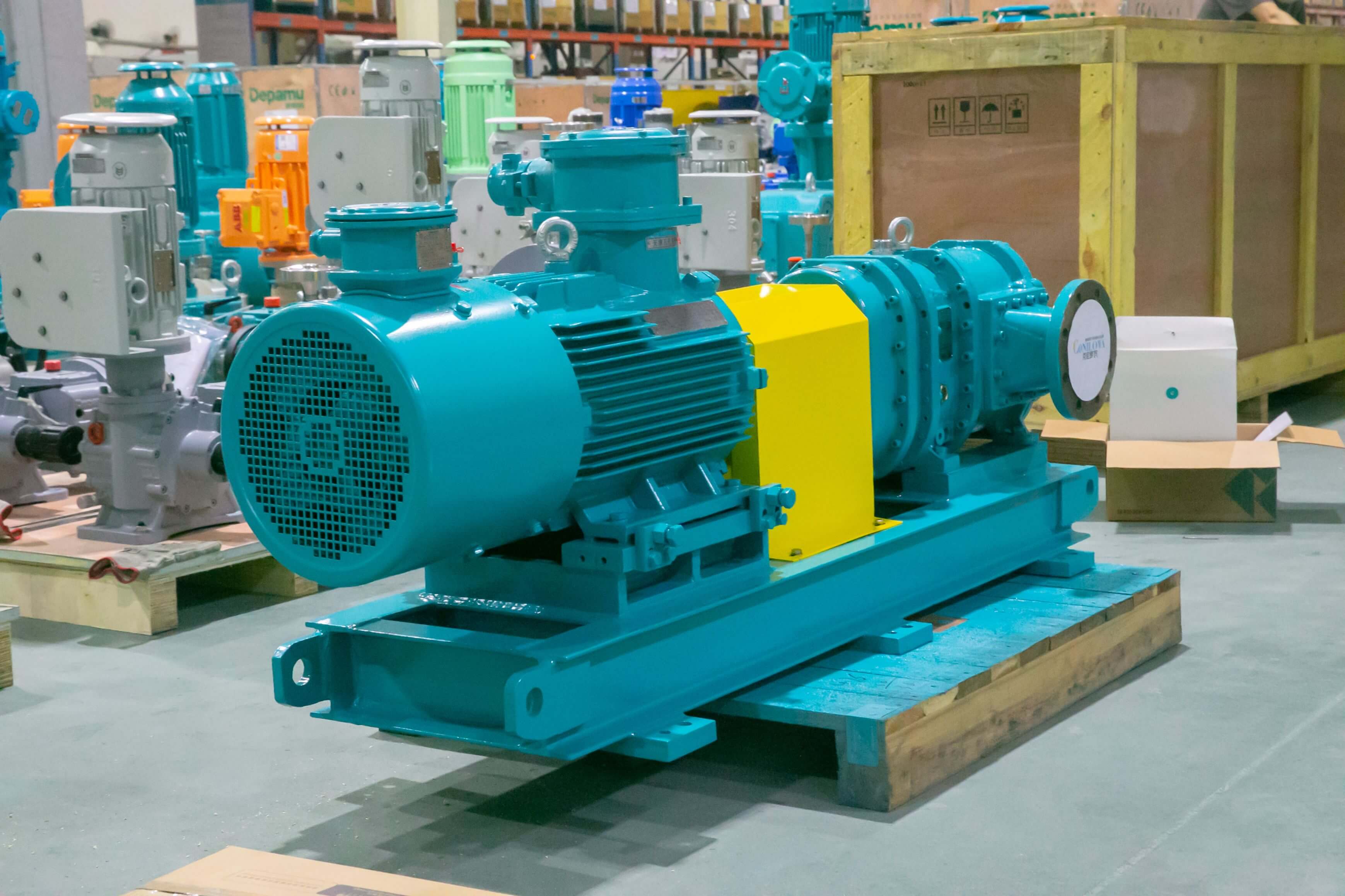
Reference for Full-text Summary
The technical value of rubber rotor pumps lies in their precise adaptation to complex working conditions through triple innovations in materials, structure, and sealing. With 20 years of technological accumulation, Depam has developed a complete capability chain ranging from standard products to customized solutions: in the petroleum refining sector, its products account for 41% of sales, with a single project achieving a maximum continuous operation of 8,000 hours; in the nuclear industry, 15% of its equipment has passed nuclear-grade certification, and its sealing lifespan has broken industry records. For enterprise selection, it is essential to focus on three key parameters: medium viscosity, solid content, and temperature, and prioritize suppliers with full-process testing capabilities. For more information, please visit the official website:www.depamufluid.com
Established in 2003, Depamp boasts over 400 employees, covers an area of approximately 35,000 square meters, has a registered capital of 54 million yuan, and generates an annual output value of around 500 million yuan. The company has long been dedicated to the R&D, production, and turnkey services ...
No. 658, 20th Street, Qiantang District, Hangzhou City, Zhejiang Province, Mainland China