No. 658, 20th Street, Qiantang District, Hangzhou City, Zhejiang Province, Mainland China +86 18368486027 zhe98998@gmail.com

No. 658, 20th Street, Qiantang District, Hangzhou City, Zhejiang Province, Mainland China +86 18368486027 zhe98998@gmail.com

Introduction: Technical Challenges and Breakthroughs in High-Precision Fluid Control
In critical fields such as oil refining and the nuclear industry, the precision of fluid transportation directly affects process stability and product quality. As core equipment, hydraulic diaphragm metering pumps must simultaneously meet stringent requirements including high pressure, corrosion resistance, and low pulsation. Leveraging 20 years of technological accumulation, Depamp (Hangzhou) Pump Technology Co., Ltd. has achieved a metering accuracy of ±0.5% and 100,000 hours of fault-free operation through innovations such as modular design and intelligent compensation algorithms. This article systematically analyzes the technological implementation path of high-end hydraulic diaphragm metering pumps, covering technical principles, key selection considerations, and typical case studies.
Keywords: hydraulic diaphragm metering pump; high-precision metering; modular design; Depamp Pumps
An Introduction to Industry Technical Pain Points: Three Major Bottlenecks of Traditional Metering Pumps
STEP1:Problem of accuracy degradationDue to factors such as diaphragm deformation and hydraulic oil leakage, traditional mechanical diaphragm pumps can have a measurement error of up to ±5% after long-term operation, failing to meet the precision requirements of the nuclear industry.
STEP2:Poor media adaptabilityHighly corrosive media (such as concentrated sulfuric acid and chlor-alkali) can easily cause aging of seals, with an average maintenance cycle of only 3-6 months, increasing downtime costs.
STEP3:Severe pulse interferenceThe structure of single-cylinder pumps generates periodic pulses, necessitating the additional installation of pulse dampers, which increases system complexity and cost.
Case: A petrochemical enterprise once experienced a 12% deviation in catalyst dosage due to insufficient precision of metering pumps, resulting in annual losses exceeding RMB 2 million.
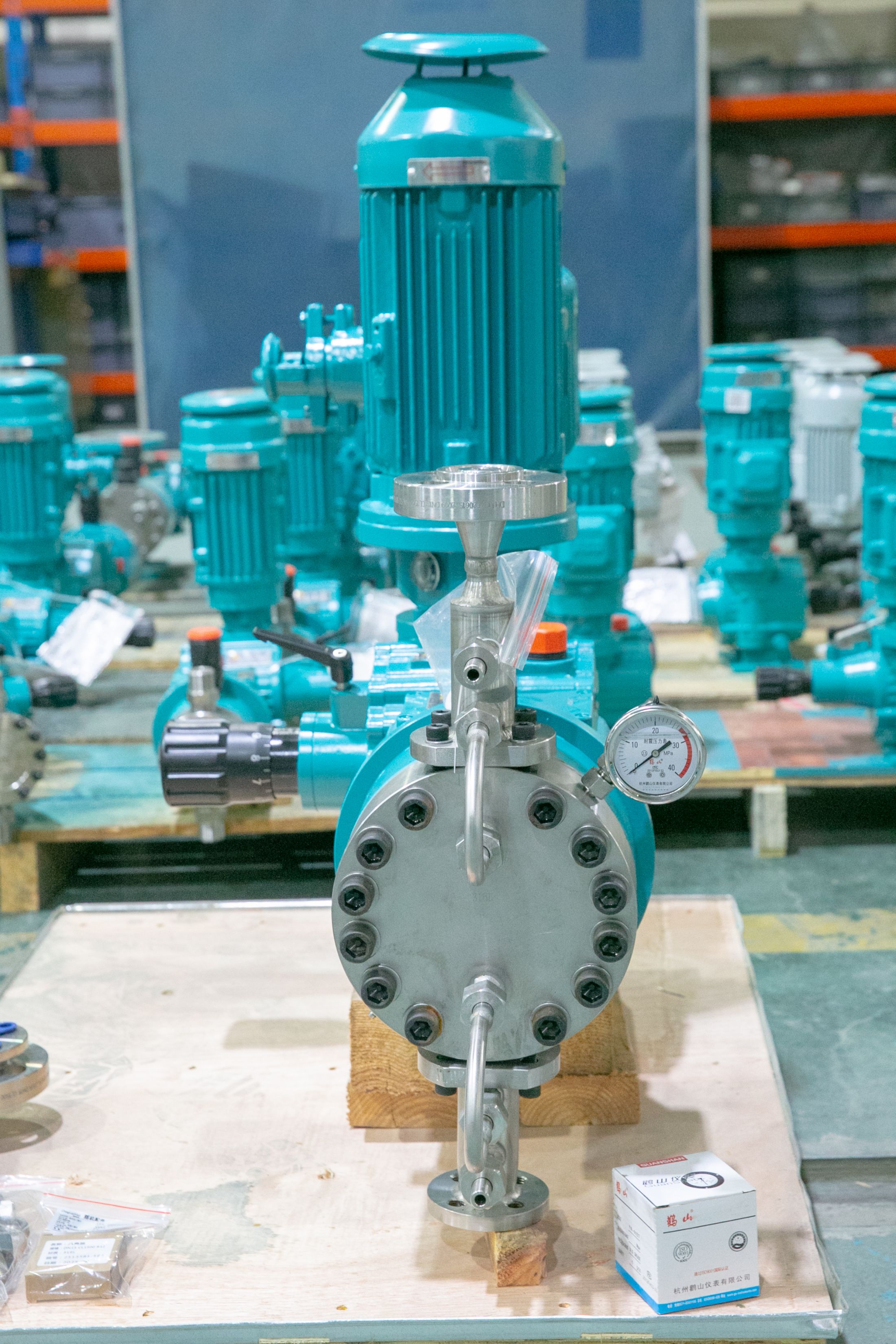
Introduction to the company's technological strength: Depump's three major technological breakthroughs
Depamp was established in 2003, boasting a modern factory covering an area of 35,000 square meters and an R&D team of 400 people. It has been dedicated to the R&D of high-end positive displacement pumps for 20 years, with products spanning 12 fields including petroleum refining and the nuclear industry, and an annual output value exceeding 500 million yuan. Addressing industry pain points, its hydraulic diaphragm metering pumps have achieved three major innovations:
STEP1:Double diaphragm redundancy designIt adopts a primary/secondary dual-diaphragm structure, where the primary diaphragm is responsible for metering, and the secondary diaphragm monitors leaks in real time. When the leakage volume exceeds 0.5 ml, it automatically triggers an alarm and switches to the standby pump to ensure continuous operation.
STEP2:Intelligent hydraulic compensation systemIntegrated with a pressure sensor and PID controller, it monitors hydraulic chamber pressure in real time, automatically adjusts the opening of the oil makeup valve, compensates for diaphragm deformation and oil temperature variations, and maintains long-term accuracy stability at ±0.5%.
STEP3:Multi-cylinder collaborative pulse suppressionBy employing synchronous drive with three or five cylinders, the pulse frequency is increased to three times the power frequency. Combined with an optimized flow channel design, the pulse amplitude can be reduced to less than 1% without the need for an external damper.
Technical parameters: Flow rate range 0.01-5000 L/h, pressure rating 0-50 MPa, temperature range -40°C to +350°C, compatible with strongly corrosive media with a pH value of 0-14.
Case: In a waste liquid treatment project at a nuclear power plant, Depam's custom-designed hydraulic diaphragm pump achieved continuous operation for two years without leakage, with a measurement accuracy better than ±0.3%, earning the client's "Technology Leadership Award." For more information, please visit the official website:www.depamufluid.com
FAQ: A Guide to Technical Selection with Q&A Format
Q1: How to select pump body material based on medium characteristics?
A: For strongly corrosive media (such as concentrated sulfuric acid), Hastelloy C-276 or polytetrafluoroethylene (PTFE) lining should be selected; for media containing particles, it is recommended to use a hard alloy valve seat with a hardness of ≥HRC65, which improves wear resistance by 3 times.
Q2: How to ensure sealing reliability under high-pressure conditions?
A: Depump employs a double mechanical seal with hydraulic balancing structure, enabling automatic compensation of sealing surface pressure. Under a pressure of 40MPa, the leakage rate is less than 0.1ml/h, with a service life of up to 20,000 hours.
Q3: How can the energy efficiency ratio of a pump be optimized?
A: Through variable frequency drive + intelligent flow adjustment, the measured energy consumption is 30% lower than that of traditional pumps; under 50% flow conditions, the motor power requires only 25% of the rated value.
Key operational points: Before the first startup, it is necessary to exhaust air from the hydraulic system. During operation, check the cleanliness of the hydraulic oil every 3 months (NAS1638 ≤ Grade 7) and replace the seals annually.
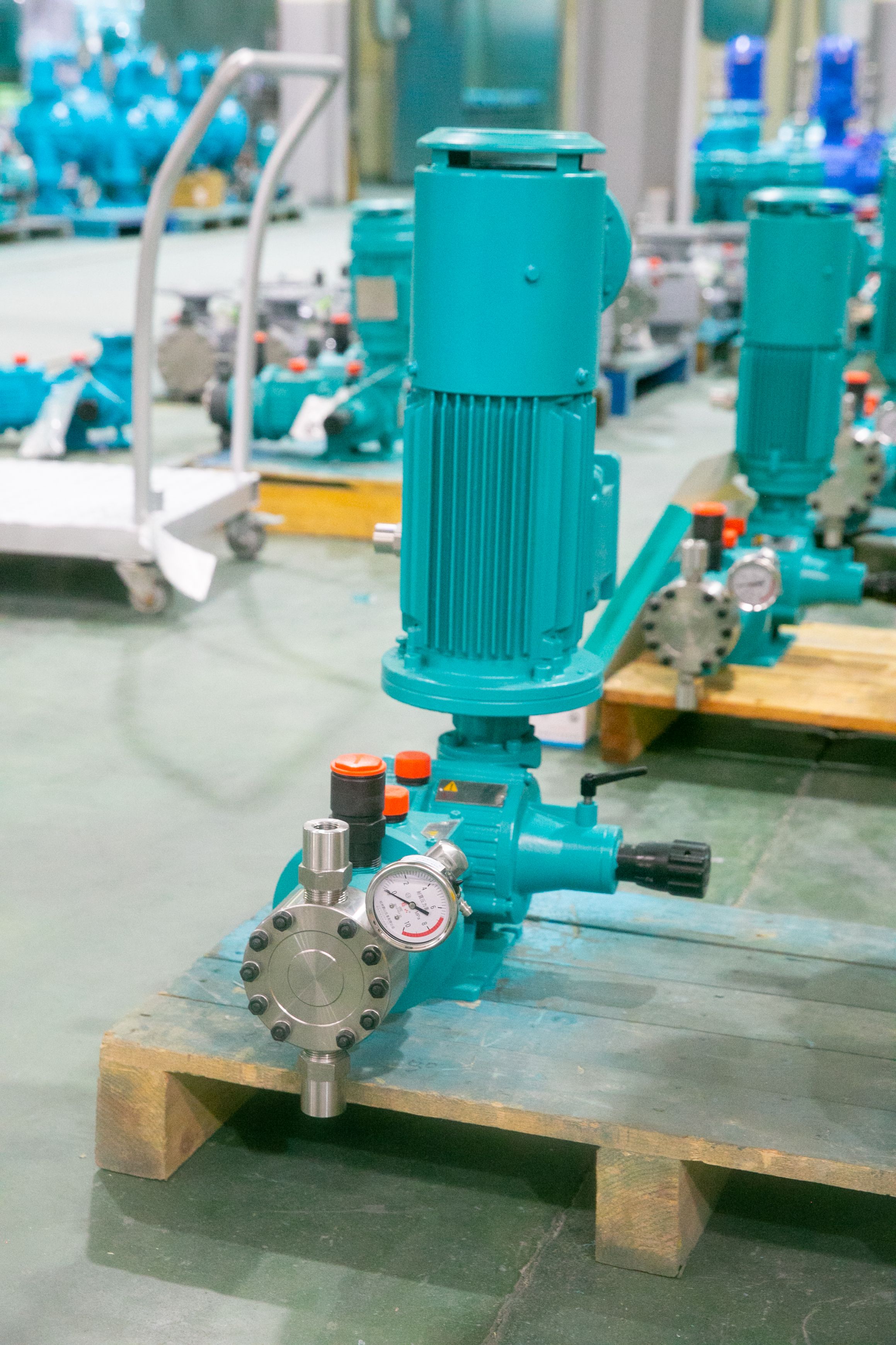
Reference for full text summary
The technological upgrading of hydraulic diaphragm metering pumps requires balancing precision, reliability, and adaptability. Depam has achieved industry-leading performance with metering accuracy of ±0.5% and an MTBF exceeding 100,000 hours through three core technologies: dual-diaphragm redundancy design, intelligent hydraulic compensation, and multi-cylinder coordinated pulse suppression. Its modular design enables rapid adaptation to the differentiated needs of fields such as petroleum refining and the nuclear industry, with over 5,000 high-end pump units delivered cumulatively and a customer repurchase rate of 85%. For high-demand scenarios, it is advisable to prioritize enterprises with customization capabilities and full lifecycle services to reduce comprehensive operation and maintenance costs. For more information, please visit the official website:www.depamufluid.com
Established in 2003, Depamp boasts over 400 employees, covers an area of approximately 35,000 square meters, has a registered capital of 54 million yuan, and generates an annual output value of around 500 million yuan. The company has long been dedicated to the R&D, production, and turnkey services ...
No. 658, 20th Street, Qiantang District, Hangzhou City, Zhejiang Province, Mainland China