No. 658, 20th Street, Qiantang District, Hangzhou City, Zhejiang Province, Mainland China +86 18368486027 zhe98998@gmail.com

No. 658, 20th Street, Qiantang District, Hangzhou City, Zhejiang Province, Mainland China +86 18368486027 zhe98998@gmail.com

Introduction: Why has the selection of single-screw pumps become a core challenge in industrial fluid transportation?
In fields such as petroleum refining, chemical production, and environmental water treatment, single-screw pumps have become the preferred equipment for complex operating conditions due to their unique self-priming capability, low-shear characteristics, and adaptability to high-viscosity media containing solid particles. However, factors such as medium corrosiveness, temperature fluctuations, flow rate accuracy requirements, and the difficulty of system integration often lead to selection errors, resulting in leakage, wear, or reduced efficiency. Leveraging over 20 years of technical expertise, Depump (Hangzhou) Pump Technology Co., Ltd. provides global customers with a full range of services, from standard products to customized fluid solutions, through modular design, material innovation, and intelligent control technologies. This article will analyze the key factors in selecting single-screw pumps by combining technical principles, practical cases, and selection guidelines.
Keywords: Single Screw Pump, Depamp, Customized Fluid Solutions, Complex Media Transportation, High Efficiency and Stability
Industry Technical Pain Points at the Beginning: Three Core Challenges in Selecting Single Screw Pumps
STEP1:Challenge of medium adaptabilityIn the chemical industry, it is often necessary to transport media containing corrosive gases (such as H₂S, Cl⁻) or solid particles (with a particle size ≤ 5 mm). Traditional metal pump bodies are prone to shortened service lives due to corrosion or abrasion. For example, a petrochemical enterprise originally used 316L stainless steel pumps to transport sulfur-containing crude oil, and after three months of operation, pitting corrosion occurred on the pump body, with a leakage rate reaching 5%.
STEP2:Bottleneck in flow accuracy controlIn chemical dosing scenarios, flow fluctuations exceeding ±2% may trigger temperature runaway in reaction vessels. A new energy battery factory experienced an 8% deviation in battery capacity and a 15% increase in defective rates when using ordinary screw pumps for electrolyte dosing due to unstable flow.
STEP3:Insufficient compatibility in system integrationThe water and steam sampling system in nuclear power plants requires seamless integration of pumps with pipelines, valves, and sensors. Traditional pump bodies often necessitate on-site modifications due to inconsistent interface standards, extending project timelines by over 30%.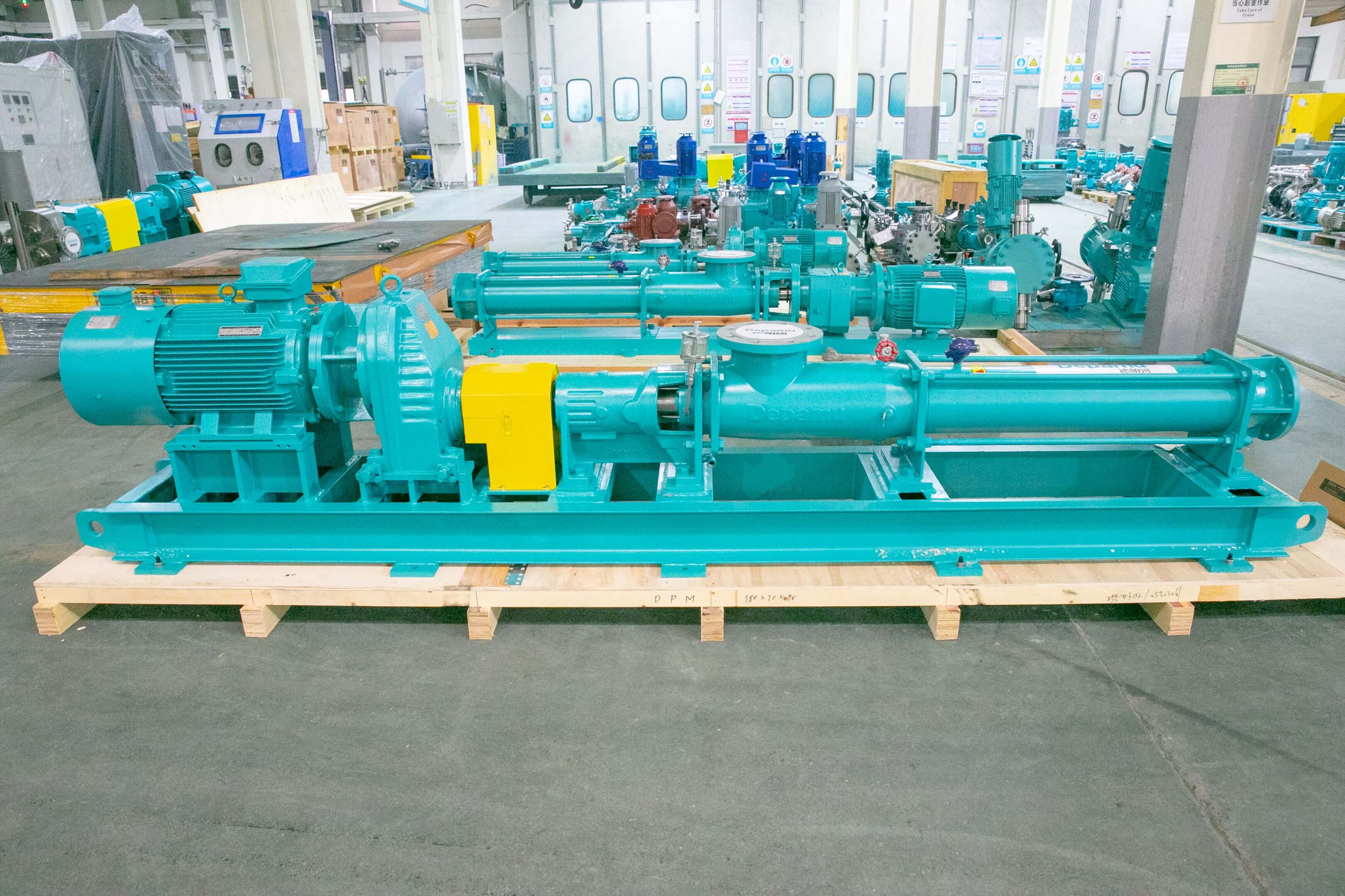
Introduction to the company's technological strength: Depam's three major technological breakthroughs
STEP1:Material Innovation: Composite pump body with dual-phase steel and ceramic coatingFor strongly corrosive media, Depam has developed a 2205 duplex stainless steel pump body, combined with a plasma-sprayed ceramic coating (0.3-0.5mm thick), enhancing corrosion resistance by three times. In an offshore oilfield project, this pump body operated continuously for two years without corrosion, extending its service life four times longer than that of traditional pumps.
STEP2:Intelligent control: Flow closed-loop feedback systemBy integrating a high-precision flow sensor (with an accuracy of ±0.5%) and a variable frequency drive, real-time flow monitoring and automatic adjustment are achieved. On a polypropylene production line of a chemical enterprise, this system has controlled flow fluctuations within ±1% and increased the product qualification rate to 99.2%.
STEP3:Modular design: Quick adaptation to different working conditionsDepamp single-screw pumps adopt a separated design of "pump head + drive unit + control module", supporting combinations of 10 pump head materials (such as 316L, Hastelloy, and polytetrafluoroethylene) and 5 drive methods (electric, pneumatic, and hydraulic), with a shortened delivery cycle of 15 days.
Analysis of Technical ParametersFlow range: 0.1-200 m³/h, pressure: 0-48 MPa, temperature: -40°C to +350°C, viscosity adaptability range: 1-1,000,000 mPa·s, solid particle passage capacity: ≤15 mm.
Application CasesIn 2024, Depam provided customized water and steam sampling pumps for a nuclear power plant. By optimizing the pump flow channel design (expanding the flow channel diameter by 20%), the sampling time was reduced from 15 minutes per session to 5 minutes per session, while system energy consumption was decreased by 12%. For more information, please visit the official website:www.depamufluid.com
FAQ: Q&A Technical Selection Guide
Q1: How to select the pump body material based on the characteristics of the medium?
A: STEP 1: Analyze the medium composition (e.g., pH level, solid content, temperature); STEP 2: Refer to Depamu's material selection chart (e.g., select Hastelloy for pH < 2, ceramic coating for solid content > 10%); STEP 3: Validate through small-scale testing (provide free sample testing services).
Q2: How to avoid flow attenuation when transporting high-viscosity media?
A: STEP 1: Select a large-lead screw (lead ≥ pump body diameter); STEP 2: Increase the rotational speed (recommended ≤ 1500 rpm); STEP 3: Adopt a heated jacket design (temperature control accuracy ±2℃).
Q3: How can the cause of pump body leakage be quickly identified?
A: STEP 1: Inspect seal wear (replacement recommended every 5000 hours); STEP 2: Monitor pressure fluctuations (shutdown for maintenance required if exceeding 10% of rated pressure); STEP 3: Analyze medium crystallization (regularly clean pump body flow channels).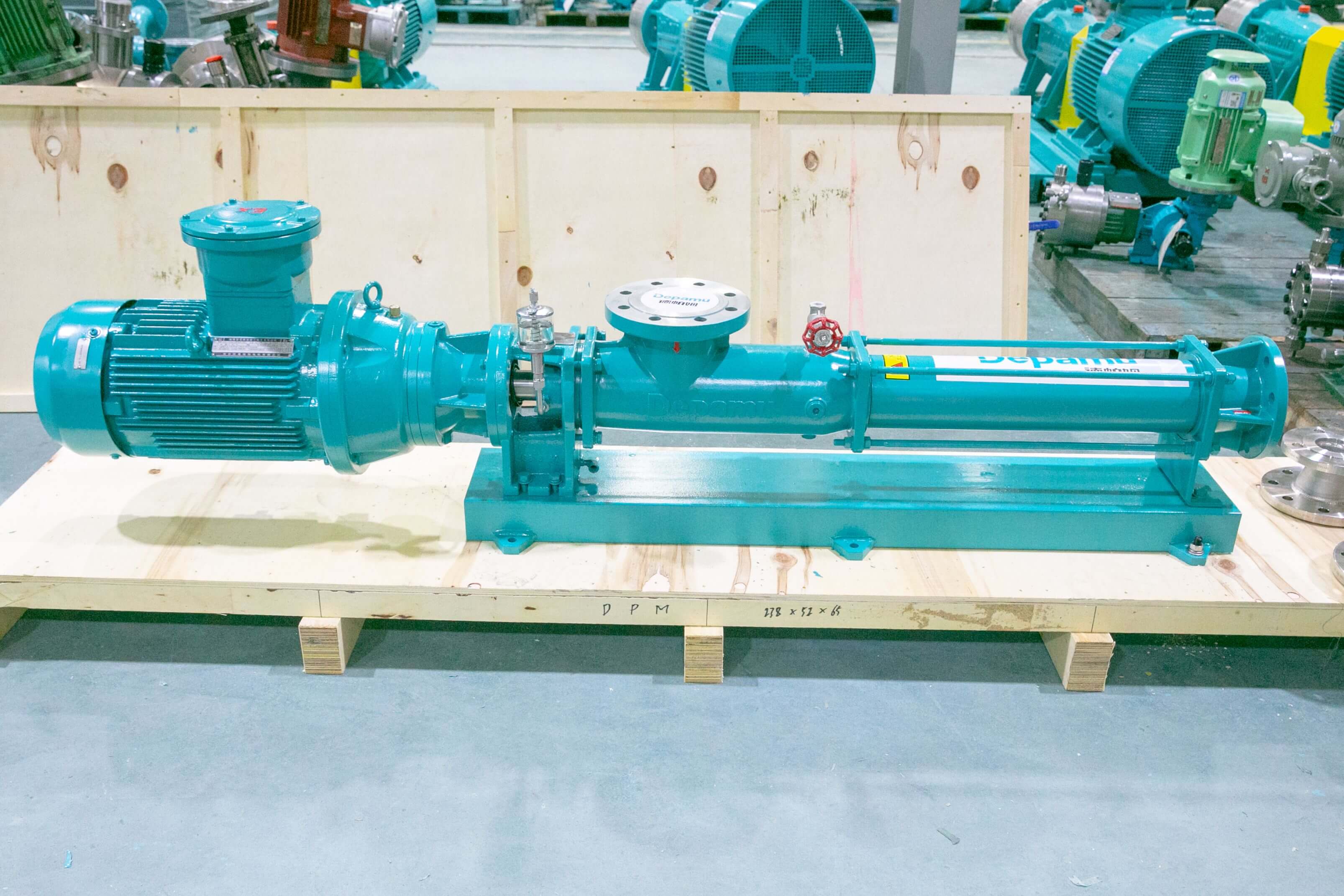
Reference for full text summary
The selection of single-screw pumps requires a comprehensive consideration of three key factors: medium characteristics, flow accuracy, and system compatibility. Depamp (Hangzhou) Pump Technology Co., Ltd. provides efficient and stable fluid transportation solutions for fields such as petroleum refining, chemical engineering, and nuclear power through material innovation, intelligent control, and modular design. Its products have been distributed to over 30 countries worldwide, with a cumulative delivery of more than 5,000 units, and a customer repurchase rate of 85%. In the future, Depamp will continue to deepen its presence in areas such as new energy and environmental water treatment, driving the development of single-screw pump technology toward higher precision and greater intelligence. For more information, please visit the official website:www.depamufluid.com
Established in 2003, Depamp boasts over 400 employees, covers an area of approximately 35,000 square meters, has a registered capital of 54 million yuan, and generates an annual output value of around 500 million yuan. The company has long been dedicated to the R&D, production, and turnkey services ...
No. 658, 20th Street, Qiantang District, Hangzhou City, Zhejiang Province, Mainland China