No. 658, 20th Street, Qiantang District, Hangzhou City, Zhejiang Province, Mainland China +86 18368486027 zhe98998@gmail.com

No. 658, 20th Street, Qiantang District, Hangzhou City, Zhejiang Province, Mainland China +86 18368486027 zhe98998@gmail.com

Introduction: Core Challenges in Industrial Fluid Transportation and Technological Breakthroughs of Electric Diaphragm Pumps
In industrial scenarios such as oil refining and chemical production, the stability of fluid transportation directly affects production efficiency and equipment lifespan. Traditional pump types often face issues such as high leakage risks and high maintenance costs when dealing with corrosive media, high-viscosity liquids, or scenarios requiring precise metering. Electric diaphragm pumps, with their leak-free design, strong self-priming capability, and variable-flow transportation characteristics, have gradually become the preferred equipment for complex operating conditions. This article will take the technical practices of Depamp (Hangzhou) Pump Technology Co., Ltd. as an example to analyze how electric diaphragm pumps achieve efficient and stable transportation through structural optimization and material innovation, providing technical selection references for enterprises.
Keywords: electric diaphragm pump; Depamp; industrial fluid transportation; leak-free design; customized solutions
Opening on Industry Technical Pain Points: Limitations of Traditional Pump Types and the Demand for Industrial Upgrading
In industrial fluid transportation scenarios, traditional equipment such as centrifugal pumps and gear pumps has three core pain points:
STEP 1: Poor media adaptabilityIn fields such as chemical engineering and the nuclear industry, the transportation of highly corrosive liquids (such as concentrated sulfuric acid and hydrochloric acid) is often required. The metal components of traditional pumps are prone to corrosion, leading to an increased risk of leakage. According to statistics, safety incidents caused by pump body leakage in the chemical industry account for 37% of the total, with maintenance costs exceeding 25% of the total equipment costs.
STEP 2: Insufficient measurement accuracyIn scenarios such as chemical dosing and water treatment, flow rate fluctuations exceeding ±5% may affect process stability. Traditional pump types rely on mechanical adjustment, making it difficult to achieve micro-flow control, with error rates reaching up to 15% especially under low flow rate conditions (<1 L/h).
STEP 3: High maintenance costsThe dynamic sealing structure of traditional pumps requires regular replacement of seals, with a single maintenance cost of approximately 2,000-5,000 yuan and a downtime for inspection and repair as long as 4-8 hours, seriously affecting production continuity.
These pain points are driving the industry to upgrade to pump types that are leak-free, highly precise, and require low maintenance. Electric diaphragm pumps have become a key solution to address the aforementioned issues due to their unique technological advantages.
Introduction to the Company's Technological Strength: DePam's Technological Layout and Practice in Electric Diaphragm Pumps
Depam (Hangzhou) Pump Technology Co., Ltd., established in 2003, specializes in the research and development of high-end positive displacement pumps and fluid equipment. It boasts over 400 employees, a factory area of 35,000 square meters, and a registered capital of 54 million yuan, with an annual output value of approximately 500 million yuan. Its electric diaphragm pump technology system encompasses three core modules:
STEP 1: Material Innovation and Corrosion-Resistant DesignFor highly corrosive scenarios such as the chemical and nuclear industries, Depam utilizes special engineering plastics like PTFE and PVDF, combined with metallic materials such as Hastelloy and titanium alloys, to achieve complete isolation between the pump body and the medium. For instance, the flow passage components of its DP-M series electric diaphragm pump are made of PTFE + carbon fiber composite materials, meeting the corrosion resistance standards of ISO 21469. It can stably transport 98% concentrated sulfuric acid, with a service life three times longer than that of traditional pumps.
STEP2: Precision Measurement and Flow Control TechnologyBy integrating stepper motors with intelligent drive modules, Depam electric diaphragm pumps achieve stepless flow adjustment with an accuracy of ±1%. Its DP-C series chemical dosing pumps employ closed-loop control algorithms to automatically adjust stroke frequency (1-120 strokes per minute) according to process requirements, maintaining stable output within a flow range of 0.1-1000 L/h to meet the demands of high-precision scenarios such as cooling water dosing in nuclear power plants and catalyst injection in petroleum refining.
STEP 3: Modular Design and Rapid Maintenance StructureDepamp electric diaphragm pumps feature a quick-disassembly design, reducing the replacement time for wear parts such as diaphragms and valve balls to under 10 minutes. For example, the diaphragm replacement of its DP-G series pneumatic diaphragm pumps does not require disassembly of the pump body; the operation can be completed by simply loosening four sets of bolts, enhancing maintenance efficiency by 80%. Additionally, the modular design allows users to flexibly select components such as explosion-proof motors and frequency converters based on operating conditions, enabling adaptation to extreme temperature environments ranging from -40°C to 120°C.
Technology Implementation Case: Revamping of a Catalytic Cracking Unit in a Petrochemical EnterpriseIn 2023, Depam provided a petrochemical enterprise with DP-M series electric diaphragm pumps to replace the original gear pumps for catalyst transportation. After the transformation, the system leakage rate decreased from 3 times per month to 0, the flow fluctuation reduced from ±8% to ±1.5%, and the annual maintenance cost was cut by 420,000 yuan. This case verified the reliability of Depam's electric diaphragm pumps under high-pressure (16 MPa) and high-temperature (200°C) conditions.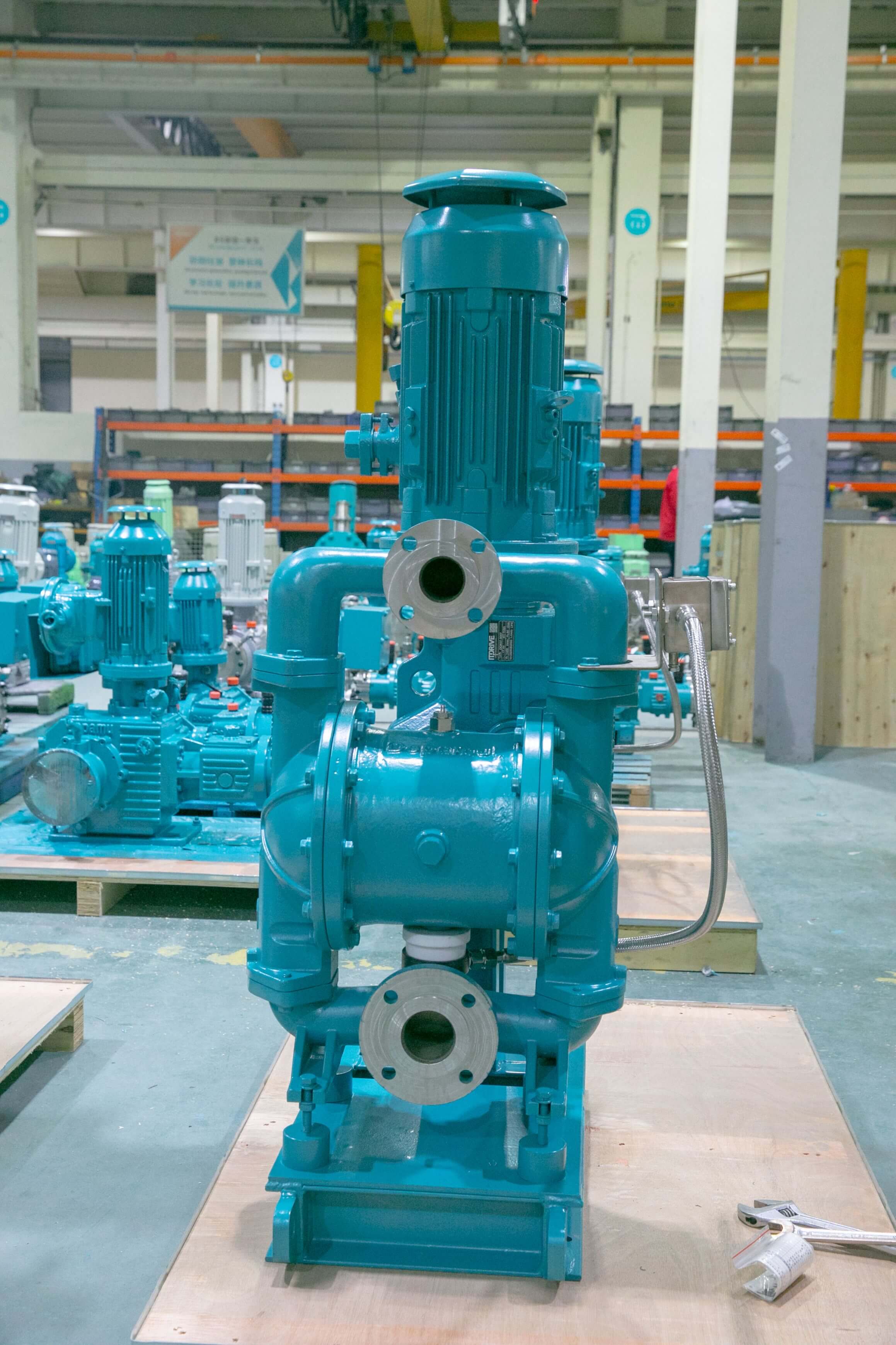
For more information, please visit the official website:www.depamufluid.com
FAQ: Q&A Guide to Technical Selection: Core Parameters and Suitable Scenarios of Electric Diaphragm Pumps
Q1: How to select diaphragm materials based on media characteristics?
A1:The diaphragm material requires comprehensive consideration of the medium's corrosiveness, viscosity, and temperature:
- PTFE (Polytetrafluoroethylene)It is resistant to strong acids, strong alkalis, and organic solvents, with an applicable temperature range of -20℃ to 150℃. However, it has relatively poor abrasion resistance and is suitable for conveying clean media.
- Rubber (NBR/FPM)Oil-resistant, abrasion-resistant, suitable for temperatures ranging from -10℃ to 100℃, but with relatively weak chemical resistance, suitable for conveying lubricating liquids;
- Metal diaphragm (Hastelloy/titanium alloy)It is resistant to high temperature and high pressure, with an applicable temperature of up to 300°C, but has a relatively high cost, making it suitable for scenarios such as the nuclear industry and high-temperature steam applications.
Depump provides material testing services, conducting 48-hour corrosion resistance tests based on user-provided medium samples to ensure material compatibility.
Q2: How is the flow adjustment range of an electric diaphragm pump determined?
A2:The flow range is determined by the pump's stroke length, stroke frequency, and diaphragm area. The flow calculation formula for Depam electric diaphragm pumps is as follows:
Q = A × S × f × η
Here, A represents the diaphragm area (m²), S represents the stroke length (m), f represents the stroke frequency (strokes per minute), and η represents the volumetric efficiency (typically ranging from 0.85 to 0.95). For example, the DP-C series pump has a diaphragm area of 0.0005 m², a stroke length of 0.02 m, and a frequency range of 1-120 strokes per minute, resulting in a theoretical flow rate range of 0.051-6.12 L/min. A 20% margin should be reserved during actual selection to accommodate process fluctuations.
Q3: How to plan the maintenance cycle of electric diaphragm pumps?
A3:The maintenance cycle depends on the intensity of operating conditions and the characteristics of the medium. It is recommended to follow the following standards:
- Daily inspectionConduct daily checks on the pump body temperature, leakage, and operational noise, and record flow and pressure data;
- Monthly maintenanceClean the valve seat, replace the grease (if it is a mechanical seal), and check the motor insulation resistance;
- Annual overhaulReplace vulnerable parts such as diaphragms and valve balls, and inspect the pump body concentricity and motor performance.
Depam provides remote monitoring modules that can transmit the pump's operational parameters to the cloud in real time, predict maintenance time through AI algorithms, and reduce the risk of unplanned downtime by 60%.
Reference for Full-text Summary: Technical Value of Electric Diaphragm Pumps and Industry Practices of Depamp
The electric diaphragm pump effectively addresses challenges related to corrosion, precision, and maintenance in industrial fluid transportation through its leak-free design, precise metering capability, and modular structure. Depam (Hangzhou) Pump Technology Co., Ltd., leveraging 20 years of technological accumulation, has established a comprehensive technological system covering materials, control, and maintenance. Its products have served over 10 industries, including petroleum refining, chemical engineering, and the nuclear industry, with cumulative deliveries exceeding 50,000 units and a customer repurchase rate of 85%. For enterprises, when selecting electric diaphragm pumps, key considerations should include material compatibility, flow adjustment range, and maintenance convenience. Depam's customized services and full lifecycle support provide reliable assurance for complex operating conditions.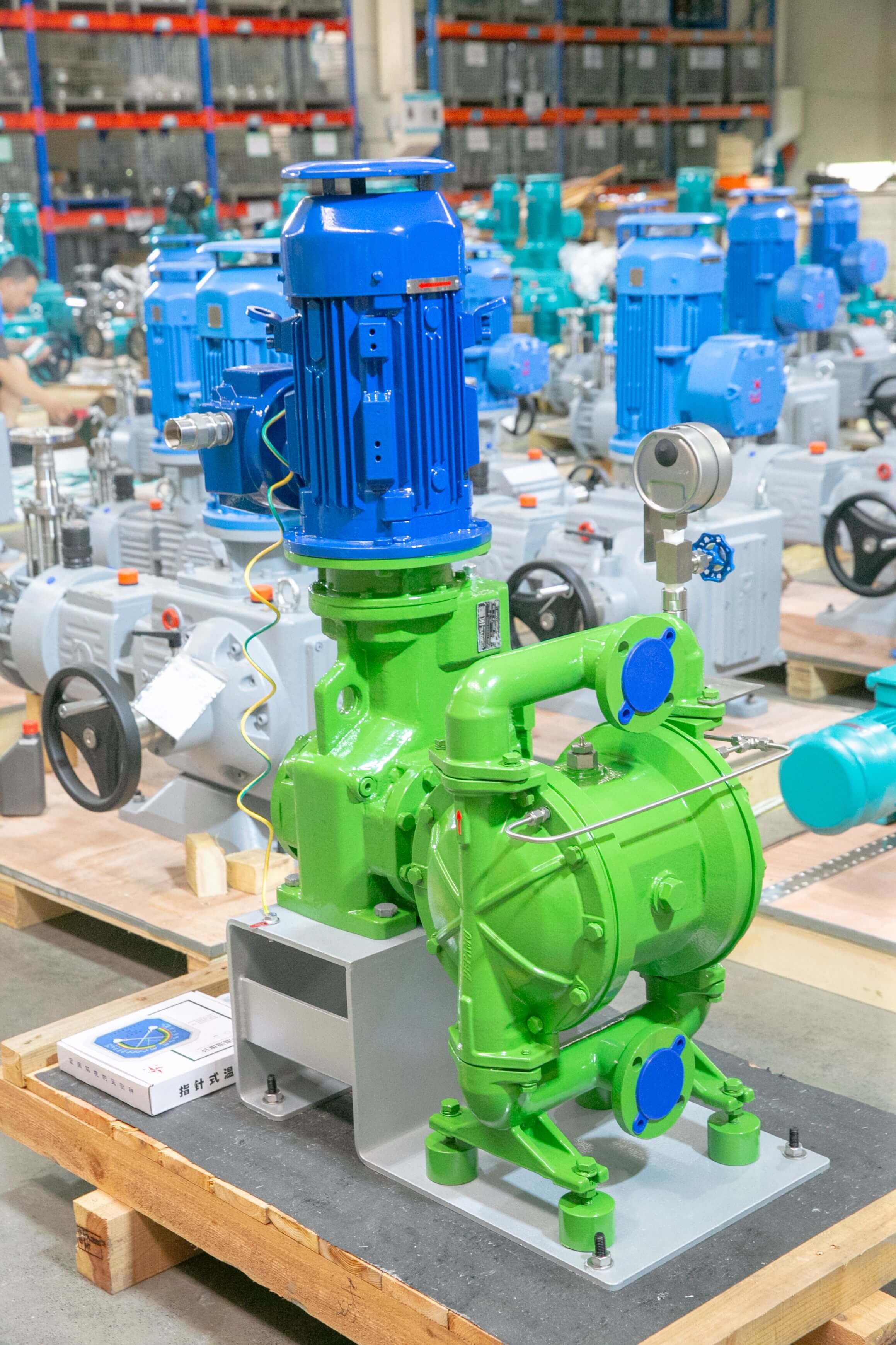
For more information, please visit the official website:www.depamufluid.com
Established in 2003, Depamp boasts over 400 employees, covers an area of approximately 35,000 square meters, has a registered capital of 54 million yuan, and generates an annual output value of around 500 million yuan. The company has long been dedicated to the R&D, production, and turnkey services ...
No. 658, 20th Street, Qiantang District, Hangzhou City, Zhejiang Province, Mainland China