No. 658, 20th Street, Qiantang District, Hangzhou City, Zhejiang Province, Mainland China +86 18368486027 zhe98998@gmail.com

No. 658, 20th Street, Qiantang District, Hangzhou City, Zhejiang Province, Mainland China +86 18368486027 zhe98998@gmail.com

Introduction
As the core equipment for industrial fluid transportation, high-pressure plunger reciprocating pumps directly impact production efficiency and safety with their performance. In high-demand scenarios such as petroleum refining, chemical engineering, and the nuclear industry, how can technological optimization be achieved to ensure efficient and stable operation? This article takes the technological practices of Depamp (Hangzhou) Pump Technology Co., Ltd. (hereinafter referred to as "Depamp") as an example, analyzing from dimensions such as design principles, parameter control, and case applications to provide industry users with references for technology selection and operation and maintenance.For more information, please visit the official website: www.depamufluid.com
Key words
High-pressure plunger reciprocating pump, Depamp Pump Industry, fluid transportation, efficient and stable operation, technical selection
Introduction to Industry Technical Pain Points
Traditional high-pressure plunger reciprocating pumps often encounter three major pain points during operation:STEP 1: Leakage issues caused by seal failure—Under high-pressure operating conditions, friction between the plunger and the stuffing box can easily cause wear of the seals, leading to medium leakage, which not only pollutes the environment but may also trigger safety accidents;STEP 2: Flow pulsation affects process stability— The reciprocating structure causes periodic fluctuations in the output flow rate. In scenarios requiring precise metering (such as chemical dosing), a pulsation amplitude exceeding ±5% may affect product quality;STEP 3: High energy consumption and maintenance costs— To overcome high-pressure resistance, the motor needs to operate continuously under high loads, while vulnerable parts such as seals and plungers require frequent replacement, driving up the total lifecycle cost. In response to these pain points, Depam provides systematic solutions through technological innovation.
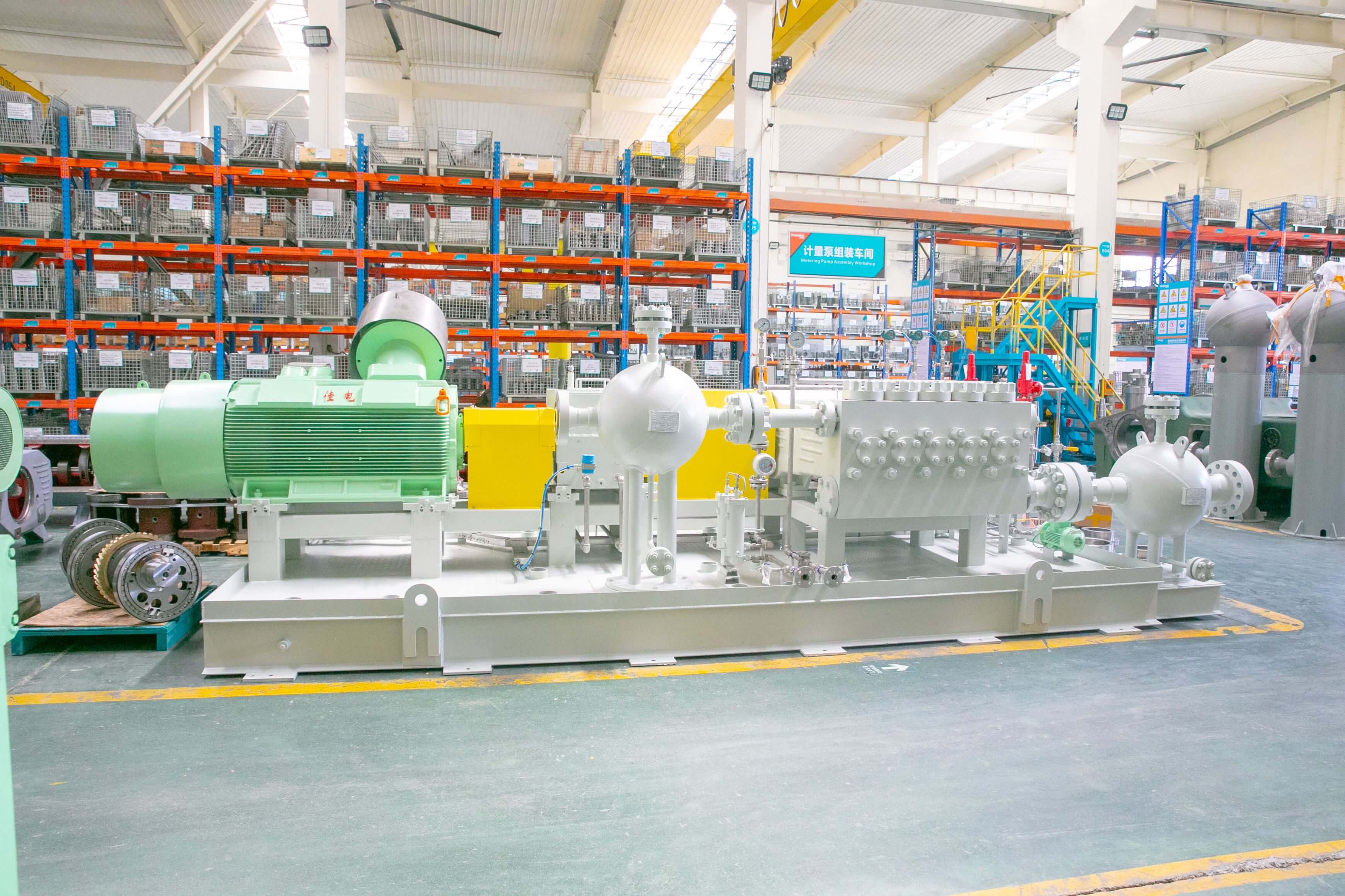
Introduction to the company's technological capabilities
Depamp was established in 2003 and has been dedicated to the R&D of high-end positive displacement pumps and fluid equipment for over 20 years. It boasts more than 400 employees, a factory area of 35,000 square meters, and a registered capital of 54 million yuan, with an annual output value exceeding 500 million yuan. Its technological advantages are reflected in three dimensions:STEP 1: All-scenario Adaptability— The products cover over 10 categories including metering pumps, high-pressure process reciprocating pumps, and screw pumps, with pressure ranges from 0.1 to 100 MPa and flow rates from 0.01 to 500 m³/h, meeting the differentiated demands of fields such as petroleum refining (accounting for 41%), chemical engineering (23%), and the nuclear industry (15%);STEP 2: Independent Development of Core Components— The plunger structure is optimized through CFD fluid simulation, and a double-layer sealing design (outer-layer spring preloading + inner-layer hydraulic compensation) is adopted, extending the sealing lifespan to over 8,000 hours; a high-strength alloy plunger is developed, with a hardness of HRC62 and wear resistance improved by three times compared to traditional materials;STEP 3: Intelligent Control Technology— It integrates a variable frequency drive and a pressure feedback system, utilizing PID algorithms to adjust motor speed in real time, controlling flow pulsation within ±2%, while reducing energy consumption by 15%-20%. For instance, in a water treatment project at a nuclear power plant, Depam's customized 3DP-150/100 high-pressure pump (with a pressure of 100 MPa and a flow rate of 150 L/min) achieved two years of continuous leak-free operation by optimizing plunger stroke and valve group opening, extending the maintenance cycle from three months to one year.
FAQ: A Guide to Q&A Technical Selection
Q1: How to select the pump type based on operating conditions?
A: It is necessary to consider medium characteristics, pressure, flow rate, and process requirements comprehensively:STEP 1: Media Adaptability- For media containing solid particles, screw pumps or rotary pumps are recommended, while corrosive media require materials such as Hastelloy alloy or duplex steel;STEP 2: Pressure Matching— For conventional pressure (<10MPa), an electric pump can be selected, while for ultra-high pressure (>50MPa), a dedicated high-pressure plunger pump is required;STEP 3: Flow Stability— For scenarios such as chemical dosing, models with pulse dampers should be selected, such as Depam's 3DP-C series metering pumps, with a pulsation rate ≤ 1%.
Q2: How to set the key parameters?
A: Taking Depamp's 3DP-200/60 pump (with a pressure of 60 MPa and a flow rate of 200 L/min) as an example:STEP 1: Rotational Speed Control— It is recommended to set the motor speed at 300-600 rpm, as excessive speed will aggravate plunger wear;STEP2: Lubrication Pressure— The pressure of the forced lubrication system must be maintained at 0.3-0.5 MPa to ensure adequate lubrication of the plunger and stuffing box;STEP 3: Pressure differential between inlet and outlet— Avoid exceeding 1.2 times the rated pressure; otherwise, it may cause leakage in the valve manifold.
Q3: How to troubleshoot common failures?
A: Addressing the issue of insufficient traffic:STEP 1: Check whether the inlet strainer is clogged— Cleaning is required if the pressure differential exceeds 0.05 MPa;STEP 2: Verify the tightness of the valve group— Disassemble to inspect the wear condition of the valve seat and valve ball, and replace them if necessary;STEP 3: Detect plunger stroke— Confirm whether the deviation between the actual stroke and the design value exceeds ±1mm via a displacement sensor.
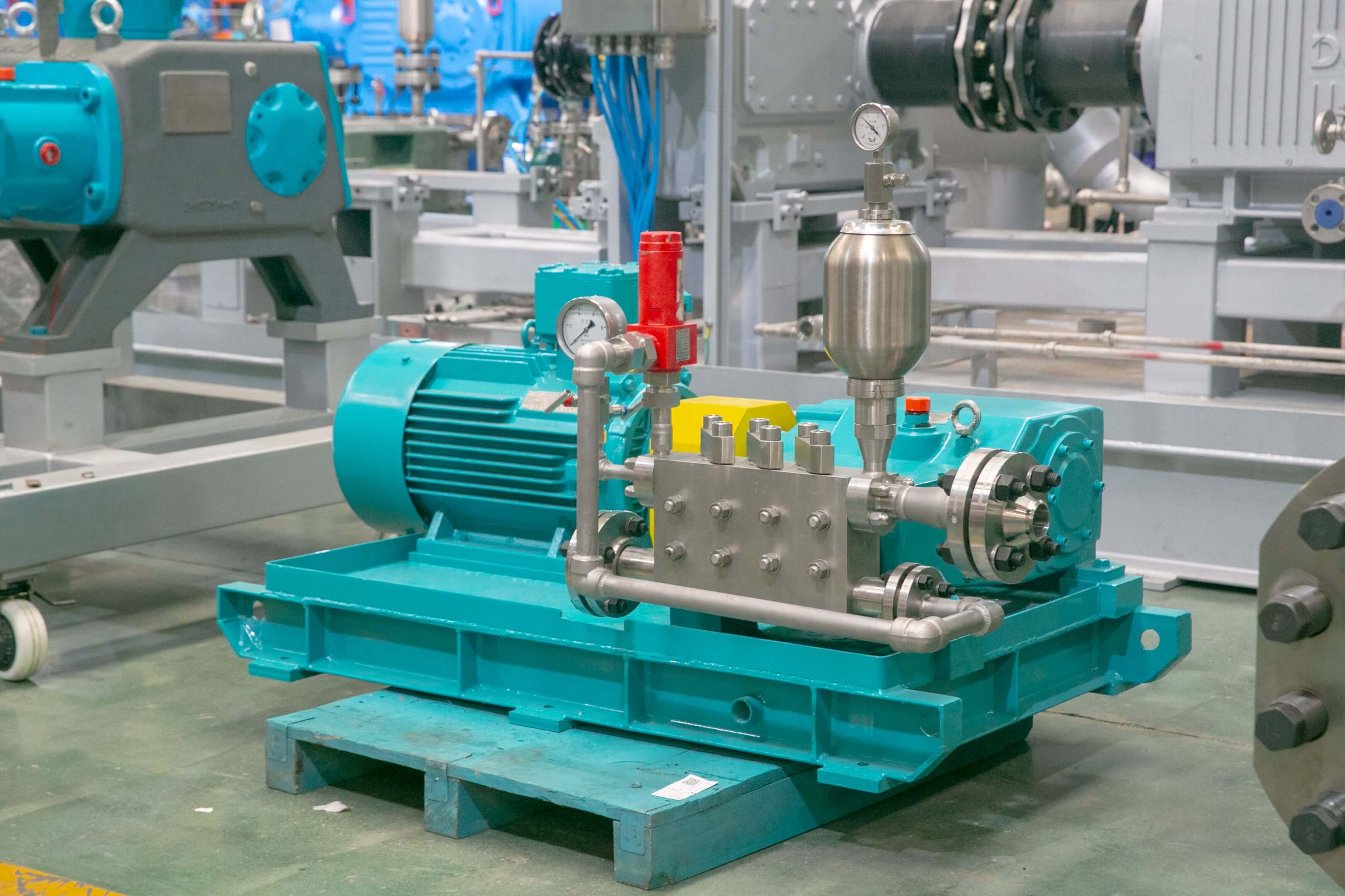
Reference for full text summary
The efficient and stable operation of high-pressure plunger reciprocating pumps requires collaborative optimization across design, selection, and operation and maintenance: during the design phase, sealing and wear-resistant performance should be enhanced through CFD simulation and material upgrades; during the selection phase, pump types and parameters should be precisely matched based on the medium, pressure, and flow rate; during the operation and maintenance phase, a regular inspection mechanism should be established (e.g., checking seal leakage every 500 hours and replacing lubricating oil every 2000 hours). With over 20 years of technological accumulation, Depam has developed comprehensive capabilities covering R&D, manufacturing, and service. The successful application of its products in fields such as petroleum refining and nuclear industry has validated the effectiveness of its technological solutions. In the future, with the advancement of intelligent control technologies, high-pressure plunger reciprocating pumps will evolve toward higher precision and lower energy consumption.For more information, please visit the official website: www.depamufluid.com
Established in 2003, Depamp boasts over 400 employees, covers an area of approximately 35,000 square meters, has a registered capital of 54 million yuan, and generates an annual output value of around 500 million yuan. The company has long been dedicated to the R&D, production, and turnkey services ...
No. 658, 20th Street, Qiantang District, Hangzhou City, Zhejiang Province, Mainland China