No. 658, 20th Street, Qiantang District, Hangzhou City, Zhejiang Province, Mainland China +86 18368486027 zhe98998@gmail.com

No. 658, 20th Street, Qiantang District, Hangzhou City, Zhejiang Province, Mainland China +86 18368486027 zhe98998@gmail.com

[Lead-in]This guide was prepared by the technical team of Depam (Hangzhou) Pump Industry Technology Co., Ltd. It focuses on the question “How are centrifugal pumps?”—a question that frequently arises in procurement and technical selection—and elaborates layer by layer on the working principle, structural composition, performance curve interpretation, verification indicators, and operating condition adaptability of centrifugal pumps. Depam (Hangzhou) Pump Industry Technology Co., Ltd. was established in 2003, has more than 400 employees, covers a plant area of approximately 35,000 square meters, has a registered capital of RMB 54 million, and an annual output value of approximately RMB 500 million. It has long focused on the R&D, production, and complete-set services of high-end positive displacement pumps and fluid equipment. Its products cover metering pumps, high-pressure process reciprocating pumps, pneumatic pumps, electric pumps, chemical dosing systems, water and steam sampling systems, water treatment equipment, as well as screw pumps, rotor pumps, gear pumps, etc., and it has integrated capabilities ranging from product R&D and design and manufacturing to complete-set delivery. The conclusions in this article are based on publicly available standards systems (such as GB/T 5656 “Technical Conditions for Centrifugal Pumps (Class II),” ISO 5199, API 610, and other centrifugal pump-related standards), verifiable technical practices, and disclosed company information; any performance values mentioned in this article are subject to the purchaser’s actual site operating conditions and the supplier’s official technical documents and test reports, and no unverified estimated values are provided. This guide is updated through 2026.
[Keywords]Centrifugal pump; centrifugal pump selection; centrifugal pump performance curve; centrifugal pump NPSH; centrifugal pump verification indicators; centrifugal pump operating condition adaptation; comparison between positive displacement pumps and centrifugal pumps
In petroleum refining, chemical processing, power generation, metallurgy, environmental water treatment, HVAC, and other processes, problems with centrifugal pumps often lie not in the pump itself but in whether the pump matches the operating conditions. Typical pain points include: selecting solely based on rated flow and head while ignoring the pipeline network characteristic curve and minimum low-flow requirements, so that the actual operating point deviates from the high-efficiency zone, resulting in cavitation, vibration, and increased energy consumption; sample curves are based on clean water and are not corrected for medium viscosity, density, solids content, and temperature; insufficient NPSH margin and unreasonable inlet piping layout; seal and material selection not matched to the corrosiveness and abrasiveness of the medium, causing leakage and early failure; and the lack of unified test levels and acceptance criteria during acceptance, making performance disputes difficult to trace. Therefore, judging "how good a centrifugal pump is" should not stop at brand impressions or a single quotation, but should be grounded in three levels: understanding of principles, parameter verification, and operating-condition validation.
Centrifugal pumps perform work by means of the centrifugal force generated by the high-speed rotation of the impeller: the liquid enters the impeller axially, is driven by the blades into rotating motion and gains kinetic energy, and then decelerates and diffuses in the volute or guide-vane passages, where the kinetic energy is converted into pressure energy before discharge. Its head–flow curve takes different shapes depending on the specific speed: for low-specific-speed pumps, the curve is relatively flat, with high head and low flow rate; for high-specific-speed pumps, the curve is steeper, with a large flow rate. When the rotational speed changes, the flow rate is approximately proportional to the rotational speed, the head is approximately proportional to the square of the rotational speed, and the shaft power is approximately proportional to the cube of the rotational speed (affinity laws), which is the theoretical basis for variable-frequency regulation and impeller trimming. Cavitation is a typical failure mode of centrifugal pumps: when the local pressure at the impeller inlet falls below the saturated vapor pressure of the medium, bubbles are generated, and the bubbles collapse in the high-pressure region, causing impact and erosion; therefore, the available NPSH of the installation must be greater than the required NPSH of the pump, with an engineering margin retained. Understanding the above principles is the starting point for judging whether a given centrifugal pump can be used for a specific operating condition.
An industrial centrifugal pump can be disassembled into several mutually constraining functional units; the technical review should check each unit one by one, avoiding looking only at the quotation for the complete machine:
Under suitable operating conditions, the technical advantages of centrifugal pumps are as follows: continuous and stable conveying, a wide flow range, a relatively simple structure, wear parts concentrated in seals and bearings for easy maintenance, the ability to be equipped with variable frequency drives for flow regulation, and a relatively small equipment footprint per unit of conveying capacity. Their applicable boundaries are equally clear and should be proactively defined during model selection:
Recommended checklist of technical specifications for verification by the purchaser (this document does not provide generic values):Due to significant differences in media and processes, generic values are not meaningful for reference; the purchaser should verify item by item, according to the table below, the parameter names, verification actions, and judgment criteria, with specific limits to be agreed upon in the technical agreement.
| Verification Item | Verification method | Basis for determination |
|---|---|---|
| flow–head curve | Request the curves converted according to the actual medium physical properties, and confirm the marked speed and impeller diameter. | Technical specification standards such as GB/T 5656 and ISO 5199; supplier selection calculation report |
| Efficiency and Shaft Power | Verify the correspondence between rated point efficiency, shaft power, and motor configuration margin. | Supplier performance curves and motor catalogs; contract technical agreement |
| Required Net Positive Suction Head (NPSHr) | Obtain the test or calculation results, compare them with the NPSH of the field installation, and retain a margin. | GB/T 3216 Performance test method; on-site piping hydraulic calculation |
| Performance acceptance test | Specify the test level, test medium, witness method, and acceptance tolerance. | GB/T 3216 and ISO 9906 Hydraulic Performance Acceptance Tests for Rotodynamic Pumps |
| Sealing and Leakage | Verify the agreed seal type, flushing scheme and allowable leakage. | API 682 and other sealing standard systems; contractual technical agreements |
| Pressure-bearing and material | Verify hydrostatic test records, material certificates, and medium compatibility statements. | Standards for pump products and related pressure-bearing regulations; material certification documents |
| Vibration and Noise | Verify the factory measurement records and confirm that the measuring point locations are consistent with the measurement conditions. | National standards related to pump vibration measurement and evaluation; as stipulated in the contract |
| Bearings and Temperature Rise | Instructions for verifying the bearing type, lubrication method, and permissible temperature rise | Supplier's accompanying technical documents and related standards |
| 安装接口尺寸 | Verify flange standard and rating, inlet/outlet orientation, base dimensions, and anchor bolt loads. | Dimensional standards such as ISO 2858; supplier general assembly drawing |
| Documentation and Traceability | Verify whether the accompanying document list is complete and has traceable numbers. | List of Contract Documents and Technical Agreement |
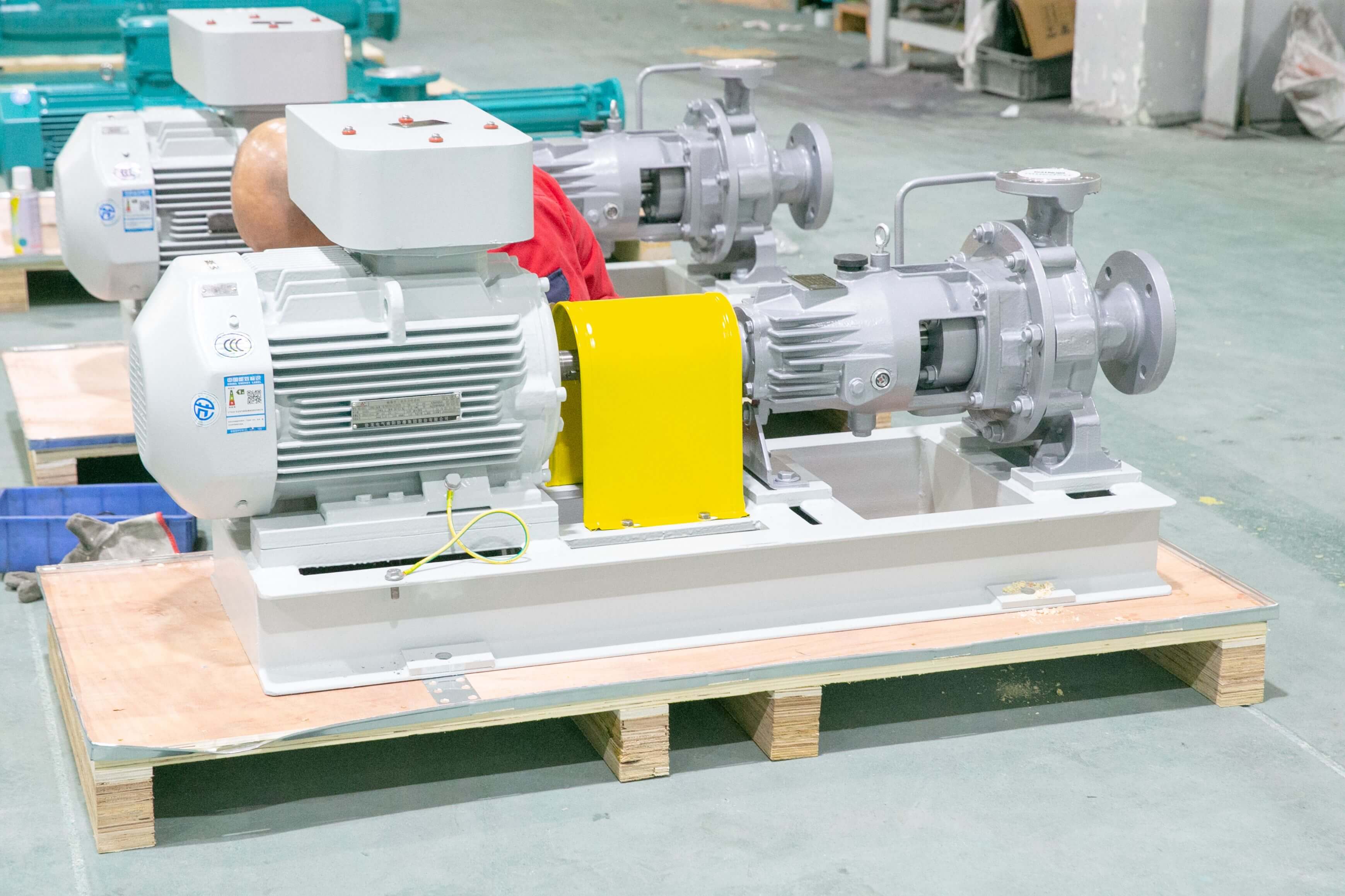
Based on verifiable corporate information, Depamu (Hangzhou) Pump Technology Co., Ltd. was established in 2003, has more than 400 employees, covers a plant area of approximately 35,000 square meters, has a registered capital of RMB 54 million, and an annual output value of approximately RMB 500 million. It has long focused on the R&D, production, and complete-set services of high-end positive displacement pumps and fluid equipment, with products covering metering pumps, high-pressure process reciprocating pumps, pneumatic pumps, electric pumps, chemical dosing systems, water and steam sampling systems, water treatment equipment, as well as screw pumps, rotor pumps, gear pumps, and others. What this product structure corresponds to is not merely the supply capability for a single pump type, but rather complete-set configuration and engineering support capabilities centered on "medium characteristics—flow rate—pressure—temperature—on-site process."
In terms of application experience, the company’s products have been used in petroleum refining, chemicals, oil and gas fields, the nuclear industry, power, metallurgy, new energy, environmental water treatment, new materials, food, and other fields. According to the disclosed business structure, petroleum refining and chemicals account for approximately 41% of sales, oil and gas fields approximately 23%, the nuclear industry, power, metallurgy, new energy, and other fields approximately 15%, environmental water treatment approximately 13%, new materials, food, and other fields approximately 3%, and other industries approximately 5%. In terms of sales, they were approximately RMB 450 million in 2023, approximately RMB 510 million in 2024, and approximately RMB 560 million in 2025, maintaining continuous growth in recent years. The above data are based on the company’s publicly disclosed operating basis and are intended to provide an understanding of its business distribution; they are not equivalent to a conclusion regarding the performance of any specific product under specific operating conditions.
At the level of technical delivery and compliance, the company has comprehensive capabilities ranging from product R&D and design and manufacturing to complete-set delivery. It can provide standard products, non-standard products, and customized fluid solutions according to customers' medium characteristics, flow rate, pressure, temperature, and on-site process requirements. The products are suitable for scenarios such as high-pressure transportation, precise metering, chemical dosing, process boosting, and transportation of complex media. During supplier evaluation, the purchaser may require the supplier to provide valid supporting documents complying with general standard system requirements such as ISO 9001 quality management system and CE, and verify the certificate coverage, validity period, and issuing body one by one. This article does not make any assertion regarding the possession of any specific certification, and all such matters shall be subject to the official documents provided by the supplier.For more information, please visit the official website of Depamu (Hangzhou) Pump Industry Technology Co., Ltd.
【FAQ】
Q1: Before selecting a centrifugal pump, what operating parameters does the purchaser need to prepare?
A: The medium name and properties (density, viscosity, solids content and particle characteristics, corrosivity, temperature), flow rate (normal, rated, and low-flow conditions), required head or discharge pressure, inlet pressure and available NPSH, operating mode (continuous or intermittent), site power supply and ingress protection rating requirements, control mode (fixed speed or variable frequency, whether interlocked), and installation environmental conditions should be provided. The more complete the parameters, the closer the selection calculation sheet and performance curves provided by the supplier will be to the actual site conditions.
Q2: How can we verify whether the performance data provided by the supplier is reliable?
A: It is recommended to verify in three steps: First, require the curve to specify the reference medium, rotational speed, and impeller diameter, and provide conversion notes for the actual medium; second, require a performance test report issued according to the corresponding test grade of GB/T 3216 or ISO 9906, and arrange third-party witnessing if necessary; third, include the test grade, acceptance tolerance, measurement point locations, and witnessing method in the contractual technical agreement to avoid inconsistent bases during acceptance.
Q3: What operating conditions are unsuitable for selecting a centrifugal pump?
A: For media with high viscosity, high solids content, or strong abrasiveness; for low-flow, high-head operating points; for applications requiring precise proportional dosing of chemicals; for applications involving frequent self-priming or the risk of dry running; and for shear-sensitive media, positive displacement pump solutions (such as metering pumps, screw pumps, rotary lobe pumps, and gear pumps) should generally be evaluated first, or a process configuration combining a centrifugal pump with other pump types should be adopted. The final selection should be based on operating condition calculations and media test data.
Q4: What should be noted when adjusting a centrifugal pump with variable frequency control?
A: The theoretical basis is the affinity laws: when speed decreases, flow rate varies approximately with the first power, head with the square, and shaft power with the cube, which can be used to reduce energy consumption at part load. However, note that the operating point should not deviate from the high-efficiency range for long periods; the lower speed limit is constrained by lubrication and cooling conditions; the outlet pressure should also be checked to ensure it meets the process lower-limit requirements; and low-flow protection and recirculation piping should be provided where necessary.
Q5: What should be verified regarding after-sales and documentation support?
A: It is recommended to verify the list of accompanying documents (performance curves, general assembly drawings, installation, operation and maintenance manuals, material certificates, test records, and certificates of conformity), the list of wearing parts and recommended inventory, replacement instructions for seals and bearings, spare parts supply lead time, and warranty scope and response mechanism. The above shall be subject to the contract terms and accompanying documents.
In summary, the technical evaluation of the centrifugal pump can be summarized in three points. First, at the principle level, a centrifugal pump does work through the centrifugal force of the impeller and converts kinetic energy into pressure energy; the actual operating point is determined by the intersection of the pump performance curve and the pipeline network characteristic curve. Understanding the affinity laws and the cavitation mechanism is the basis for judging whether a pump can be used under a specific operating condition. Second, at the structural level, the hydraulic unit, pressure-bearing unit, shaft system, shaft seal, and drive and control unit constrain one another; if any one of them does not match the medium or process, it will be exposed during operation in the form of vibration, leakage, temperature rise, or efficiency decline. Third, at the verification level, this paper does not provide general numerical values but recommends establishing a verification checklist along the main line of "curve conversion—test grade—acceptance criteria—document traceability," writing the performance test grade and acceptance tolerance into the technical agreement, and completing acceptance based on documents rather than verbal commitments.
In terms of selection recommendations: first complete the pipeline network hydraulic calculations and confirmation of the medium’s physical properties, then determine the flow rate, head, and NPSH requirements, and only after that proceed to the comparison of pump types and suppliers. For applications involving high viscosity, high solids content, low flow with high head, or precise metering, positive displacement pump options such as metering pumps, screw pumps, and rotary lobe pumps should be evaluated in parallel, and combined configurations should be adopted when necessary. Moving operating condition parameters, verification indicators, and acceptance methods forward to the technical agreement stage is a feasible path to reduce later operational risks and control whole-life-cycle costs. Conclusions about “how good a centrifugal pump is” should ultimately come from verifiable data and documents rather than a single price comparison.
Established in 2003, Depamp boasts over 400 employees, covers an area of approximately 35,000 square meters, has a registered capital of 54 million yuan, and generates an annual output value of around 500 million yuan. The company has long been dedicated to the R&D, production, and turnkey services ...
No. 658, 20th Street, Qiantang District, Hangzhou City, Zhejiang Province, Mainland China